Out Of The Loop - Page 2
-

What is Numeraire (NMR) Crypto Coin? The AI Hedge Fund Token Explained
Numeraire (NMR) is a crypto token that powers a real AI hedge fund. Data scientists stake NMR to submit machine learning models that predict stock markets. Accurate predictions earn rewards; bad ones burn tokens. Over $25 million has been paid out since 2017.
-

ZOO Crypto World Mega Event Airdrop: What We Know and How to Prepare
ZOO Crypto World's Mega Event airdrop isn't officially confirmed yet, but here's what you need to know about the GameFi platform, how to prepare, and how to avoid scams. Get ready before the drop.
-
What is Reflect (RFL) Crypto Coin? Tokenomics, Price, and Real-World Use
Reflect (RFL) is an Ethereum-based crypto token that rewards holders with passive income through transaction reflections. As of 2026, it trades below 10% of its all-time high, with high volatility and unverified risks. Its utility in the Aerodrome DeFi ecosystem and upcoming AI tool Flight Fren may shape its future.
-

Flash Loan Providers and Platforms Explained
Flash loan providers let you borrow crypto without collateral - if you repay it in the same transaction. Aave, dYdX, and Uniswap lead the market, but these tools are only for expert traders with smart contract skills.
-
What is Nibbles (NIBBLES) crypto coin? Here's the raw truth about this micro-cap token
Nibbles (NIBBLES) is a micro-cap Solana token with no utility, no team, and conflicting market data. Here's what the numbers really show - and why it's not worth buying.
-
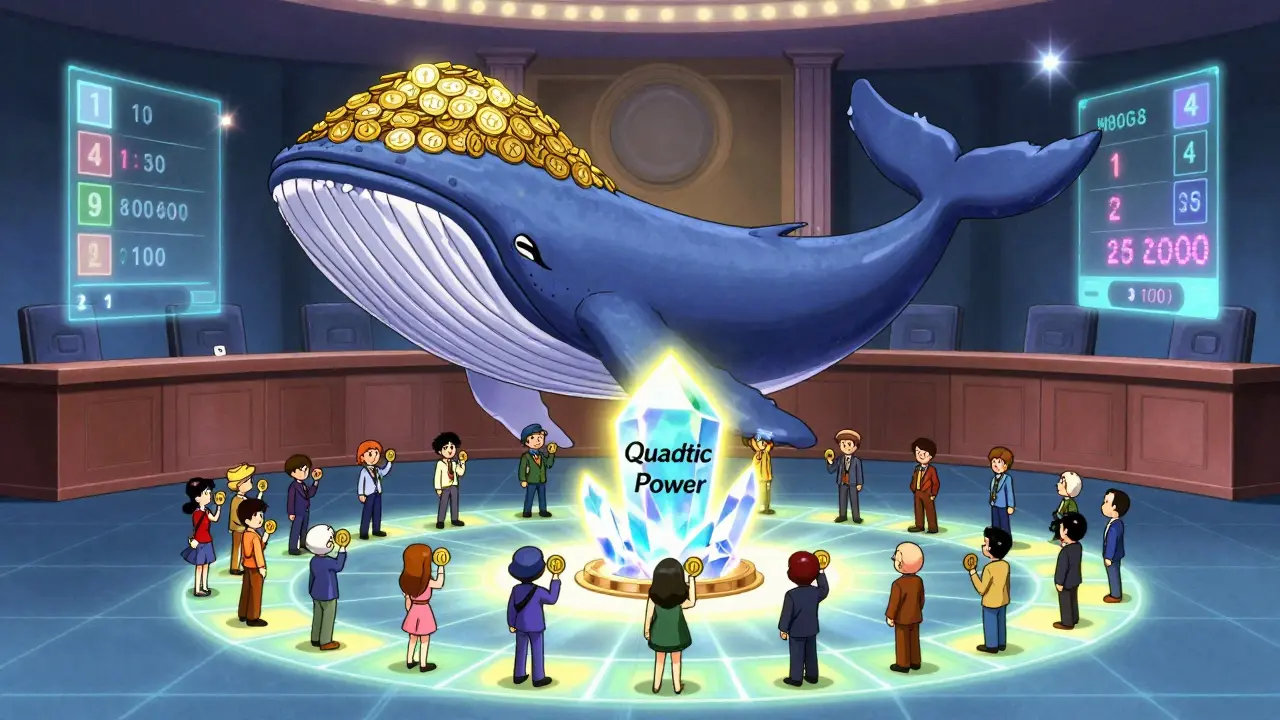
Quadratic Voting in DAOs: How It Fixes Whale Dominance and Gives Power Back to the Community
Quadratic voting in DAOs gives small token holders real influence by making each extra vote exponentially more expensive. It stops whales from dominating decisions and encourages thoughtful, focused participation - making governance fairer and more democratic.
-

Crypto Exchanges That Allow Russian Citizens in 2026
As of 2026, Russian citizens use exchanges like Bybit, Gate.io, and KuCoin to trade crypto, bypassing sanctions through RUB deposits and ruble-backed stablecoins like A7A5. Access is restricted, but not impossible.
-

Data Availability Layers in Modular Blockchains Explained
Data availability layers let blockchains scale by separating data storage from execution. Learn how Celestia, Ethereum, and EigenDA use sampling and erasure coding to cut costs and boost speed - without sacrificing security.
-

What is SelfKey (KEY) Crypto Coin? A Simple Guide to the Identity Token
SelfKey (KEY) is a crypto token that powers a self-sovereign identity platform, letting users control their personal data without relying on centralized systems. It enables one-time KYC verification for banking, crypto, and immigration services.
-

What is Britt (BRITT) crypto coin? The love story behind the memecoin and its wild price swing
Britt (BRITT) is a memecoin built on Base Chain around a real love story between two people. It has no utility, but a loyal community. Price crashed 99% since its peak, yet still has over 86,000 holders. Is it an investment? No. Is it meaningful? For some, yes.
-

SpartaDEX Crypto Exchange Review: Gamified DeFi on Arbitrum
SpartaDEX is a gamified crypto exchange on Arbitrum that turns liquidity provision into a strategy game. Learn how it works, its pros and cons, and who it's really for.
-

Why Cryptocurrency Outperforms Fiat Money in Key Areas
Cryptocurrency outperforms fiat money in cross-border payments, inflation protection, and financial autonomy. With fixed supply, transparency, and no intermediaries, it offers real advantages-though fiat still rules everyday spending.