Blockchain
When working with Blockchain, a decentralized ledger that records transactions across a network of computers. Also known as distributed ledger technology, it powers everything from finance to gaming.
One key area is on-chain analytics, the practice of examining blockchain data to uncover market trends and user behavior. Blockchain encompasses on-chain analytics, and those insights feed directly into better investment decisions. Another critical component is transaction finality, the point at which a transaction is irrevocably recorded on the chain. Transaction finality requires fast consensus mechanisms, which in turn enable DeFi and gaming experiences that feel instantaneous. Meanwhile, NFT metadata, the information that describes an NFT’s attributes and provenance determines how permanent and accessible a digital collectible is, shaping collector confidence and secondary market liquidity. Together, these sub‑topics illustrate how Blockchain supports both data‑driven analysis and real‑time user interaction.
Security, Governance, and Emerging Trends
Beyond analytics and speed, security remains a top concern. Sybil attack, a method where malicious actors create many fake identities to manipulate consensus prevention influences blockchain security, pushing developers toward AI‑based monitoring and decentralized identity solutions. At the same time, governance token distribution, the strategy for allocating voting power to stakeholders in a decentralized autonomous organization shapes how decisions are made, balancing capital raise needs with true decentralization. Effective token distribution also ties into regulatory compliance, ensuring projects stay on the right side of the law while maintaining community trust. The interplay between security measures, token economics, and user incentives creates a dynamic ecosystem where each element reinforces the others.
All of these pieces—analytics, finality, security, metadata, and governance—form a linked chain of innovations driving the blockchain space forward. Below, you’ll find deep‑dive articles that break down each trend, illustrate real‑world use cases, and offer practical checklists you can apply today. Whether you’re a developer, investor, or curious enthusiast, the collection ahead is designed to give you clear, actionable insight into where blockchain technology is headed next.
-

Flash Loan Providers and Platforms Explained
Flash loan providers let you borrow crypto without collateral - if you repay it in the same transaction. Aave, dYdX, and Uniswap lead the market, but these tools are only for expert traders with smart contract skills.
-

Quadratic Voting in DAOs: How It Fixes Whale Dominance and Gives Power Back to the Community
Quadratic voting in DAOs gives small token holders real influence by making each extra vote exponentially more expensive. It stops whales from dominating decisions and encourages thoughtful, focused participation - making governance fairer and more democratic.
-

Data Availability Layers in Modular Blockchains Explained
Data availability layers let blockchains scale by separating data storage from execution. Learn how Celestia, Ethereum, and EigenDA use sampling and erasure coding to cut costs and boost speed - without sacrificing security.
-

Execution Layers and Settlement Layers: How Modular Blockchains Solve Scalability
Execution layers process transactions and run apps, while settlement layers verify them. Together, they solve blockchain’s scalability problem - letting Ethereum handle security while rollups handle speed.
-

Future Blockchain Security Against 51% Attacks: How Networks Are Fighting Back in 2026
As 51% attacks become more common, blockchain networks are evolving. Bitcoin remains secure due to its massive hash rate, but smaller chains face existential threats. Learn how networks are fighting back in 2026-and what it means for your crypto holdings.
-

dApp Security Considerations: What Every Developer and User Must Know
dApp security requires understanding smart contract risks, wallet safety, and decentralization. Learn how to avoid phishing, rug pulls, and unsafe approvals - and why audits and zero-knowledge proofs matter.
-

How Sharding Improves Blockchain Scalability
Sharding splits a blockchain into smaller pieces called shards, allowing parallel transaction processing. This boosts throughput from 15 to 100,000 TPS, lowers fees, and keeps decentralization intact-key for Ethereum’s future and mass adoption.
-
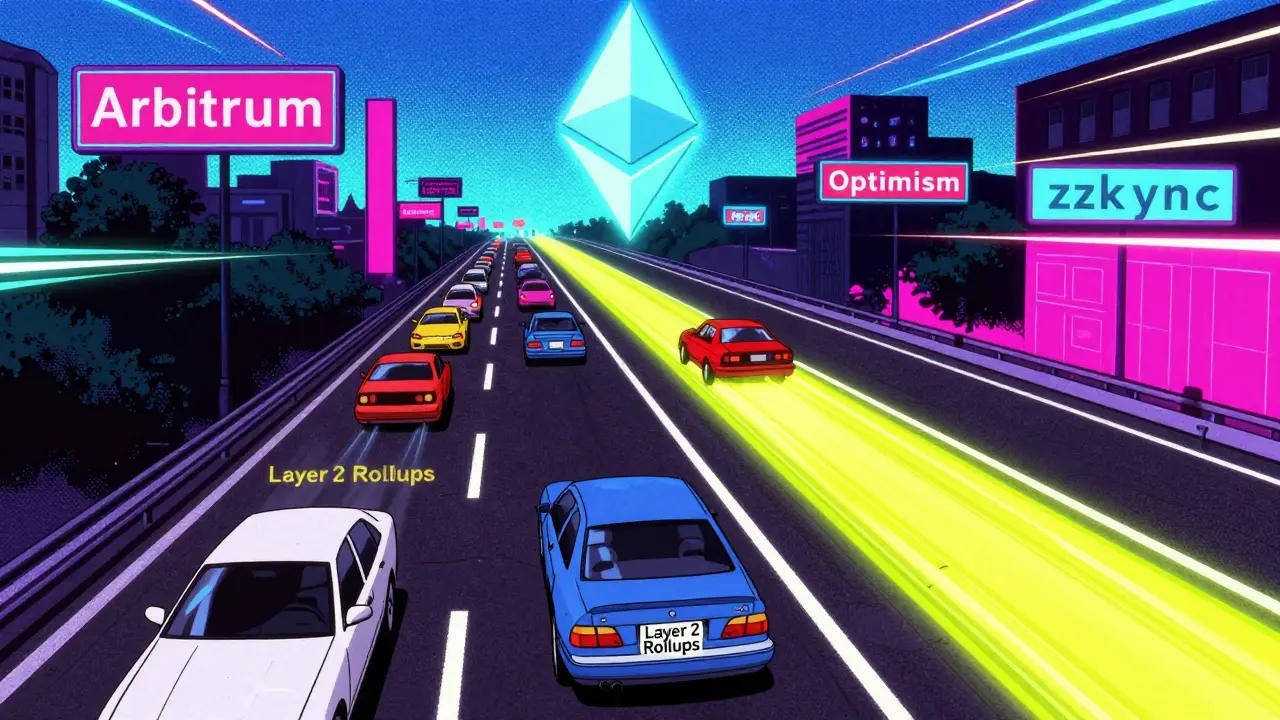
Sharding vs Layer 2 Solutions: Which Blockchain Scaling Method Wins?
Sharding and Layer 2 solutions are the two main ways blockchains scale. Layer 2s add speed on top of existing chains; sharding splits the chain itself. Learn which one fits your needs today and tomorrow.
-

Future of Blockchain Security Auditing in 2025: What’s Changed and What’s Next
In 2025, blockchain security auditing has become essential for enterprises, not just crypto projects. With AI-driven monitoring, regulatory fines up 400%, and $20B stolen in 2024, continuous audits are no longer optional.
-

Ongoing Compliance Obligations in Blockchain: What You Must Keep Doing to Stay Legal
Ongoing compliance obligations in blockchain aren't optional-they're legal. Learn what you must keep doing to avoid fines, loss of trust, or shutdowns in 2025's evolving regulatory landscape.
-

Sharding Security Considerations in Blockchain Networks
Sharding improves blockchain scalability but introduces new security risks like shard takeovers and cross-shard exploits. Learn how modern protocols are fixing these flaws-and why most enterprise implementations still fail.
-

Future of Blockchain Transaction Fees: How Costs Are Plunging and What It Means for You
Blockchain transaction fees have dropped from $24 to under a cent thanks to Layer-2 scaling and Solana’s efficiency. Stablecoins now move $1.25 trillion monthly with near-zero costs, transforming global payments.