Blockchain networks are stuck in traffic. Ethereum handles about 30 transactions per second. That’s fine for early adopters, but not for millions of users sending payments, trading NFTs, or playing games. So how do you fix this? Two big ideas have emerged: sharding and Layer 2 solutions. Both promise faster, cheaper blockchains. But they work in completely different ways.
What Is Layer 2 Scaling?
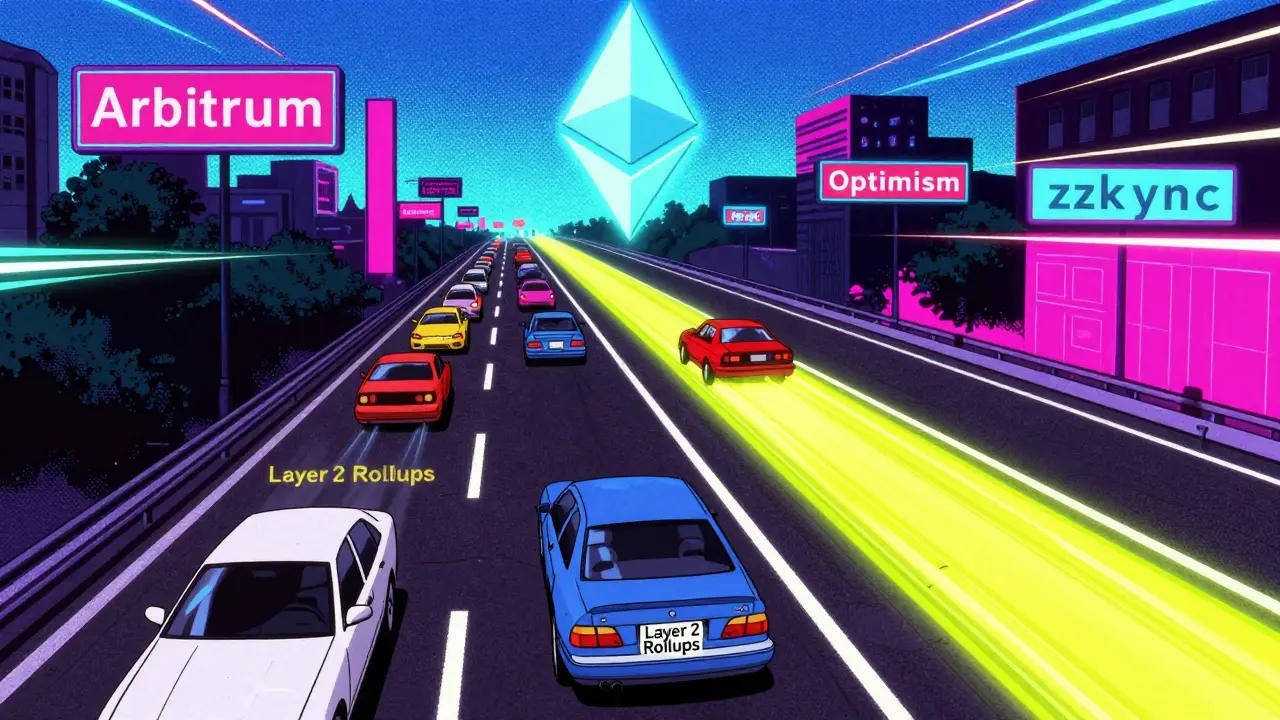
Layer 2 solutions don’t change the main blockchain. Instead, they build on top of it. Think of it like adding express lanes to a highway. The main road (Layer 1) still exists, but most traffic flows on the new lanes (Layer 2), then gets recorded back on the main road for safety. The two biggest Layer 2 types are optimistic rollups and ZK-rollups. Both bundle hundreds of transactions into one batch, then send a single proof to Ethereum. Optimistic rollups assume everything is valid unless someone proves otherwise-like a trust-but-verify system. ZK-rollups use math-heavy zero-knowledge proofs to prove transactions are correct without revealing details. That’s faster and more secure. Popular Layer 2s today include Arbitrum, Optimism, zkSync, and Polygon zkEVM. These networks handle DeFi trades, NFT sales, and gaming transactions with fees under $0.10. Ethereum’s total value locked in Layer 2s jumped 16% in just seven days last month, showing how fast adoption is growing.What Is Sharding?
Sharding changes the blockchain itself. Instead of one long chain where every node processes every transaction, sharding splits the network into smaller pieces called shards. Each shard handles its own set of transactions and data. It’s like turning one big warehouse into ten smaller ones, each run by a different team. Ethereum 2.0 plans to launch 64 shards. That means instead of 10,000 nodes all checking every transaction, each node only checks the data from one shard. This cuts down storage needs and speeds things up. NEAR Protocol already uses sharding and claims it reduces storage costs by nearly 40%. With sharding, Ethereum could go from 30 TPS to thousands. The big win? Cross-shard communication. If you’re trading an NFT on Shard 3 and paying with a token on Shard 7, the system handles it natively. No bridges. No extra steps. It’s all built into the protocol.Security: Who Keeps the Lights On?
Layer 2s depend on Ethereum for security. If a rollup gets hacked, you can still challenge it on the main chain. Fraud proofs and ZK-proofs make this safe-but not foolproof. There’s still a delay before funds are final. With optimistic rollups, you might wait up to a week to withdraw if someone disputes a transaction. Sharding keeps everything on-chain. Every shard is secured by the same proof-of-stake system as Ethereum. No off-chain trust needed. But sharding introduces new risks: what if one shard gets attacked? What if communication between shards breaks? The protocol must be flawless. That’s why it’s harder to build. Vitalik Buterin compares Layer 2s to extra highways. Sharding is like adding more lanes to the same highway. Both reduce congestion. But with sharding, the highway itself gets upgraded. With Layer 2s, you’re just building new roads around it.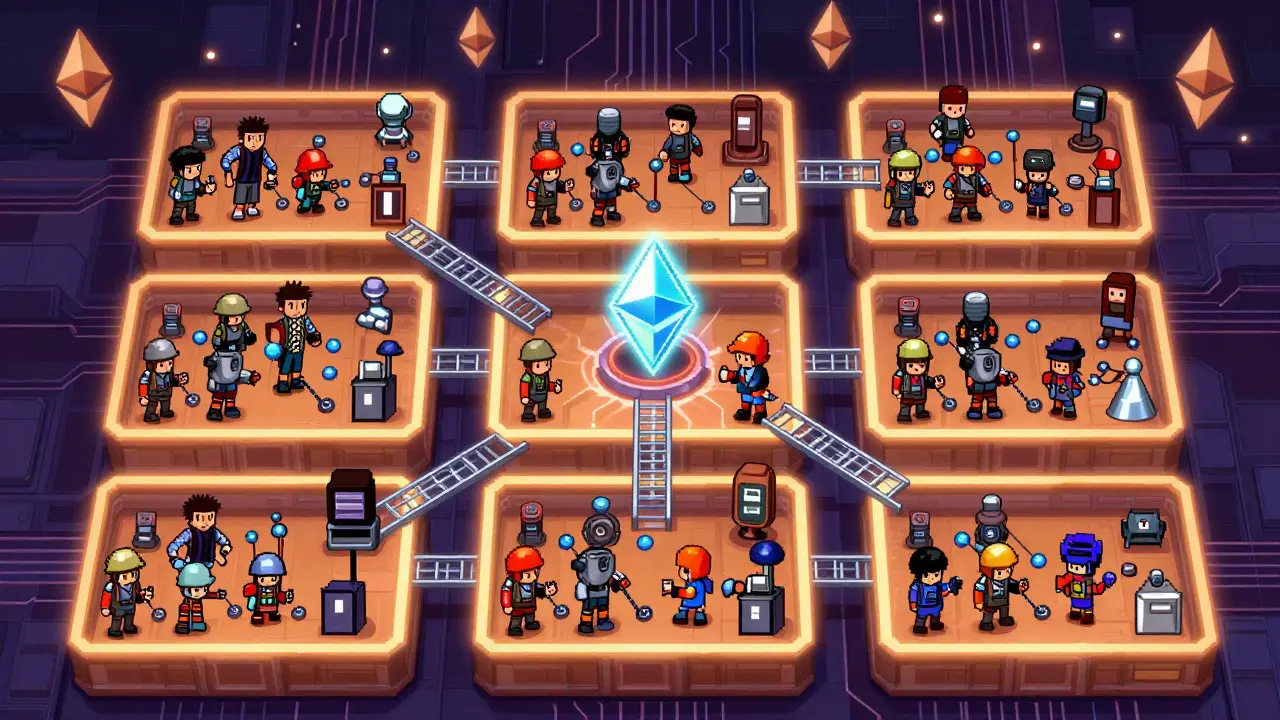
Cost and User Experience
Layer 2s are cheaper for users today. Transactions cost pennies. But you need to move money between Layer 1 and Layer 2. That’s a gas fee. And if you want to use multiple Layer 2s-say, Arbitrum and zkSync-you need to bridge between them. Bridges have been hacked before. Over $2 billion lost in bridge exploits since 2022. Sharding doesn’t require bridging. Everything happens inside the same network. No wallet switches. No extra approvals. If you’re building a game where players trade items across different parts of the metaverse, sharding makes that seamless. No one wants to juggle five wallets just to buy a sword. For DeFi traders, Layer 2s win. Fast swaps, low fees, and mature tools make them ideal. For complex ecosystems-like a full metaverse with NFTs, tokens, and social features-sharding is cleaner. Less friction. More native integration.Who’s Doing What?
Ethereum went all-in on Layer 2s. Why? Because it’s easier. They didn’t have to rebuild their whole network. Rollups could be built by independent teams. That led to rapid innovation. Now, dozens of rollups exist, each with different features. NEAR Protocol chose sharding from day one. They believed native cross-shard interaction was non-negotiable for real-world apps. Solana also leans toward parallel processing, though not exactly sharding. Both are betting on long-term scalability through protocol-level changes. Polygon is interesting. They started with a Layer 2 (Polygon PoS), then added zkEVM, and now they’re exploring sharding. They’re not picking one-they’re building both.