
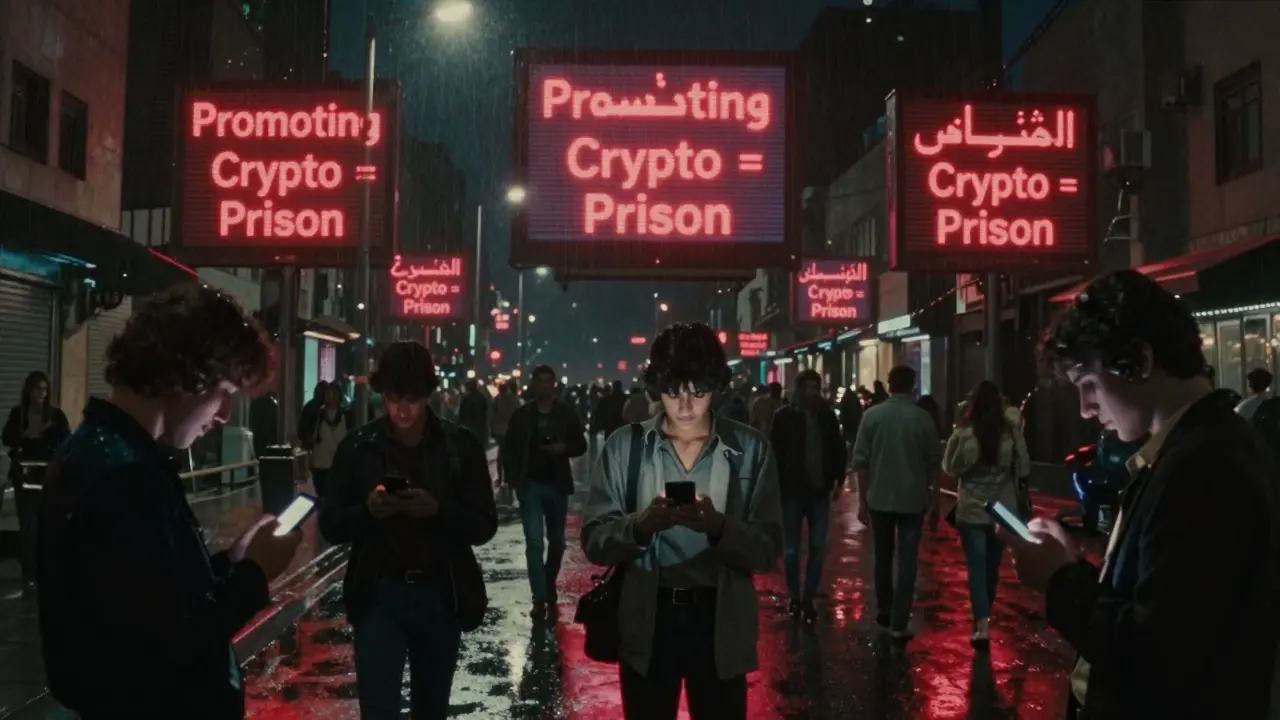
If you're promoting cryptocurrency in Egypt, you could go to jail. Not just a fine. Not just a warning. Actual prison time. And it’s not a rumor - it’s written into Egyptian law.
What exactly is illegal?
Under Law No. 194 of 2020, any form of crypto promotion is banned unless you have explicit permission from Egypt’s Central Bank (CBE) or the Financial Regulatory Authority (FRA). That means posting about Bitcoin on Instagram, running a YouTube video explaining how to buy Ethereum, creating a website that lists crypto exchanges, or even sharing a referral link for a crypto staking platform - all of it is illegal without a license.The law doesn’t care if you’re a one-person blogger or a big marketing agency. If you’re encouraging people to invest, trade, or use crypto, and you’re not officially approved, you’re breaking the law. This includes promoting NFTs for financial gain, DeFi protocols, or any blockchain-based service that involves money. Even staking rewards are considered part of the prohibited activity.
How bad can the punishment get?
The penalties are severe and non-negotiable. The law says anyone caught promoting crypto without authorization faces:- Imprisonment - no minimum term specified, but courts have handed down sentences ranging from months to years
- A fine between 1 million and 10 million Egyptian pounds (roughly $20,000 to $200,000 USD)
- Or both
That’s not a small fine. That’s enough to wipe out a small business or ruin a family’s savings. And the courts don’t always pick the lighter option. In recent cases, judges have opted for prison time even when the promoter claimed they didn’t make money from the activity. Intent doesn’t matter - if you promoted it, you’re liable.
Why does Egypt care so much?
Egypt’s government doesn’t see cryptocurrency as innovation. They see it as a threat. The Central Bank has been warning the public since 2018 that crypto is dangerous - unregulated, unstable, and capable of fueling crime. They argue that since Bitcoin or Ethereum aren’t backed by the state, they can’t be trusted. And when people start using them, it weakens the Egyptian pound’s control over the economy.The FRA calls crypto promotion a form of financial fraud. They say platforms that promise high returns on crypto investments are often scams. And they’re not wrong - many pyramid schemes and fake ICOs have targeted Egyptians. But the law doesn’t distinguish between a scammer and a legitimate educator. Both are treated the same.
But millions of Egyptians use crypto anyway
Here’s the contradiction: despite the prison risk, Egypt has one of the highest crypto adoption rates in Africa and the Middle East. A 2022 report showed over 1.7 million Egyptians owned cryptocurrency - about 1.75% of the population. Other estimates put the number closer to 3 million. That’s more people than the entire population of many European countries.Why? Because of inflation. The Egyptian pound has lost more than 50% of its value since 2022. People are turning to Bitcoin and USDT to protect their savings. Remittances from Egyptians abroad are often sent in crypto because traditional banks are slow and expensive. Crypto isn’t a hobby here - it’s survival.
But here’s the catch: owning crypto isn’t illegal. Only promoting it is. So millions use it quietly. They buy on peer-to-peer apps like Paxful or Binance P2P. They hold it in wallets. They trade with friends. But if they start talking about it publicly - posting on TikTok, running a Telegram group, or even giving advice on Reddit - they risk prison.
How does the government catch people?
The FRA keeps a public “negative list” of unlicensed crypto platforms and services. They monitor social media, search engines, and app stores. If a website promotes crypto without authorization, it gets blocked. If a YouTube channel or Instagram account pushes crypto as an investment, the government can demand the platform remove it - or shut down the entire account.They also encourage citizens to report suspicious activity. If you see someone promoting crypto on Facebook, you can file a complaint with the FRA. That complaint can trigger an investigation. And if you’re the one being reported, you don’t get a warning first. You get a summons - then possibly an arrest.
What about blockchain and tech companies?
Even legitimate blockchain startups are caught in the crossfire. If you’re building a supply chain tracking tool using blockchain, but you mention “crypto” or “tokens” in your marketing, you could be accused of promoting financial assets. The law doesn’t care if your tech is useful - if it uses words like “coin,” “token,” or “decentralized,” you’re at risk.There’s no clear path to get licensed. The CBE hasn’t published any application process for crypto promotion licenses. No forms. No fees listed. No timelines. It’s a black box. So even if you want to do it legally, you can’t.

Is there any hope for change?
Not anytime soon. The government’s stance has only hardened. In 2025, the CBE issued a new warning calling crypto promotion “an urgent threat to national financial security.” They’re working with telecom providers to block crypto-related websites faster. They’re training police to identify crypto promoters. And they’re increasing public awareness campaigns - telling people, “Don’t invest. Don’t promote. Don’t even talk about it.”Legal experts say the law is intentionally vague so authorities can target anyone they want. That’s why even small influencers with 5,000 followers have been arrested. It’s not about scale - it’s about control.
What should you do if you’re in Egypt?
If you’re an Egyptian citizen or resident:- Don’t post about crypto on social media - even if you’re just sharing news
- Don’t run a blog or YouTube channel about crypto trading
- Don’t join or manage crypto Telegram or WhatsApp groups that discuss investment
- Don’t promote any crypto-related service, even if you’re not making money
Own crypto? Fine. Use it privately? Probably safe. But if you turn it into a public conversation, you’re playing with fire.
If you’re a foreigner living in Egypt or running a business here: avoid any crypto-related marketing. Even if your company is based abroad, if your content is accessible in Egypt, you could be targeted. The law applies to anyone promoting crypto to Egyptian citizens - no matter where they are.
What’s the real message here?
This isn’t just about crypto. It’s about who controls money. Egypt’s government wants to keep financial power in its hands. They don’t want people using tools that bypass banks, avoid taxes, or escape currency controls. Crypto promotion is seen as a challenge to that control - and they’re willing to throw people in jail to stop it.The law is extreme. The enforcement is harsh. But the reality is simple: in Egypt, talking about crypto publicly is a criminal act. And the punishment isn’t just a fine - it’s your freedom.
Can you go to jail just for talking about Bitcoin in Egypt?
Yes. If you’re promoting Bitcoin or any cryptocurrency as an investment, trading tool, or financial opportunity - even in casual posts on social media - you can be arrested under Law No. 194 of 2020. The law doesn’t require you to make money or have a business. Just promoting it publicly is enough to trigger legal action.
Is owning cryptocurrency illegal in Egypt?
No. Owning cryptocurrency is not illegal. You can buy, hold, and transfer Bitcoin or other digital assets privately without breaking the law. The ban only applies to promoting, advertising, or facilitating crypto transactions without government authorization.
What’s the maximum prison sentence for crypto promotion in Egypt?
The law doesn’t specify a maximum prison term. Sentences vary by court and case. Some offenders have received 6 months to 2 years in prison, while others got fines only. But the law gives judges full discretion - meaning a judge could theoretically impose a longer sentence if they deem the offense serious enough.
Can foreign companies be punished for promoting crypto to Egyptians?
Yes. Egyptian law applies to anyone promoting crypto to Egyptian citizens, regardless of where the company is based. If your website, app, or social media post targets Egyptians, you’re subject to enforcement. Authorities can block your site, pressure payment processors to cut you off, or even request international cooperation to prosecute you.
Are there any licensed crypto promotion platforms in Egypt?
No. There are currently no known licensed entities authorized to promote cryptocurrency in Egypt. The Central Bank has not opened any application process for such licenses. All promotional activity, even by banks or fintech firms, remains unapproved and illegal under current law.
What happens if you report someone for promoting crypto?
Reporting someone to the FRA can trigger an investigation. The authority may contact the person, demand they remove content, or initiate legal proceedings. In some cases, individuals have been arrested within days of being reported. There’s no anonymity guarantee - your identity may be shared with the accused during legal processes.
Can you be arrested for promoting crypto on a personal Instagram account?
Yes. Even personal accounts have led to arrests. If your posts suggest crypto is a good investment, offer trading tips, or link to exchanges, you’re considered to be promoting. Authorities don’t distinguish between influencers and businesses - if you’re reaching Egyptian users, you’re a target.
Is staking crypto illegal in Egypt?
Yes. The Central Bank of Egypt considers staking a form of cryptocurrency activity because it involves earning returns from digital assets. Promoting staking platforms or encouraging others to stake without a license is illegal and carries the same penalties as promoting trading or mining.


