Foreign P2P Crypto: How Global Users Trade Crypto Without Banks
When you think of buying cryptocurrency, you might picture a centralized exchange like Binance or Coinbase. But for millions around the world, foreign P2P crypto, peer-to-peer crypto trading that bypasses traditional financial systems and borders. Also known as crypto P2P trading, it’s how people in Nigeria, Russia, Iran, and beyond get access to Bitcoin and stablecoins when banks block them. This isn’t a workaround—it’s the main way many people interact with crypto today.
Foreign P2P crypto works because it doesn’t need a bank. Instead, buyers and sellers trade directly using apps like Paxful, YellowCard, or local Telegram groups. One person sends cash or mobile money; the other sends crypto. No middleman. No KYC overload. No frozen accounts. This model thrives where governments restrict crypto or where banking systems are unreliable. In Nigeria, where banks shut down crypto transactions, P2P platforms became lifelines. In Russia, after Western payment processors pulled out, ruble-to-Bitcoin P2P trading exploded. In Iran, where sanctions cut off access to global exchanges, decentralized P2P networks filled the gap. These aren’t edge cases—they’re the new normal for over 200 million people.
What makes foreign P2P crypto different isn’t just the tech—it’s the trust system. Users rate each other. Escrow services hold funds until both sides deliver. Many platforms even let you trade via cash pickup, mobile airtime, or even gift cards. This isn’t theoretical. It’s happening right now in real time, in real cities, with real people. And it’s not just for the unbanked. Even in the U.S. and Europe, traders use P2P to avoid high fees, get better rates, or stay private. The rise of stablecoins like USDT and USDC made it even easier—no need to gamble on volatile coins when you can trade a digital dollar with someone across the world.
But it’s not without risk. Scammers exist. Fake payment screenshots. Fake escrow. Overpriced rates. That’s why the posts below dive into what actually works: which platforms still let Nigerians trade safely, how VPNs help or hurt P2P access, why Russian users rely on specific apps, and how Iranians bypass sanctions using DAI on Polygon. You’ll see real cases—like how B2Z Exchange blocks U.S. users but thrives in Poland, or how Interdax offers no-KYC trading that’s perfect for global P2P users. You’ll also learn what doesn’t work: ghost coins like TajCoin or Gunstar Metaverse that pretend to be investments but have zero real use. These aren’t random posts—they’re a map to what’s real in foreign P2P crypto today.
Whether you’re trying to send money home, protect savings from inflation, or just buy Bitcoin without a bank account, foreign P2P crypto is the tool that makes it possible. The posts here don’t sugarcoat it. They show you the platforms that still work, the traps to avoid, and the strategies that keep people trading even when the system tries to shut them down. What you’ll find below isn’t theory—it’s what people are doing right now, in real time, across borders.
-
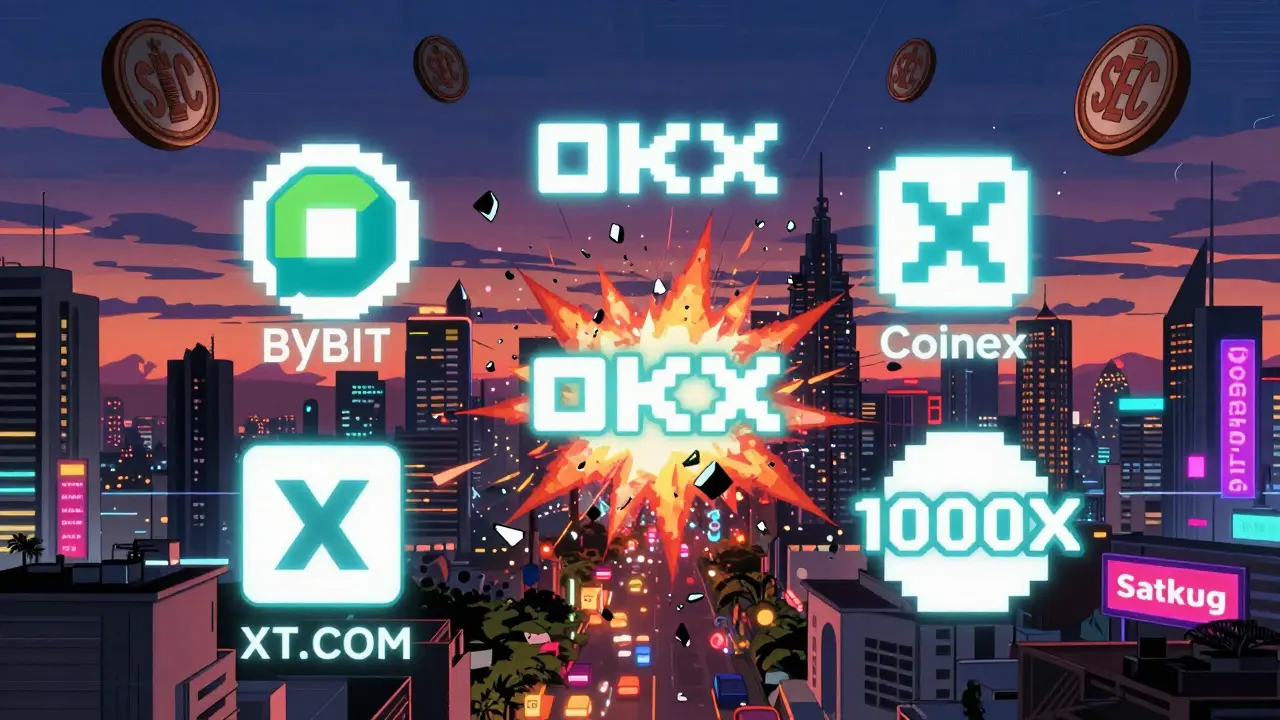
Thailand Bans Foreign P2P Crypto Platforms in 2025 Regulatory Crackdown
Thailand banned foreign P2P crypto platforms like Bybit and OKX in June 2025, requiring all trading to go through licensed local exchanges. The move aimed to stop scams and money laundering but left users scrambling to withdraw funds.