Crypto Asset Transfer Calculator
Transfer Impact Calculator
Calculate estimated fees and time when moving crypto assets from banned foreign exchanges to licensed Thai platforms as per Thailand's 2025 regulatory crackdown.
Based on Thailand's 2025 regulations requiring licensed exchanges only. Fees reflect current industry standards.
Estimated Transfer Fee
-
Estimated Processing Time
-
Total Received
-
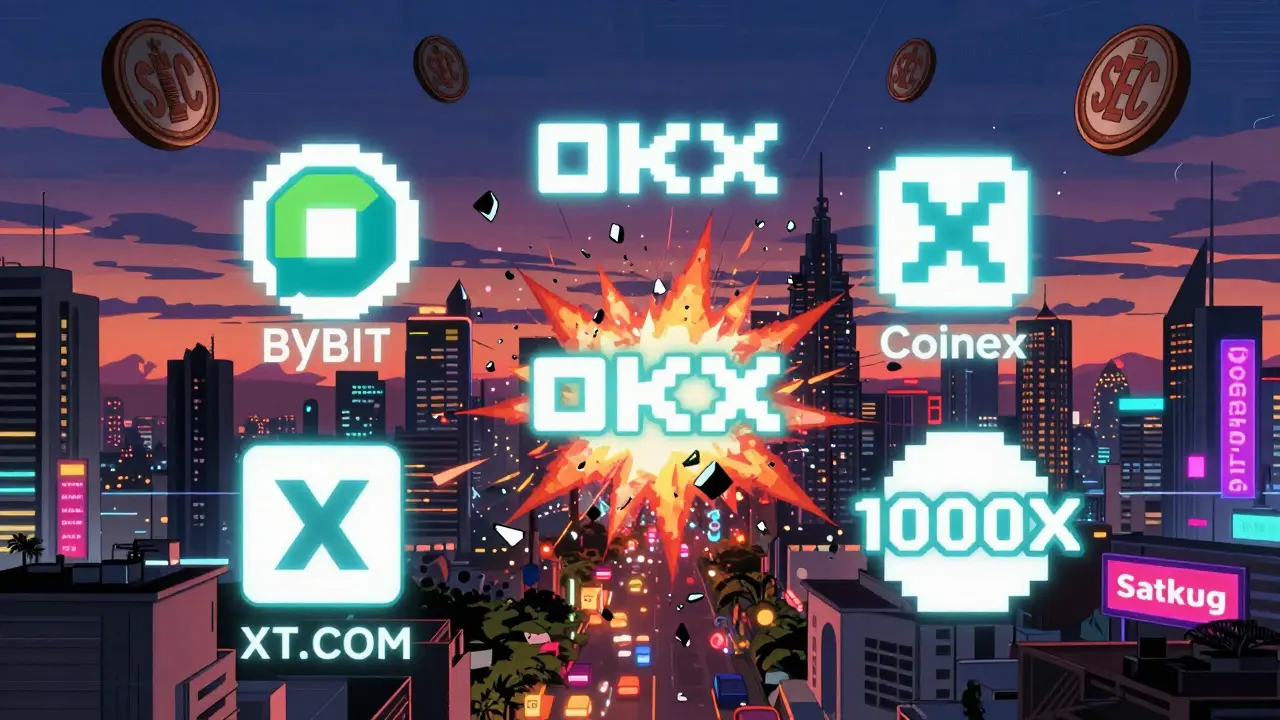
On June 28, 2025, five major foreign cryptocurrency exchanges-Bybit, 1000X, CoinEx, OKX, and XT.COM-were completely blocked in Thailand. No warning. No grace period beyond a one-month notice. Just a hard stop. This wasn’t a random enforcement action. It was the final step in a carefully planned regulatory shutdown targeting unlicensed foreign peer-to-peer (P2P) crypto platforms operating in Thailand. The Thai Securities and Exchange Commission (SEC) didn’t just tighten rules. They rewrote them.
Why Thailand Moved So Hard
Thailand didn’t ban crypto. It banned unlicensed foreign platforms. The difference matters. Trading crypto is still legal in Thailand-but only through exchanges that hold a Thai SEC license. Foreign platforms like Bybit and OKX had been serving Thai users for years without ever applying for a license. They operated in a gray zone: accessible, popular, and legally exposed. The SEC’s main concern? Money laundering and online scams. According to official reports, unregulated P2P platforms were being used to move stolen funds, run phishing schemes, and launder proceeds from fraud. With no KYC checks, no transaction reporting, and no accountability, these platforms became magnets for criminals. The Thai government estimated that over 60% of crypto-related financial crimes in 2024 originated from unlicensed foreign platforms. The response was swift. In April 2025, the Thai Cabinet approved two Royal Decrees. The first, the Royal Decree on the Operation of Digital Asset Businesses (No. 2), made it illegal for any foreign crypto platform to target Thai users without a license. The second, the Royal Decree on Measures to Prevent and Suppress Technology Crimes (No. 2), gave the Ministry of Digital Economy and Society (MDES) the power to block websites without a court order. That last part was key. No more waiting for judges. If a platform was flagged, MDES could shut it down in hours.Who Got Blocked and Why
The five blocked platforms weren’t chosen randomly. They were the most popular among Thai users. Bybit and OKX alone had over 1.2 million active Thai accounts combined. CoinEx and XT.COM were growing fast, especially among younger traders looking for low fees and high leverage. 1000X, a lesser-known but aggressive P2P broker, was flagged for facilitating anonymous cash trades with no identity verification. All five shared the same violation: they operated as digital asset exchanges under Thailand’s Digital Asset Business Act but refused to register. They claimed they weren’t targeting Thai users. But their websites were in Thai, they ran ads on Line and Facebook Thailand, and their customer support responded to Thai-language queries. The SEC called it “de facto targeting.” The courts agreed. The shutdown wasn’t just about blocking websites. The SEC also ordered Thai banks and telecom providers to cut off payment channels to these platforms. If you tried to deposit money via PromptPay or AIS Wallet to Bybit after June 28, the transaction was automatically rejected. Your bank could even be held liable if they ignored repeated warnings about suspicious activity.The One-Month Deadline That Caused Chaos
On May 29, 2025, the SEC announced the ban would take effect on June 28. One month to move your assets. Sounds fair? For most, it wasn’t. Thousands of users had large holdings on these platforms-some with over 5 million baht ($140,000 USD). With no official withdrawal window and no guidance on how to safely transfer assets to licensed exchanges, panic set in. Reddit threads filled with posts like: “Can I withdraw to a cold wallet before the block?” and “Is my USDT stuck forever?” Many rushed to withdraw. Others waited too long. Reports emerged of users losing access to funds when platforms suddenly froze withdrawals days before the deadline. Some claimed they were locked out after attempting to move large sums. The SEC didn’t intervene. Their stance: “It’s your responsibility to use licensed platforms.” The result? A wave of crypto withdrawals flooded Thai-licensed exchanges like Bitkub and Satang Pro. Bitkub’s daily trading volume jumped 300% in the final week of June. But even licensed exchanges struggled. Their servers crashed. Customer support lines were overwhelmed. The system wasn’t built for this kind of sudden influx.
What Happens to Your Crypto Now
If you held crypto on one of the banned platforms, you had two options: withdraw before June 28, or lose access. There was no third option. No government bailout. No recovery fund. The SEC didn’t help users move funds. They didn’t provide tools or instructions. They only warned: “Use licensed exchanges.” That meant if you had Bitcoin on OKX, you had to move it to Bitkub or another Thai-licensed platform before the deadline. Once the block was in place, the only way to access your assets was through the original platform’s website-which was now unreachable from Thailand. Some users tried using VPNs to log in. That’s risky. Under the new Technology Crimes Decree, using a VPN to access banned platforms can be considered aiding illegal activity. Fines of up to 300,000 baht ($8,700 USD) or up to three years in prison apply to anyone operating or assisting unlicensed platforms. The message was clear: if you want to trade crypto in Thailand, you play by Thai rules.Thailand’s Double Game: Ban Foreigners, Back Local Innovation
Here’s the twist: Thailand didn’t shut down crypto. It doubled down on its own version. While foreign platforms were being blocked, the government was quietly building its own digital asset infrastructure. On May 13, 2025, Thailand announced plans to issue up to 5 billion baht ($150 million) in government-backed digital tokens called “G Tokens.” These aren’t cryptocurrencies. They’re digital bonds-backed by Thai treasury debt-designed to be traded on a blockchain platform operated by the Bank of Thailand. The goal? To modernize public debt issuance and reduce reliance on traditional banking systems. The government also announced plans for a blockchain-based securities trading platform for Thai companies. Local startups are getting funding and regulatory sandboxes to build compliant DeFi tools. It’s a controlled experiment: ban the wild west, but build the future yourself.