Trading on Ethereum mainnet used to mean paying more in gas fees than the profit you’d make from a small swap. That reality has shifted dramatically with Layer 2 solutions, and SyncSwap v2 is a leading decentralized exchange protocol optimized for zero-knowledge rollup networks like zkSync Era. If you are looking to trade tokens efficiently without draining your wallet on transaction costs, SyncSwap v2 is likely at the top of your list. But does it live up to the hype across all its supported networks?
This review breaks down exactly how SyncSwap v2 works, where it shines, and where it might leave you hanging. We will look at the fee structures, the specific networks it supports, security considerations, and whether it is actually worth your time compared to other DeFi giants.
What Is SyncSwap v2 and Why Does It Matter?
At its core, SyncSwap is not just another copy-paste Uniswap clone. It was built natively for the zkSync Era ecosystem, which uses zero-knowledge rollup technology to scale Ethereum transactions. This native integration means the interface and smart contracts are optimized specifically for the quirks and benefits of zkSync, rather than being a generic port.
The "v2" designation refers to an upgrade in the protocol’s architecture. While the original version laid the groundwork, v2 introduced improved liquidity mechanisms and better user experience features. The goal? To create a one-stop-shop for DeFi that feels as easy to use as a centralized exchange but retains the self-custody benefits of decentralization.
Why should you care? Because SyncSwap has become the dominant player in its home ecosystem. According to data from DefiLlama, it commands roughly 37% of the zkSync DEX market share. When a single platform holds that much liquidity, it usually means tighter spreads and less slippage for traders. You get better prices because there is more money sitting in the pools waiting for you.
Network Support: It’s Not Just zkSync Anymore
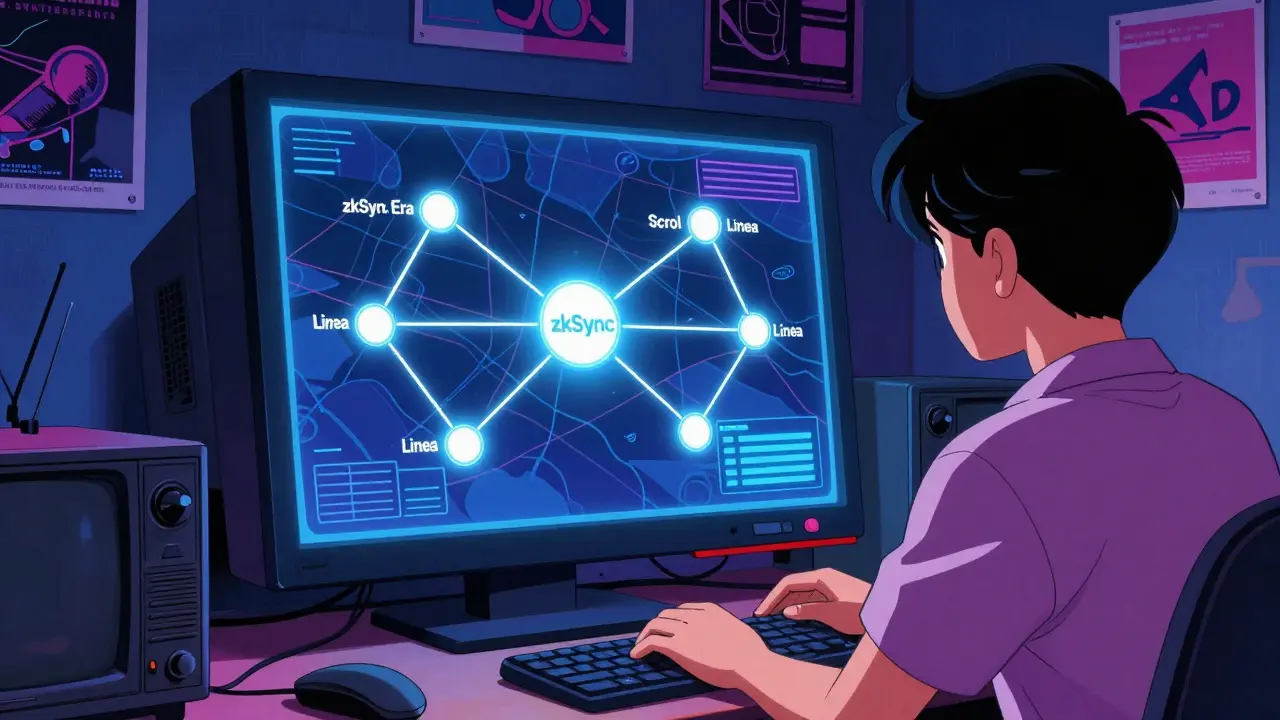
One of the biggest changes with SyncSwap v2 is its expansion beyond its roots. Initially tied strictly to zkSync Era, the protocol has deployed v2 versions on several other prominent Layer 2 networks. This multi-chain approach allows users to access similar functionality wherever their assets happen to be.
Here is where SyncSwap v2 currently operates:
- zkSync Era: The home turf. This is where the highest Total Value Locked (TVL) resides, often fluctuating between $60M and $80M. It offers the deepest liquidity and the most trading pairs.
- Scroll: A strong competitor in the L2 space. SyncSwap on Scroll has gained traction, particularly due to its aggressive fee structure.
- Linea: Supported by ConsenSys, Linea is another major L2 where SyncSwap has established a presence.
- Taiko & Sophon: Newer additions to the roster. However, activity here can be sporadic.
The key takeaway? Don’t assume every network performs the same. The zkSync Era deployment is the mature, high-volume engine. Other networks, like Sophon, have seen significantly lower activity. For example, data from mid-2025 showed the Sophon deployment had very limited trading pairs and minimal transaction volume. Always check the liquidity depth before swapping on a secondary network.
Fees and Costs: Where SyncSwap Shines
If there is one reason traders flock to Layer 2 exchanges, it is cost. On Ethereum mainnet, a simple swap could cost $10 or $50 depending on network congestion. On SyncSwap v2, those numbers drop drastically.
Gas fees on zkSync Era and Scroll are typically fractions of a cent. This makes micro-trading viable. You don’t need to move thousands of dollars to make a swap worthwhile; even small amounts remain profitable after fees.
But what about the protocol fees charged by SyncSwap itself? This varies by network:
| Network | Maker Fee | Taker Fee | Notes |
|---|---|---|---|
| Scroll | 0.00% | 0.00% | Highly competitive, ideal for high-frequency trading. |
| zkSync Era | Variable | Variable | Standard AMM fees apply, often around 0.3% for standard pairs. |
| Linea | Variable | Variable | Competitive rates aligned with industry standards. |
The zero-fee model on Scroll is a standout feature. If you are moving large volumes or executing frequent trades, the savings add up quickly. On zkSync Era, while you do pay a standard swap fee, the combination of low gas and deep liquidity still results in a total cost that is significantly lower than mainnet alternatives.
User Experience and Interface
Decentralized exchanges have historically been clunky. Connect wallet, approve token, wait for confirmation, hope the price doesn’t slip. SyncSwap v2 attempts to smooth this out.
The interface is clean and familiar if you have used Uniswap or SushiSwap. You select your input token, choose your output token, and set your slippage tolerance. The platform provides real-time quotes so you know exactly what you are getting before you confirm.
However, there are nuances. Because it is a non-custodial platform, you are responsible for managing your private keys. There is no customer support chat to reset a password. If you lose your seed phrase, your funds are gone. This is standard for DeFi, but it is a critical distinction from centralized exchanges like Coinbase or Binance.
Web traffic analysis suggests users find the platform relatively engaging. On the Scroll deployment, for instance, users spend an average of over two minutes per session, visiting multiple pages. This indicates that users are not just bouncing off immediately; they are exploring pools, checking prices, and interacting with the platform.
Security and Trust: What You Need to Know
When you deposit money into any smart contract, security is paramount. SyncSwap operates as an open-source protocol. This means its code is public and can be audited by anyone. Transparency is a double-edged sword: it builds trust when the code is solid, but it also exposes vulnerabilities if they exist.
SyncSwap has undergone audits, but remember that audits are snapshots in time. They do not guarantee future safety. The platform relies on the security of the underlying Layer 2 networks. If zkSync Era or Scroll suffers a catastrophic bridge hack or consensus failure, assets on SyncSwap could be at risk.
Regulatory status is another factor. SyncSwap is not regulated by any government authority. This is typical for decentralized protocols but means there is no legal recourse if something goes wrong. You are operating in a permissionless environment. The CoinGecko trust score for certain deployments, like the Sophon version, has been rated as "medium," reflecting the experimental nature of newer network integrations.
Always verify the URL. Phishing sites targeting popular DEXs are common. Bookmark the official SyncSwap site and never click links from unsolicited emails or social media messages.
Liquidity and Trading Volume
Liquidity is lifeblood for a DEX. Without it, you face high slippage, meaning you get fewer tokens than expected when you swap. SyncSwap v2 on zkSync Era boasts a TVL of nearly $64 million. While this pales in comparison to Uniswap’s billions, it is substantial for a Layer 2-specific exchange.
Cumulative trade volume exceeds $8 billion. This history of usage demonstrates that the platform can handle significant load. For major pairs like ETH/USDC or USDT/USDC, liquidity is deep enough for most retail and even some institutional-sized trades.
However, niche tokens may suffer. If you are trying to swap a low-cap meme coin on the Sophon or Taiko networks, you might find empty pools or wide spreads. Stick to the primary networks for exotic assets unless you are comfortable with the risk of impermanent loss and slippage.
Tokenomics and the SYNC Token
Many DeFi platforms launch governance tokens to incentivize usage. SyncSwap has confirmed the existence of 100 million SYNC tokens. This has generated significant speculation regarding potential airdrops.
Users have engaged in "airdrop farming," performing numerous swaps to qualify for future token distributions. While this boosts short-term volume, the development team monitors such activities closely. Be aware that relying on an unconfirmed airdrop as a strategy is risky. The value of the SYNC token, once launched, will depend on utility, demand, and broader market conditions.
For now, focus on the utility of the platform. Use it because the fees are low and the speed is high, not just because you hope for free tokens later.
Is SyncSwap v2 Right for You?
SyncSwap v2 is an excellent choice if you are already active on zkSync Era or Scroll. It offers a seamless, low-cost trading experience that rivals many centralized platforms. The zero-fee options on Scroll are particularly attractive for active traders.
It is less suitable if you are looking for a fully regulated environment with customer support. As a decentralized protocol, you are on your own. Additionally, if you primarily trade on Ethereum mainnet or Solana, SyncSwap is not the right tool. Stick to the networks it supports.
In the broader landscape of Layer 2 DeFi, SyncSwap v2 stands out for its native optimization and growing multi-chain footprint. It is not perfect, and newer networks require caution, but for efficient, cheap trading on zk-rollups, it is currently hard to beat.
Is SyncSwap v2 safe to use?
SyncSwap v2 is generally considered safe within the context of decentralized finance. It is an open-source protocol built on secure Layer 2 networks like zkSync Era. However, like all DeFi platforms, it carries risks related to smart contract vulnerabilities and the security of the underlying blockchain. Always ensure you are connecting to the official website and never share your private keys.
Does SyncSwap charge fees?
Yes, but they vary by network. On Scroll, SyncSwap v2 currently offers 0% fees for both makers and takers. On zkSync Era, standard AMM fees apply, typically around 0.3% for common pairs. Gas fees on these Layer 2 networks are negligible compared to Ethereum mainnet.
Which networks does SyncSwap v2 support?
SyncSwap v2 is available on zkSync Era, Scroll, Linea, Taiko, and Sophon. The zkSync Era deployment has the highest liquidity and activity, while newer networks like Sophon may have limited pairs and lower volume.
Will SyncSwap have an airdrop?
The platform has confirmed 100 million SYNC tokens exist, leading to speculation about an airdrop. However, no official date or criteria have been finalized. Users should trade based on utility rather than solely hoping for a token distribution.
How does SyncSwap compare to Uniswap?
Uniswap is a multi-chain giant with massive liquidity across Ethereum mainnet and various L2s. SyncSwap is specialized for zk-rollups, particularly zkSync Era. SyncSwap often offers lower gas fees and deeper liquidity within its specific ecosystems, making it a better choice for users focused on those networks.