
Impermanent Loss Calculator
Ever wonder why people keep tossing crypto into a pool and still end up with extra money? The answer lies in liquidity provision-a core DeFi mechanic that lets you earn a cut of every trade without lifting a finger.
What is Liquidity Provision?
Liquidity provision is a process where users lock pairs of crypto assets into a smart‑contract‑based pool so traders can swap tokens instantly. In return, the pool mints LP token representing your share of the pool. Every time someone trades, a small fee (usually 0.05%‑0.3%) gets pooled and split among all LP token holders proportional to their stake.
How Automated Market Makers (AMMs) Make It Work
Automated Market Maker (AMM) algorithms replace order books with a mathematical formula that constantly balances token ratios. The most common formula is the constant‑product model (x·y = k) first popularized by Uniswap. When a trader swaps ETH for USDC, the AMM automatically adjusts prices by pulling ETH out and pushing USDC in, keeping the product of the reserves constant.
Choosing the Right Platform
Not all AMMs are created equal. Fees, incentive structures, and supported pairs differ widely. Below is a quick comparison of the most used platforms as of 2025.
| Platform | Base Trading Fee | Typical Reward Token | Special Feature |
|---|---|---|---|
| Uniswap | 0.30% | UNI | Concentrated liquidity (V3) |
| SushiSwap | 0.25% | SUSHI | On‑chain limit orders |
| Curve Finance | 0.04% (stable‑coin pairs) | CRV | Optimized for low slippage on stablecoins |
| Balancer | 0.10% (varies by pool) | BAL | Multi‑token pools (up to 8 tokens) |
Step‑by‑Step: How to Provide Liquidity
- Connect a wallet (MetaMask, Phantom, or WalletConnect) to the chosen AMM.
- Select a trading pair. For beginners, stable‑coin pairs like USDC/DAI keep price risk low.
- Approve the smart contract to spend each token. This is a one‑time transaction (gas fee applies).
- Enter the amount you want to deposit. Most interfaces auto‑calculate the required equal‑value amount for the second token.
- Confirm the deposit. You’ll receive an LP token that tracks your share.
- Monitor the pool’s performance via the dashboard. Fees accrue in real‑time and can be claimed or reinvested.
That’s it - you’re now a Liquidity provider (LP) earning a slice of every swap.
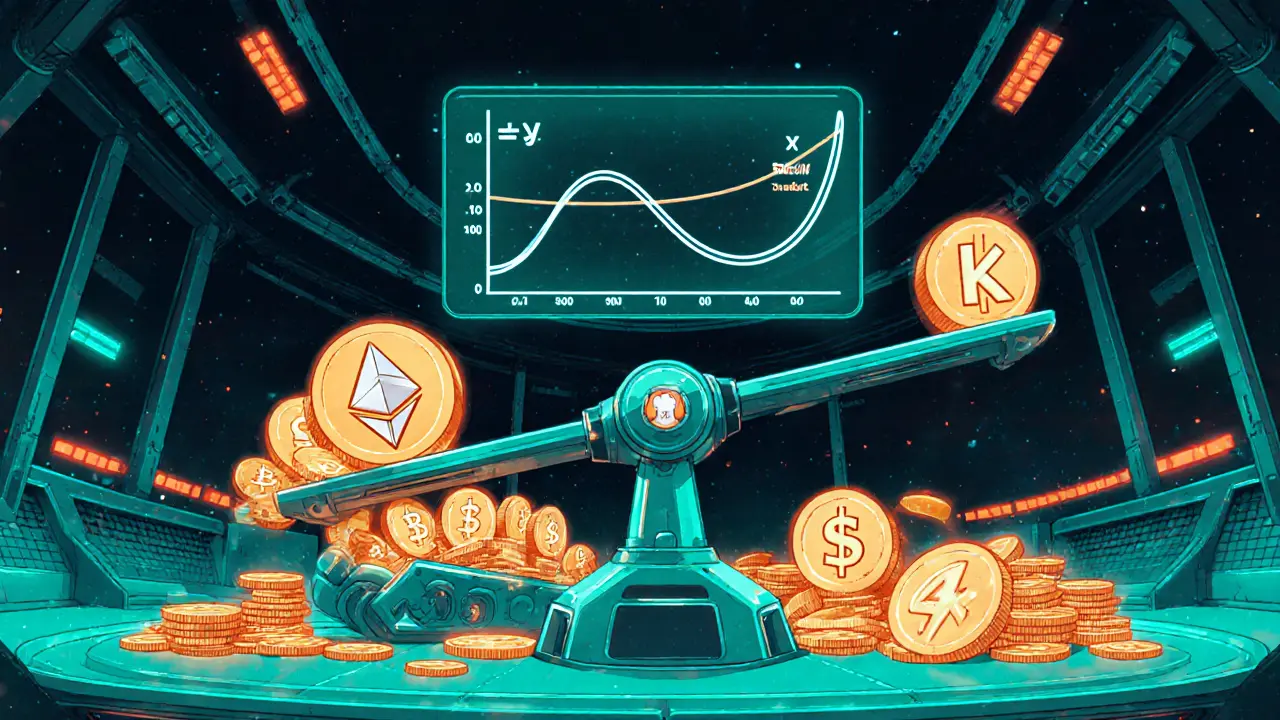
Understanding and Managing Impermanent Loss
Impermanent loss occurs when the price ratio between the two pooled tokens drifts away from the ratio at deposit. The AMM rebalances by selling the appreciating asset and buying the depreciating one, which can leave you with a lower combined value than if you’d simply held the assets.
Typical loss scenarios:
- If one token doubles in price relative to its pair, the loss is roughly 5.7%.
- High volatility pairs (e.g., ETH/BTC) generate bigger fees but also higher loss risk.
- Stable‑coin pairs usually see < 0.1% loss over a year because price ratios stay tight.
The loss becomes permanent only when you withdraw. To offset it, ensure the pool’s fee earnings (plus any extra token rewards) exceed the calculated loss over your holding period.
Boosting Returns: Yield Farming and Concentrated Liquidity
Beyond the base trading fee, many protocols reward LPs with their native governance tokens. This practice is called Yield farming. For example, staking your UNI‑LP tokens on a separate farm can add another 10‑30% APY.
Uniswap V3 introduced Concentrated liquidity, letting you lock funds within a custom price range instead of across the entire curve. By focusing capital where most trades occur, you can earn up to 10× more fees, but you must actively adjust the range as market prices move.
Key tips for advanced LPs:
- Use analytics dashboards like DeFiLlama or APY.vision to compare pool APRs.
- Combine base fees with token rewards for an “effective yield.”
- Allocate a portion of rewards to a “re‑balancing fund” for concentrated liquidity adjustments.
Tools, Tracking, and Automation
Manual monitoring can become tedious. Here are some go‑to tools for LPs:
- DefiPulse - real‑time TVL and pool performance.
- DeFiLlama - deep dive into fee structures and token incentives.
- Yearn Finance - automated vaults that auto‑compound LP rewards.
- Harvest Finance - strategy builder for multi‑chain LP farms.
Automation reduces gas costs on Layer‑2 networks (Polygon, Arbitrum) where transaction fees are a fraction of Ethereum’s base fee.

Common Pitfalls and How to Avoid Them
Even seasoned LPs slip up. Watch out for these traps:
- Under‑estimating gas. On Ethereum, a $100 deposit can cost $30‑$70 in gas during congestion. Consider Layer‑2 or Solana‑based pools (Raydium) for low‑fee entries.
- Choosing obscure pairs. Small pools have high fee percentages but dilute quickly, making it hard to recoup gas.
- Ignoring token approvals. Approve only the exact amount you plan to deposit; otherwise you expose yourself to unnecessary risk.
- Leaving rewards unclaimed. Most farms require manual claim; set calendar reminders.
Quick Checklist Before You Dive In
- Pick a reputable AMM (Uniswap, Curve, SushiSwap, Balancer).
- Choose a pair that matches your risk appetite (stable‑coins for low risk, correlated assets for moderate risk).
- Calculate expected fees vs. gas costs using a fee‑calculator tool.
- Understand impermanent loss formulas or use an online calculator.
- Consider staking LP tokens for extra yield if the platform offers farms.
Frequently Asked Questions
What is the minimum amount I need to start providing liquidity?
Most Ethereum‑based pools require at least $100‑$200 worth of each token to make the gas cost worthwhile. Layer‑2 solutions can drop this to under $10.
How are trading fees distributed to LPs?
Fees accumulate in the pool contract and are proportional to each LP’s share. When you withdraw, you receive your original tokens plus the earned fees.
Can I lose money as a liquidity provider?
Yes. Impermanent loss can outweigh fee earnings, especially in volatile pairs. Using stable‑coin pairs or adding token rewards can mitigate the risk.
What’s the difference between Uniswap V2 and V3 for LPs?
V2 spreads liquidity across the whole price curve, while V3 lets you concentrate it within a chosen price range, boosting capital efficiency but requiring active management.
How do I claim extra token rewards from yield farms?
Navigate to the farm’s dashboard, click ‘Claim’, and confirm the transaction in your wallet. Some platforms auto‑harvest weekly.
Liquidity provision can turn idle crypto into a steady income stream, but success hinges on smart pair selection, fee awareness, and vigilant risk monitoring. Start small, track results, and scale up as you get comfortable with the mechanics.


