P2P Crypto Savings Calculator
Send Money Savings Calculator
Calculate how much you could save by using P2P crypto versus traditional remittance services
Your Savings Breakdown
Based on Nigeria's P2P market data: 60-80% savings on international transfers
Example: $200 transfer saves you $16 with crypto
When most people think of countries leading in cryptocurrency use, they imagine Silicon Valley, Singapore, or Switzerland. But the real leader isn’t on any list of wealthy tech hubs-it’s Nigeria. In 2025, Nigeria tops the world in peer-to-peer (P2P) crypto trading volume, with over $59 billion in transactions between July 2023 and June 2024. That’s more than Germany, Japan, or Canada. And it’s not because Nigerians are gambling on Bitcoin. It’s because they have no other choice.
The Banking System Failed Them
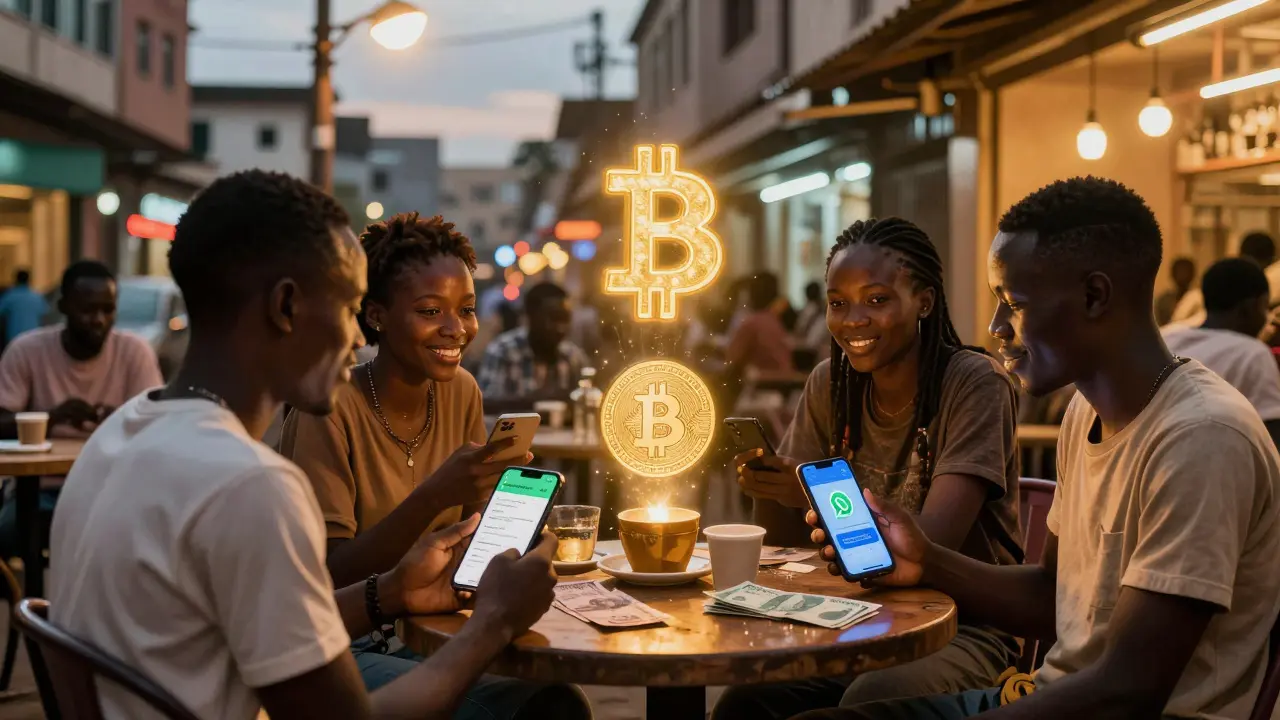
Nigeria’s crypto revolution didn’t start with investors or tech enthusiasts. It started with people trying to send money home, pay for imports, or save their earnings from inflation. By 2023, inflation hit 24%. The naira had lost over 75% of its value against the U.S. dollar since 2016. Banks refused to process crypto-related payments after the Central Bank of Nigeria (CBN) banned them in 2017. So Nigerians built their own system-outside the banks, outside the government, and often under the radar.They didn’t wait for permission. They used WhatsApp groups to find buyers and sellers. They met in cafes to swap cash for Bitcoin. They created informal escrow systems to avoid scams. Within years, Nigeria became the largest P2P crypto market in the world-not because it was easy, but because it was necessary.
How P2P Crypto Works in Nigeria
P2P crypto trading means buying and selling digital assets directly between people, not through an exchange. In Nigeria, this looks like:- A trader posts on Paxful or Binance P2P: “I’ll sell 0.5 BTC for 3 million Naira.”
- A buyer transfers naira to the seller’s bank account or mobile wallet.
- Once payment is confirmed, the seller releases Bitcoin from escrow.
This system bypasses traditional banks entirely. No wire fees. No 7-day delays. No “foreign exchange restrictions.” The average Nigerian saves 60-80% on international transfers compared to Western Union or MoneyGram. For a family sending $200 to a relative in the U.S., that’s $16 saved every time.
Bitcoin and USDT dominate trades, but Dash and Ripple are also popular. The naira-to-Bitcoin pair is the most traded in Africa. By 2020, Nigeria was already third globally in crypto volume. Today, it’s number one in P2P.
Why Nigeria Beats Other Countries
Other developing nations have high crypto use too-Vietnam, Argentina, Turkey. But none match Nigeria’s scale or depth. Here’s why:- 36% of adults are unbanked. They never had access to savings accounts, loans, or credit cards. Crypto gave them a financial identity.
- 22 million Nigerians use crypto-about 10% of the population. That’s higher than adoption rates in the U.S. or UK.
- Young population. Over 60% of Nigerians are under 25. They grew up with smartphones and social media. Crypto was just another app.
- Remittance dependence. Nigeria receives over $20 billion in remittances yearly. P2P crypto cuts costs and speeds up delivery.
It’s not just about money. It’s about control. When the government devalues your currency, you find a way to protect it. Crypto became a lifeline.

The Regulatory Shift That Changed Everything
For years, the CBN treated crypto like a threat. Banks blocked accounts. Exchanges were shut down. Traders were scared. But by late 2023, the government realized it couldn’t stop what it didn’t understand.The CBN reversed its ban. Licensed exchanges could now open bank accounts. The Investments and Securities Act of 2025 officially recognized crypto as a financial security. The Nigeria Inter-Bank Settlement System (NIBSS) partnered with Zone’s blockchain network to make interbank transfers faster and fraud-resistant.
This wasn’t surrender. It was adaptation. The government didn’t kill crypto-it started regulating it. And the market responded. Moniepoint, a fintech firm using crypto infrastructure, became Nigeria’s first unicorn with a $1 billion valuation after Google invested.
Challenges Still Exist
Nigeria’s crypto success isn’t flawless. Many users still face:- Scams. Early adopters were burned by Ponzi schemes like MMM and OneCoin. Trust takes time to rebuild.
- Volatility. Bitcoin’s price swings can wipe out savings overnight if you’re not careful.
- Security. Not everyone knows how to store private keys. Wallet hacks still happen.
- Regulatory uncertainty. Will the next government reverse course? No one knows.
But the community has learned. Telegram groups offer 24/7 support. YouTube tutorials explain wallet security in Hausa, Yoruba, and Igbo. Local meetups teach beginners how to avoid phishing scams. The learning curve is steep-but people are climbing it.

What This Means for the Rest of the World
Nigeria isn’t just using crypto. It’s redefining how finance works in economies where banks fail. Other countries are watching. Vietnam, Kenya, and Indonesia are copying Nigeria’s P2P model. The World Bank and IMF have started studying Nigeria’s crypto ecosystem as a case study in financial inclusion.What Nigeria proves is that when traditional systems collapse, people don’t wait for permission to innovate. They build. And they build better than the institutions ever did.
Today, Nigeria’s crypto economy grows over 100% every year. Analysts predict it will become Africa’s largest by transaction volume within two years. And if global regulators want to understand the future of money, they should stop looking at Wall Street. They should look at Lagos.
Getting Started with P2P Crypto in Nigeria
If you’re in Nigeria and want to try P2P crypto, here’s how to begin:- Choose a trusted platform: Quidax, Patricia, or Binance P2P.
- Complete identity verification (KYC)-it’s required by law now.
- Start with small trades. Buy $10-$20 worth of Bitcoin or USDT.
- Use escrow services. Never send money before receiving crypto.
- Store your crypto in a hardware wallet like Ledger or Trezor after a few trades.
- Join local Telegram or WhatsApp groups for tips and warnings.
It takes 2-4 weeks to feel comfortable. Three months to master advanced trading. But the payoff? Control over your money, lower fees, and access to the global economy.
Why is Nigeria #1 in P2P crypto adoption?
Nigeria leads because its traditional banking system failed to meet basic financial needs. With inflation over 24%, a collapsing naira, and banks blocking crypto transactions, millions turned to peer-to-peer trading to send money, save value, and access foreign currency. This necessity drove innovation, making Nigeria the largest P2P crypto market globally.
Is crypto legal in Nigeria?
Yes. In 2023, the Central Bank of Nigeria lifted its ban on banks servicing crypto businesses. The 2025 Investments and Securities Act officially recognized cryptocurrencies as financial securities. Licensed exchanges now operate legally, and crypto trading is fully permitted.
What cryptocurrencies do Nigerians use most?
Bitcoin and USDT (Tether) are the most traded. Bitcoin is used for savings and long-term value storage. USDT is preferred for daily transactions because it’s pegged to the U.S. dollar and avoids Bitcoin’s price swings. Dash and Ripple are also popular for faster, cheaper transfers.
How much money do Nigerians save using P2P crypto instead of banks?
Nigerians save 60-80% on international transfers. Traditional services like Western Union charge up to 8% per transaction. With P2P crypto, fees are often under 1%. For a $500 transfer, that’s $40 saved-money that goes straight into family savings or small business investments.
Can I get scammed using P2P crypto in Nigeria?
Yes, but scams are declining. Early users lost money to fake platforms like MMM and OneCoin. Today, trusted platforms use escrow systems. Always use verified sellers with high ratings. Never send money before receiving crypto. Join local crypto communities-they warn about new scams before they spread.
What’s next for crypto in Nigeria?
Nigeria is moving toward a hybrid model: grassroots P2P trading combined with regulated institutional infrastructure. The integration of blockchain with NIBSS is making interbank payments faster. More fintechs are adopting crypto. Analysts expect Nigeria to become Africa’s largest crypto economy by 2027. The next phase will be crypto-based lending, insurance, and payroll systems.


