
TajCoin Investment Risk Calculator
⚠️ Critical Warning
TajCoin has a market cap under $125,000 with daily trading volume under $100. This indicates extremely low liquidity, making it virtually impossible to sell without crashing the price. The article states this is likely a pump-and-dump scheme with no real development or use case.
Your Risk Assessment
Estimated Cost: $0.00
Estimated Sell Impact: 100% price crash
TajCoin (TAJ) is a little-known cryptocurrency that exists in a gray zone between obscure digital asset and potential scam. With a market cap under $125,000 and trading volumes so low they barely register, TajCoin isn’t something you’ll find in mainstream wallets or on major exchanges like Binance or Coinbase. But if you’ve stumbled across it online - maybe through a low-key social media post or a tiny crypto forum - you might be wondering: is this real? Is it worth anything? And why does no one seem to agree on how it even works?
What blockchain is TajCoin built on?
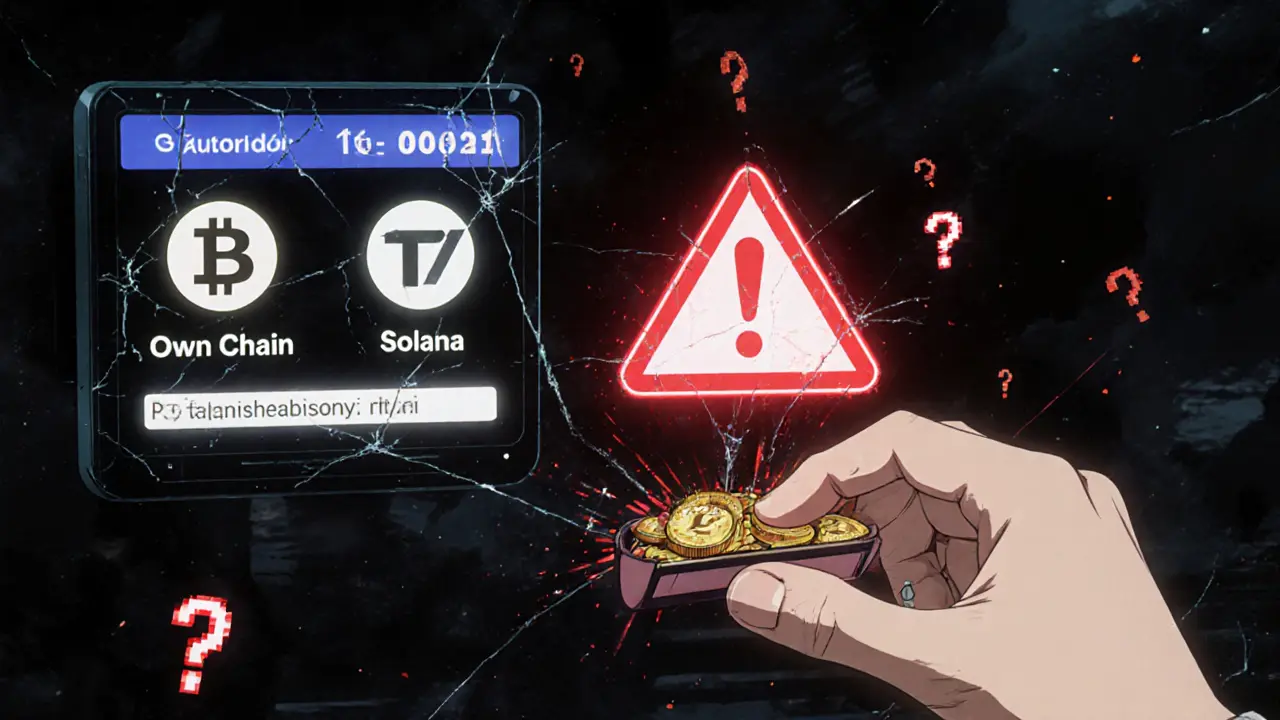
This is the first red flag. Different sources give completely different answers. The official TajCoin website claims it runs on its own blockchain - a public ledger using both proof of work and proof of stake. That sounds impressive, but there’s zero public evidence of this blockchain. No block explorer. No node list. No developer commits on GitHub. Nothing.
Meanwhile, CoinSwitch, a crypto aggregation platform, says TajCoin is actually a token built on Solana. That would mean it’s a SPL token, like millions of others on Solana’s network. But again, no official smart contract address is published. You can’t verify it. You can’t check its code. You can’t even confirm if the token exists on Solana’s blockchain at all.
And then there’s Tajoshi.com, which just says TajCoin operates on “a blockchain platform” - no details, no specifics. This isn’t transparency. It’s confusion by design. Real projects don’t leave their core technology ambiguous. They publish their whitepapers, their contract addresses, their GitHub repos. TajCoin doesn’t. And that’s not just sloppy - it’s dangerous.
Price and supply: Tiny numbers, big claims
As of late 2023, TajCoin’s circulating supply is listed as 34,722,385 TAJ tokens. That’s a fixed number. No more will be created. Sounds fair, right? But here’s the catch: the total value of all those coins combined is less than $125,000. That’s less than the cost of a modest used car.
The price hovers around $0.002 per TAJ. That’s two-tenths of a cent. You’d need over 500 coins just to make a dollar. And the trading volume? On most days, it’s under $100 across all exchanges. Compare that to Bitcoin, which trades over $20 billion daily. TajCoin’s volume is 0.0001% of that. What this means is simple: if you try to sell even 10,000 TAJ, you’ll likely crash the price. There are no buyers. Not enough to absorb any meaningful sell order.
There’s also a strange pattern in the price history. TajCoin’s all-time high was $0.03656 - over 15 times its current price. That’s a 93.7% drop. But here’s the twist: over the past year, it’s risen 331%. Sounds great, right? Except when you realize it started from a price of $0.0005. A 331% gain from half a mill is still just $0.0022. It’s not growth. It’s a rebound from near-zero.
Where can you buy TajCoin?
You won’t find TajCoin on any major exchange. It’s listed on MEXC Global, LBank, and a synthetic market on Investing.com. That’s it. No Kraken. No KuCoin. No Binance. These are small, low-regulation platforms that list hundreds of micro-cap tokens with no real scrutiny. They’re not trusted. They’re not safe.
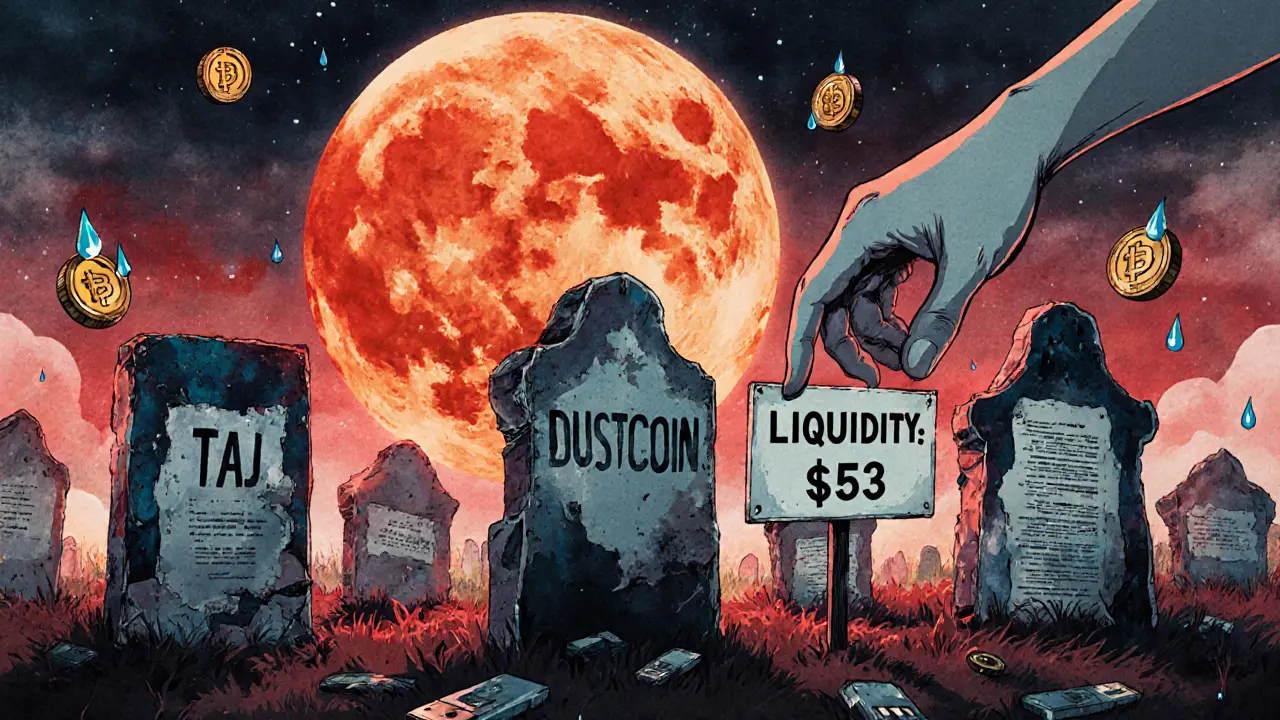
Even on those exchanges, trading is nearly nonexistent. LBank shows a price, but the 24-hour volume is $53.29. That’s less than what you’d spend on a coffee in New York. If you try to buy 100,000 TAJ, you’ll likely end up paying double or triple the listed price because there’s no liquidity. And if you try to sell? You might not find a buyer at all.
Wallets and storage: No clear answer
If you somehow get TAJ, where do you put it? The website mentions Slavi.io - a multi-chain DeFi wallet - as an integration partner. But there’s no official guide on how to connect TAJ to Slavi.io. No tutorial. No contract address. No support page.
Some sources suggest you might be able to store it in a Solana wallet like Phantom or Solflare, assuming it’s an SPL token. But again - no contract address to verify. Others say you need a custom TajCoin wallet. No such thing exists publicly. This isn’t just inconvenient. It’s a security nightmare. You could send your coins to the wrong address and lose them forever, with no way to recover them.
Who’s behind TajCoin?
No team. No whitepaper. No LinkedIn profiles. No Twitter account with verified followers. No Telegram group with active members. No GitHub commits. No Discord server. Nothing.
Most legitimate crypto projects have at least a skeleton crew: a founder, a few developers, maybe a community manager. TajCoin has none. The website is bare-bones. The domain was registered in 2021. There’s no history of updates. No blog posts. No announcements about new features. Just a static page and a price chart.
The lack of transparency here isn’t accidental. It’s textbook for a “pump and dump” scheme. The creators likely created the token, listed it on a small exchange, posted vague marketing on Reddit or Telegram, and waited for newbies to buy in. Once the price rose a little, they sold their holdings and disappeared. The coin’s 331% yearly gain? That’s not innovation. That’s a dead coin bouncing off the bottom.
Is TajCoin a scam?
It’s not labeled as a scam by any official watchdog. But it ticks every box for one:
- No verifiable blockchain
- No development team
- No active community
- No clear use case
- Extremely low liquidity
- Contradictory technical claims
- Price spikes that match pump-and-dump patterns
There’s no evidence TajCoin is being used for payments, DeFi, or any real-world service. No merchants accept it. No apps integrate with it. It exists only as a ticker on a few obscure exchanges. That’s not a cryptocurrency. That’s a digital IOU with no backing.
Why does TajCoin still exist?
Because crypto markets are wild. There are over 25,000 tokens out there. Most will fail. Many are outright scams. TajCoin survives because there’s always someone new to crypto who doesn’t know how to read the signs. Someone who sees “331% gain” and thinks, “This could be the next Bitcoin.”
It also survives because exchanges make money listing tokens. They don’t care if the token has value. They care if people trade it - even if it’s just a few dollars a day. They take fees on every buy and sell. TajCoin gives them that.
And for the creators? If they ever held any coins - and they almost certainly did - they’ve long since cashed out. The coin you see now is a ghost.
Should you invest in TajCoin?
No.
Not because it’s definitely a scam - though the odds are high. But because even if it’s real, it has no future. No team to improve it. No demand to sustain it. No liquidity to exit safely. You’re not investing. You’re gambling with money you can’t afford to lose.
If you’re new to crypto, stick to projects with clear teams, active development, and real adoption. Bitcoin. Ethereum. Solana. Even lesser-known coins with public GitHub repos and community forums are safer bets.
TajCoin? It’s a digital ghost. And ghosts don’t pay dividends. They just haunt your portfolio.
Is TajCoin (TAJ) a real cryptocurrency?
TajCoin exists as a token on a few small exchanges, but its technical foundation is unclear. Some sources say it runs on its own blockchain; others say it’s built on Solana. No public blockchain explorer, smart contract, or developer activity confirms either claim. Without verifiable infrastructure, it’s not a real cryptocurrency in the traditional sense - more like a speculative ticker with no backing.
Can I buy TajCoin on Coinbase or Binance?
No, TajCoin is not listed on Coinbase, Binance, Kraken, or any other major exchange. It’s only available on small, low-regulation platforms like MEXC and LBank. These exchanges often list hundreds of low-quality tokens with minimal oversight. Buying TajCoin means dealing with high risk and almost zero liquidity.
Why is TajCoin’s price so low?
TajCoin’s price is low because demand is nearly nonexistent. With a market cap under $125,000 and daily trading volume under $100, there are almost no buyers. The price reflects zero real-world use. Any recent price increases are likely due to small, speculative trades - not growth in adoption or utility.
Is TajCoin a scam or a pump-and-dump?
TajCoin shows all the hallmarks of a pump-and-dump scheme: no team, no development, contradictory tech claims, extremely low liquidity, and a price history that spikes briefly before crashing. The 331% annual gain sounds impressive, but it started from a near-zero base. The real value was likely taken out by early holders before most investors even knew the coin existed.
Can I store TajCoin in MetaMask or Phantom?
There’s no official confirmation. If TajCoin is an SPL token on Solana, you *might* be able to store it in Phantom. But without a verified contract address, adding it manually is risky. You could send your coins to the wrong address and lose them permanently. There is no known TajCoin wallet, and no guide exists for safe storage.
What’s the future of TajCoin?
The future is bleak. TajCoin has no active development, no community, no roadmap, and no clear purpose. Cryptocurrencies with market caps under $1 million and trading volumes under $100 per day rarely survive more than a year. Without transparency or utility, TajCoin will likely fade into obscurity - like thousands of other micro-cap tokens before it.
If you’re considering TajCoin, ask yourself: why would anyone build a cryptocurrency with no team, no code, and no users? The answer isn’t innovation. It’s exploitation. And you don’t want to be the one left holding the bag.


