
Remember the summer of 2021? That was when everyone seemed to be talking about buying digital sneakers. It felt like the next big thing in fashion and finance had finally collided. At the center of this hype stood a project called ShoeFy, which promised to revolutionize how we view footwear through blockchain technology. But fast forward to today, May 2026, and the landscape looks very different. The hype has cooled, the prices have shifted dramatically, and many investors are left asking: what actually happened to ShoeFy?
If you are looking at your portfolio or just curious about this specific coin, you need more than just a price chart. You need to understand the mechanics behind the dual-token ecosystem combining fungible tokens and non-fungible collectibles. This guide breaks down exactly what ShoeFy is, how it works, where the money went, and whether there is any life left in this project after five years of market turbulence.
The Core Concept: Digital Sneakers Meets DeFi
At its heart, ShoeFy Protocol was designed as a hybrid platform. It didn't just want to sell pictures of shoes; it wanted to create an economy around them. The platform operates on two main pillars: the utility token, known as $SHOE, and the collectible assets, known as sNFTs.
The $SHOE token is an ERC-20 token built on the Ethereum blockchain. Think of this as the currency used within the ShoeFy universe. You use it to buy, sell, and stake. On the other side, you have the sNFTs (semi-fungible Non-Fungible Tokens). These are algorithmically generated digital sneakers. Each one is unique, created by code rather than a human artist drawing every detail. The idea was that these digital kicks would hold value based on their rarity, similar to how limited-edition Jordans or Yeezys work in the physical world.
What made ShoeFy stand out initially was its attempt to solve a major problem in the NFT space: liquidity. Usually, if you own an NFT, you have to list it on a marketplace and wait for someone to buy it. ShoeFy introduced a mechanism where users could provide liquidity using pairs of $SHOE tokens and sNFTs. This allowed traders to swap their digital shoes for cash (in the form of SHOE tokens) instantly, without waiting for a buyer. It sounded like a brilliant solution to the "stuck asset" problem that plagues most NFT collections.
How the Dual-Token Ecosystem Works
To understand the value proposition, you have to look at how these two components interact. The system relies on a cycle of staking and farming.
- Staking sNFTs: If you own a digital sneaker (an sNFT), you can lock it up in the protocol. In return, you earn passive income paid out in $SHOE tokens. This incentivizes holding onto the collectibles rather than selling them immediately.
- Farming with $SHOE: Conversely, if you hold the $SHOE token, you can stake it to "farm" new sNFTs. This means you might get a random digital shoe added to your wallet. The rarity of the shoe depends on chance and the specific pool you are farming in.
- Liquidity Provision: Advanced users can pair their $SHOE tokens with sNFTs to provide liquidity to the decentralized exchange. They earn fees from trades executed against their pool. This creates a self-sustaining market for the assets.
This model was ambitious. It tried to merge the speculative nature of crypto trading with the collection culture of sneakers. However, complexity often brings risk. For the average user, understanding the difference between an ERC-20 token and an ERC-721 NFT, let alone managing liquidity pools, presents a steep learning curve.
Historical Context: The 2021 Boom and Bust
You cannot evaluate ShoeFy today without looking at its launch. The project kicked off its Initial DEX Offerings (IDOs) in October 2021. This was the peak of the NFT bull run. People were throwing money at anything related to Bored Apes or digital art. ShoeFy rode this wave aggressively.
The team conducted three funding rounds between October 12 and October 20, 2021. Here is how the money flowed:
| Date | Price per Token | Amount Raised |
|---|---|---|
| Oct 12, 2021 | $0.40 | $70,000 |
| Oct 13-14, 2021 | $0.40 | $142,500 |
| Oct 19-20, 2021 | $0.40 | $50,000 |
While the direct IDO raised a modest amount, the total capital raised across all phases reportedly hit $8.37 million. The initial price was set at $0.40 per token. From there, the price skyrocketed. Driven by FOMO (Fear Of Missing Out) and aggressive marketing, the token reached an all-time high of approximately $1.72. For early buyers, this looked like a goldmine. The ROI peaked at nearly +98% from the launch price.
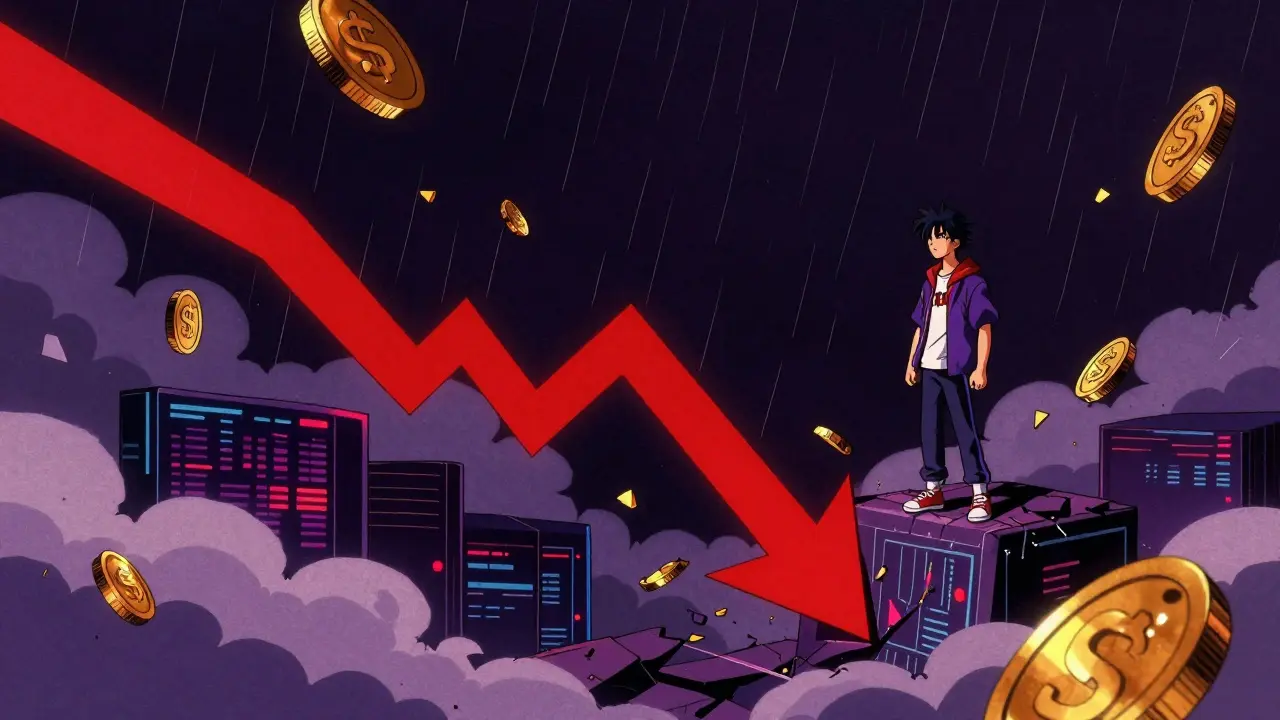
But crypto markets are cyclical. As 2022 approached, the broader market turned bearish. Bitcoin dropped, Ethereum gas fees became prohibitive for small transactions, and interest in niche NFT projects evaporated. ShoeFy, being a specialized play on a narrow theme, suffered disproportionately. Without major exchange listings or a massive active user base, the volume dried up. The price fell, and it kept falling.
Current Market Status: Where Is SHOE Today?
As of May 2026, the reality for ShoeFy holders is starkly different from the 2021 headlines. The token has lost the vast majority of its value. Current data shows the price hovering between $0.001072 and $0.001164 USD. Let that sink in. From a high of over $1.70, it is now trading for fractions of a cent.
Here are the key metrics defining its current position:
- Market Cap: Approximately $13,900 to $15,144 USD. This places ShoeFy in the lower tier of tracked cryptocurrencies, ranked around #3428 on aggregators like CoinMarketCap.
- Fully Diluted Valuation (FDV): Around $107,300. This suggests that even if all 100 million tokens were in circulation, the total value would remain relatively low compared to major projects.
- Circulating Supply: About 13.01 million tokens out of a maximum cap of 100 million.
- ROI from IDO: -99.7%. If you bought at the $0.40 launch price, you have lost virtually all your investment.
The lack of listing on major centralized exchanges like Binance or KuCoin is a significant hurdle. Most users today trade SHOE on decentralized platforms or smaller venues, which limits liquidity and increases volatility. You can find the contract addresses for Ethereum (0x0fD67B9A77032c9) and BNB Smart Chain (0xc0f42b9bc), but finding a reliable place to trade large volumes is difficult.
Risks and Challenges Facing the Project
Investing in or interacting with ShoeFy right now comes with substantial risks. It is crucial to look beyond the whitepaper promises and examine the operational realities.
1. Liquidity Crisis
The 24-hour trading volume sits between $9,921 and $18,788. While this sounds like a number, for a crypto asset, it is quite low. Low volume means you might not be able to sell your tokens quickly without crashing the price further. It also makes the token susceptible to manipulation by "whales" who hold large portions of the supply.
2. Niche Appeal
Unlike OpenSea, which hosts millions of different types of NFTs, or Axie Infinity, which built a global gaming community, ShoeFy focused strictly on digital shoes. When the novelty of "crypto sneakers" wore off, the user base shrank. There is no broad utility driving demand for SHOE tokens outside of the ShoeFy ecosystem itself.
3. Development Activity
Community feedback indicates that development updates have slowed significantly. The roadmap mentioned expanding into gaming and metaverse partnerships with fashion brands. However, there is little public evidence of these partnerships materializing. Without active development and new features, user engagement tends to drop.
4. Security Audits
On the positive side, the smart contracts were audited by CertiK, a reputable security firm. This provides some assurance that the code itself doesn't contain obvious backdoors. However, an audit only checks the code at a specific point in time; it does not guarantee the long-term viability of the business model.
Is There Any Future for ShoeFy?
So, is ShoeFy dead? Not necessarily, but it is in critical condition. For a project like this to recover, several things would need to happen simultaneously. First, the broader NFT market needs to experience another massive bull run, specifically favoring collectibles. Second, ShoeFy would need to secure a listing on a top-tier exchange to bring in fresh liquidity and credibility. Third, the team would need to deliver on its promise of integrating with real-world fashion brands or successful gaming ecosystems.
Currently, the competition is fierce. Projects like Decentraland and The Sandbox have moved far ahead in the metaverse space. Gaming tokens like AXS and IMX have established stronger economies. ShoeFy is fighting an uphill battle to regain relevance in a crowded field.
If you are holding SHOE tokens from the early days, you are likely sitting on significant unrealized losses. Selling now locks in those losses, but holding requires faith in a turnaround that has yet to show signs of happening. If you are new to the project, consider why you are entering. Are you betting on a meme revival? Or do you genuinely believe in the utility of digital shoe collectibles? Be honest with yourself about the risk.
Practical Steps for Users
If you decide to interact with the ShoeFy platform despite the risks, here is what you need to know practically.
- Wallet Setup: You will need a Web3 wallet like MetaMask. Ensure you add both the Ethereum network and the BNB Smart Chain network, as SHOE exists on both.
- Security First: Always verify contract addresses directly from official sources. Scammers often create fake tokens with similar names. Double-check the checksum of the address before connecting your wallet.
- Start Small: Given the low liquidity, never invest more than you can afford to lose completely. The slippage on trades can be high, meaning you might get less than expected when selling.
- Monitor Community Channels: Since documentation is sparse, keep an eye on any remaining Discord or Telegram channels for announcements. However, be wary of unofficial groups that may promote scams.
What is the current price of SHOE token?
As of May 2026, the SHOE token trades between $0.001072 and $0.001164 USD. This represents a decline of over 99% from its all-time high of $1.72.
Is ShoeFy still active?
The platform technically remains online, but activity levels are very low. Trading volumes are minimal, and there have been few major development updates recently. It is considered a low-tier project in the current market.
Can I buy SHOE on Binance or Coinbase?
No, ShoeFy is not listed on major centralized exchanges like Binance, Coinbase, or KuCoin. You must trade it on decentralized exchanges (DEXs) using a Web3 wallet, which carries higher risks and complexity.
What are sNFTs in ShoeFy?
sNFTs are semi-fungible Non-Fungible Tokens representing unique digital sneakers. They are algorithmically generated and can be staked to earn $SHOE tokens or traded for liquidity within the platform.
Is ShoeFy safe to use?
The smart contracts were audited by CertiK, which adds a layer of technical security. However, the financial risk is extremely high due to the token's low value, low liquidity, and lack of major exchange support. Always exercise caution.
What is the total supply of SHOE tokens?
The maximum total supply of SHOE tokens is capped at 100 million. Currently, approximately 13.01 million tokens are in circulation.