
You might have stumbled upon LFGSwap Finance (LFG) while scrolling through a list of low-cap coins or digging into the Arbitrum ecosystem. The name sounds familiar to anyone who followed the DeFi boom of 2021-2023, but the reality behind this specific token is starkly different from its more famous cousin. So, what exactly is LFGSwap Finance on Arbitrum, and why is it trading at fractions of a cent? This guide cuts through the noise to give you the raw data, the history, and the risks associated with holding or buying LFG.
The Core Concept: Solving the Liquidity Fragmentation Problem
To understand what LFGSwap Finance claims to be, we have to look at the problem it set out to solve. In the world of Decentralized Finance (DeFi), liquidity fragmentation is a major headache. When users spread their money across dozens of different protocols, it becomes hard for traders to find deep enough pools to execute large orders without slipping the price.
LFGSwap positions itself as an aggregator that connects these disparate forms of liquidity. Unlike traditional exchanges that just match buyers and sellers, LFGSwap aims to create broader network effects by intertwining multiple decentralized markets. The idea is to build a single interface where various instruments can interact seamlessly. However, there is a crucial distinction to make here. Do not confuse this project with Liquid Glass (LFG), the popular meme coin on Ethereum. They share the same ticker symbol but operate in completely different spheres. The LFG you are asking about lives on the Arbitrum blockchain, a Layer 2 scaling solution designed to make Ethereum transactions faster and cheaper.
Tokenomics and Supply Details
Before you consider any interaction with this token, you need to know the numbers. Here is the breakdown of the LFG token structure:
- Maximum Supply: Exactly 1 billion LFG tokens.
- Circulating Supply: Reported as 0 in many market data feeds, which often indicates a distribution pause, a vesting schedule, or simply a lack of active trading volume to register circulation accurately.
- Fully Diluted Valuation (FDV): Approximately $5,580 USD (as of early 2026).
- Smart Contract Address: 0xf7a0b80681ec935d6dd9f3af9826e68b99897d6d (on Arbitrum).
An FDV of under $6,000 for a project with a 1 billion supply cap tells a story of extreme devaluation. For context, if the price were to return to even $0.01, the market cap would jump to $10 million. The current metrics suggest that the vast majority of value has evaporated since the token's inception.
| Metric | LFGSwap Finance (LFG) | Typical Healthy DeFi Protocol |
|---|---|---|
| Price Range | $0.000005 - $0.000006 | $0.10 - $10.00+ |
| 24h Volume | $0 - $11 | $100k - $10M+ |
| Holder Count | ~17,610 | 50,000+ |
| Blockchain | Arbitrum | Ethereum / Arbitrum / Base |
Price History: From Hype to Dormancy
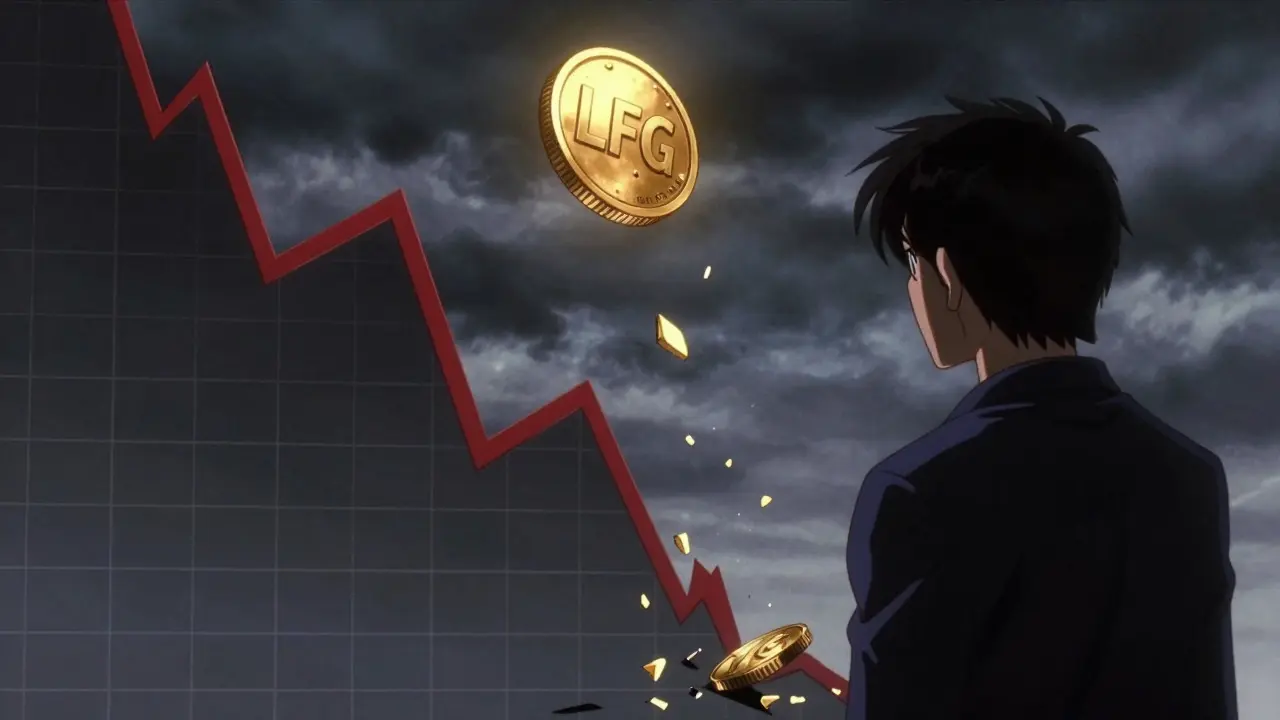
The trajectory of LFGSwap Finance is a classic example of the "boom and bust" cycle common in speculative crypto assets. Let’s look at the timeline:
- The Peak (March 2023): The token hit an all-time high (ATH) of $0.3344. During this period, interest in Arbitrum-based DeFi was surging, and many projects saw inflated valuations due to hype rather than utility.
- The Decline (2023-2025): As the broader crypto market cooled and investors shifted focus to established protocols like Uniswap or newer narratives like AI and RWA (Real World Assets), LFGSwap struggled to maintain relevance. The price began a steady downward trend.
- The Bottom (February 2026): Just weeks before our current date in August 2026, the token hit an all-time low (ATL) of $0.00005547. This represents a loss of over 99% from its peak.
- Current Status (August 2026): Trading around $0.000006. The volatility is minimal because there is almost no volume. A single buy order of $100 could move the price significantly, which is a hallmark of illiquid assets.
This drastic depreciation isn't just bad luck; it usually signals a lack of ongoing development, failed marketing efforts, or simply better alternatives emerging in the space. With a fully diluted valuation of only ~$5.5K, the project is effectively micro-cap status, bordering on zombie territory.
Risk Assessment: Is It Still Alive?
If you are considering buying LFG, you need to ask yourself: What is driving the value right now? Currently, the answer appears to be nothing substantial. Here are the red flags you should weigh heavily:
- Negligible Trading Volume: With daily volumes reported between $0 and $11, selling your tokens could be difficult. You might not find a buyer at the listed price, leading to significant slippage.
- Low Holder Activity: While 17,610 holders sound like a decent community, compare this to the 1 billion supply. Many of these addresses may belong to bots, dead wallets, or team members who haven’t moved funds in years.
- Lack of Recent Updates: Comprehensive research reveals a silence from the development team. There are no recent whitepaper updates, security audits, or roadmap milestones visible in public forums. In crypto, silence often equals abandonment.
- Competition: The liquidity aggregation space on Arbitrum is dominated by giants like Uniswap, the largest DEX by volume, and specialized aggregators like 1inch or CowSwap. These platforms have millions in TVL (Total Value Locked) and active developer teams. LFGSwap lacks the capital and user base to compete directly.
How to Check LFG Prices and Trade Safely
If you still want to track LFGSwap Finance or check if you hold any old tokens, here is how you do it safely:
- Use Reliable Trackers: Go to CoinMarketCap or CoinGecko and search for "LFGSwap Finance (Arbitrum)". Ensure you select the correct contract address:
0xf7a0b80681ec935d6dd9f3af9826e68b99897d6d. Mistaking it for the Ethereum-based Liquid Glass meme coin is a common error that leads to wrong portfolio calculations. - Check Decentralized Exchanges (DEXs): Since centralized exchanges (CEXs) rarely list such low-volume tokens, you will likely find LFG on DEXs operating on Arbitrum, such as SushiSwap or Camelot. Use a wallet like MetaMask connected to the Arbitrum network.
- Verify Liquidity Pools: Before swapping, check the depth of the LFG/USDT pool. If the pool size is less than $1,000, expect high fees and price impact. You might put in $50 and receive tokens worth only $40 after slippage.
Conclusion: A Cautionary Tale in DeFi
LFGSwap Finance serves as a reminder of the brutal nature of the cryptocurrency market. While its initial goal of solving liquidity fragmentation was valid, the execution failed to capture market share against stronger competitors. Today, it stands as a low-volume, low-value asset with negligible influence on the Arbitrum ecosystem. For most investors, the opportunity cost of holding LFG is too high compared to established DeFi blue-chips. Treat it as a speculative relic unless you see concrete signs of renewed development activity from the team.
Is LFGSwap Finance the same as Liquid Glass (LFG)?
No, they are completely different projects. Liquid Glass (LFG) is a popular meme coin primarily traded on the Ethereum mainnet. LFGSwap Finance is a DeFi protocol token operating on the Arbitrum Layer 2 network. They share the ticker "LFG" but have different contract addresses, use cases, and market performances.
Where can I buy LFGSwap Finance tokens?
You can typically find LFGSwap Finance on decentralized exchanges (DEXs) that support the Arbitrum network, such as SushiSwap or Camelot. Due to extremely low trading volume ($0-$11 daily), it is rarely listed on major centralized exchanges like Binance or Coinbase. Always verify the smart contract address before swapping.
Why is the price of LFG so low in 2026?
The price dropped from an all-time high of $0.33 in 2023 to approximately $0.000006 in 2026 due to a combination of factors: loss of investor confidence, lack of significant development updates, intense competition from larger DeFi protocols, and overall market consolidation away from low-cap speculative assets.