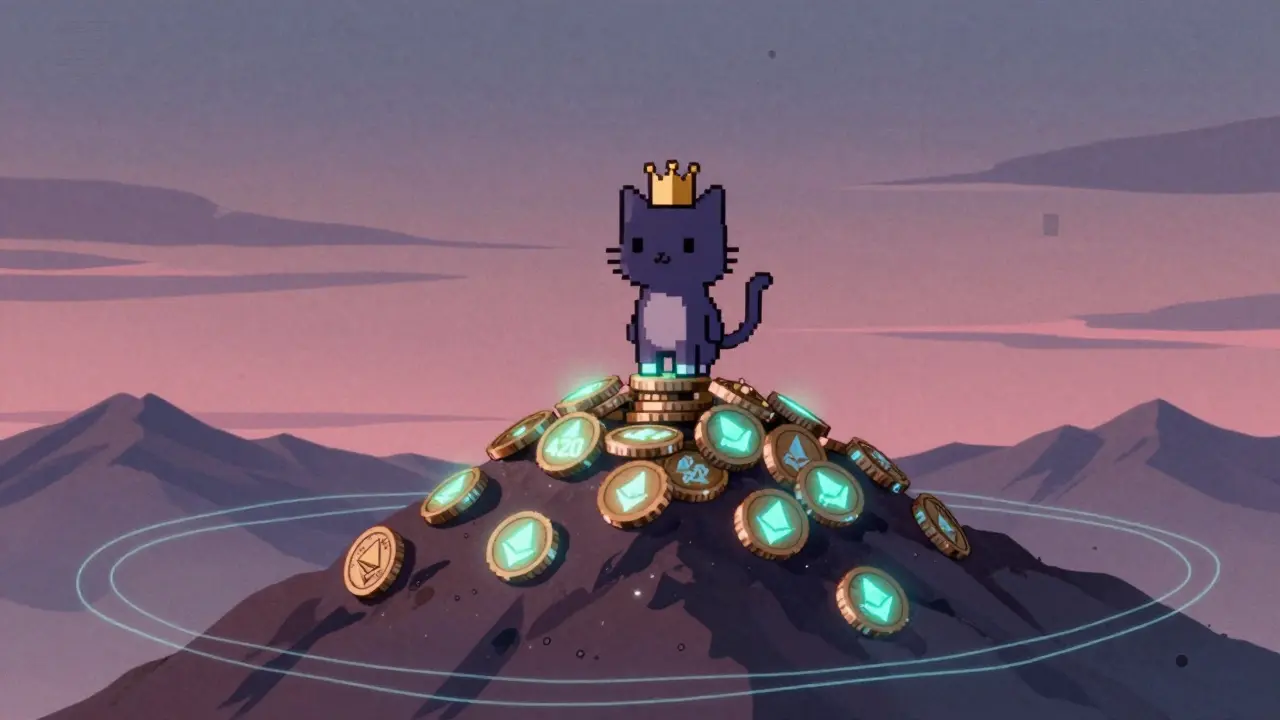
daCAT (sometimes written as daCat) isn’t a breakthrough in blockchain tech. It’s not a payment system, a decentralized app platform, or even a serious investment. It’s a meme coin - one of thousands launched in the last few years with no real utility, almost no liquidity, and a story built on internet humor and hope. If you’re wondering what daCAT is, the short answer is: it’s a speculative gamble wrapped in cat memes and community hype.
What daCAT actually is
daCAT is an ERC-20 token on the Ethereum blockchain. That means it runs on the same network as Ethereum itself, and like other tokens on Ethereum, it needs gas fees to move. Its contract address is 0x814A870726EdB7Dfc4798300ae1ce3E5Da0Ac467, and it was launched on January 23, 2024. The project claims to be "a story. A movement. A meme-fueled revolution." But behind the branding, the numbers tell a different story.
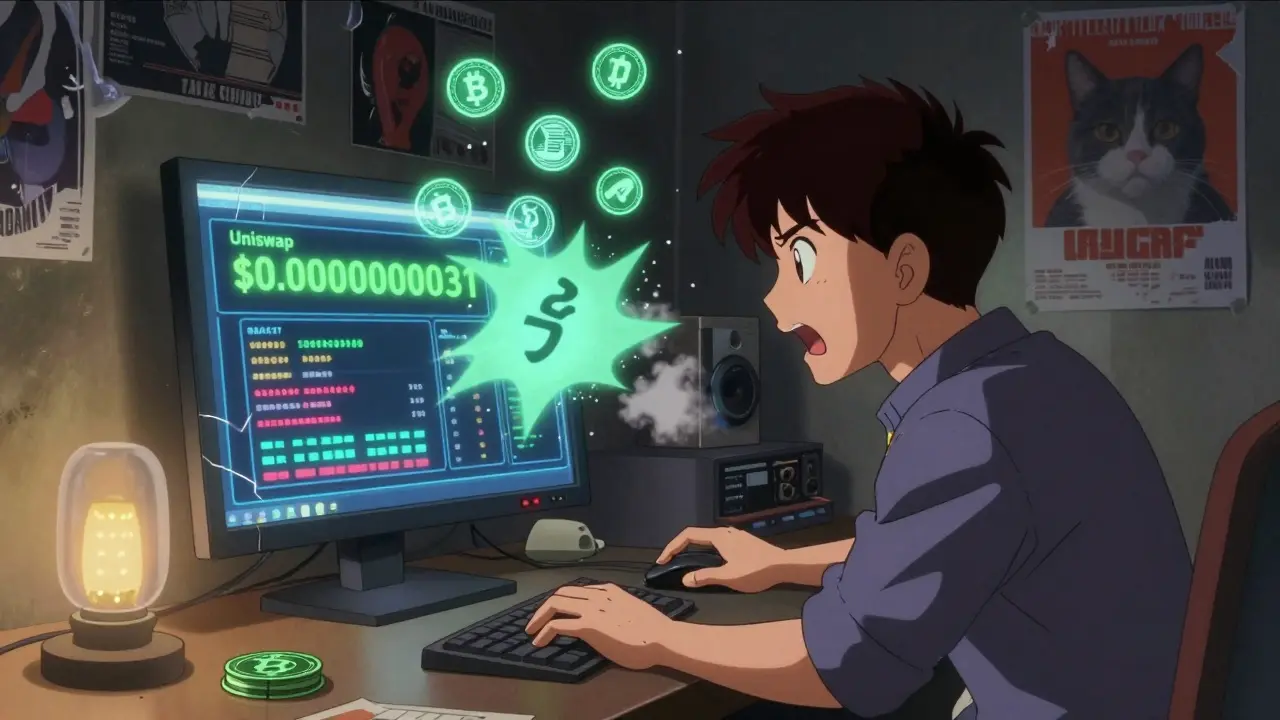
daCAT has a total supply of 420 trillion tokens. That’s not a typo. 420,000,000,000,000. Right now, about 403 trillion are in circulation. With a market cap around $1.9 million, that means each individual daCAT token is worth roughly $0.0000000031. To buy one token, you’d need to spend fractions of a cent. To buy $10 worth, you’d need over 3 billion tokens.
It’s not designed to be used for payments. You can’t buy coffee with daCAT. You can’t send it to a friend via a regular wallet app without manually adding the contract address. Even if you could, the value is so tiny that sending a few million tokens would still be worth less than a penny.
Where you can trade daCAT
daCAT is only listed on decentralized exchanges - specifically, Uniswap V3 on Ethereum. That means you can’t buy it on Coinbase, Binance, Kraken, or any major exchange. You need a crypto wallet like MetaMask, some Ethereum (ETH) to pay for gas, and the technical know-how to navigate Uniswap.
Here’s the catch: because so few people are trading it, liquidity is nearly nonexistent. CoinGecko reported only $2,056 in total trading volume over 24 hours. That’s less than what a single Bitcoin transaction costs in fees on some days. Most other data sources, including CoinMarketCap and CoinStats, show zero volume.
This makes trading daCAT extremely risky. If you try to sell even a small amount, you’ll likely trigger massive slippage - meaning the price drops as you sell because there’s no one buying. Users on Reddit and CryptoSlate report losing 80-90% of their investment just trying to exit their position. One user said they paid $50 in gas fees to buy $10 worth of daCAT. That’s not investing. That’s paying to play a game with terrible odds.
Who owns daCAT?
As of mid-2024, there are only about 1,150 wallet addresses holding daCAT. Compare that to Dogecoin, which has over 2.3 million holders, or even PEPE, with more than 1.5 million. daCAT’s holder count has actually dropped from 1,254 to 1,150 in just 30 days. That’s not growth - it’s attrition.
There’s no evidence of a team behind daCAT. No public founders, no LinkedIn profiles, no verified social media accounts with authority. The project’s Medium blog has 12 posts since launch, the last one in May 2024, promising an "NFT collection coming soon" - but no contract address, no timeline, no update since. Telegram has about 1,000 members, but activity averages just 3-5 messages per day. That’s not a community. That’s a ghost town.
Why daCAT isn’t like Dogecoin or Shiba Inu
People often compare daCAT to Dogecoin or Shiba Inu. But that’s misleading. Dogecoin started as a joke in 2013, but it gained traction because of Elon Musk’s support, media coverage, and eventually, real-world adoption. Shiba Inu built a whole ecosystem - a decentralized exchange (ShibaSwap), a token (LEASH), and a layer-2 blockchain (Shibarium). They have exchanges, merchants, and millions of users.
daCAT has none of that. No exchange listings. No utility. No roadmap updates. No partnerships. No audits. No staking. No governance. Just a token on Ethereum with a cat logo and a vague promise of "culture. Art. Music. Purpose."
It’s not even in the same league. Dogecoin’s market cap is $21.5 billion. daCAT’s is $1.9 million. That’s 11,300 times smaller. Dogecoin trades $1.5 billion daily. daCAT trades $2,000. That’s a difference of 750,000 times.
The real risk: it’s a dead end
Industry analysts agree: tokens like daCAT are high-risk by design. TokenInsight labeled it "high-risk" in May 2024 because of "negligible trading volume, minimal holder diversification, and absence of technical innovation." Michael van de Poppe, CEO of Fairside, said in June 2024 that tokens under $5 million with no utility have a 99% chance of becoming worthless within a year.
And daCAT fits that profile perfectly. Its price has dropped 56% from its all-time high. Holder count is falling. Trading volume is near zero. No new features have been released. No team has spoken out. The only thing keeping it alive is a handful of speculators hoping for a pump - but with no buyers, there’s no way out.
Even if you believe in the "movement," you can’t build a movement on a token that no one can trade. You can’t create a cultural phenomenon when 90% of your users can’t cash out.
What happens if you buy daCAT?
If you buy daCAT, you’re not investing. You’re gambling. Here’s what you’re signing up for:
- You’ll need to pay high Ethereum gas fees - often $10-$30 - just to make a single trade.
- You’ll need to manually add the token contract to your wallet.
- You’ll need to set slippage tolerance to 40-50% just to complete a buy or sell.
- You’ll likely lose most of your money to slippage when trying to sell.
- You’ll have no customer support. No help desk. No answers.
- You’ll be stuck holding a token with no future, no use, and no exit.
There’s no safety net. No redemption. No plan B. The only outcome is either a tiny, temporary profit - or total loss.
Bottom line: daCAT is a warning sign
daCAT isn’t the next Bitcoin. It’s not even the next Dogecoin. It’s a reminder of how easy it is to create a crypto token with zero value and still get people to throw money at it.
There are over 42,000 ERC-20 tokens on Ethereum. 99% of them will vanish. daCAT is one of them. It’s not a coin you hold. It’s a coin you avoid.
If you’re looking for meme coins with real momentum, look at DOGE, SHIB, or PEPE - tokens with exchanges, communities, and trading volume. daCAT? It’s a ghost. A footnote. A cautionary tale.
Is daCAT a good investment?
No. daCAT has no utility, no liquidity, and no team. With a market cap under $2 million and trading volume near zero, it’s classified as a high-risk meme coin by analysts. Over 99% of tokens like this become worthless within a year. Buying daCAT is gambling, not investing.
Can I buy daCAT on Coinbase or Binance?
No. daCAT is only available on decentralized exchanges like Uniswap V3. You cannot buy it on any major centralized exchange like Coinbase, Binance, Kraken, or Gemini. You’ll need a wallet like MetaMask, some Ethereum (ETH), and the technical skill to navigate DeFi platforms.
Why is daCAT’s price so low?
daCAT’s price is low because of its massive supply - 420 trillion tokens. Even with a $1.9 million market cap, each token is worth less than a billionth of a dollar. The low price isn’t a bargain - it’s a sign of extreme dilution and lack of demand.
Can I sell my daCAT tokens easily?
No. Due to extremely low liquidity, selling daCAT is extremely difficult. Most users report losing 80-90% of their value to slippage when trying to sell. Even with 50% slippage tolerance, trades often fail or result in massive losses. Many users say they’re stuck holding the tokens with no way out.
Is daCAT a scam?
It’s not officially labeled a scam, but it has all the red flags: no team, no roadmap, no updates, no audits, and zero liquidity. The project’s claims of being a "cultural movement" are marketing language with no substance. Most users who bought it have lost money trying to exit. It’s a high-risk speculative asset with no future.
What’s the future of daCAT?
The future looks bleak. The project hasn’t released any updates since May 2024. Holder count is declining. Trading volume is near zero. Industry reports predict that 75% of meme coins under $5 million will become completely illiquid by early 2025. daCAT fits that profile exactly. Without a major catalyst - like a listing on a major exchange or a functional product - it will likely fade into obscurity.


