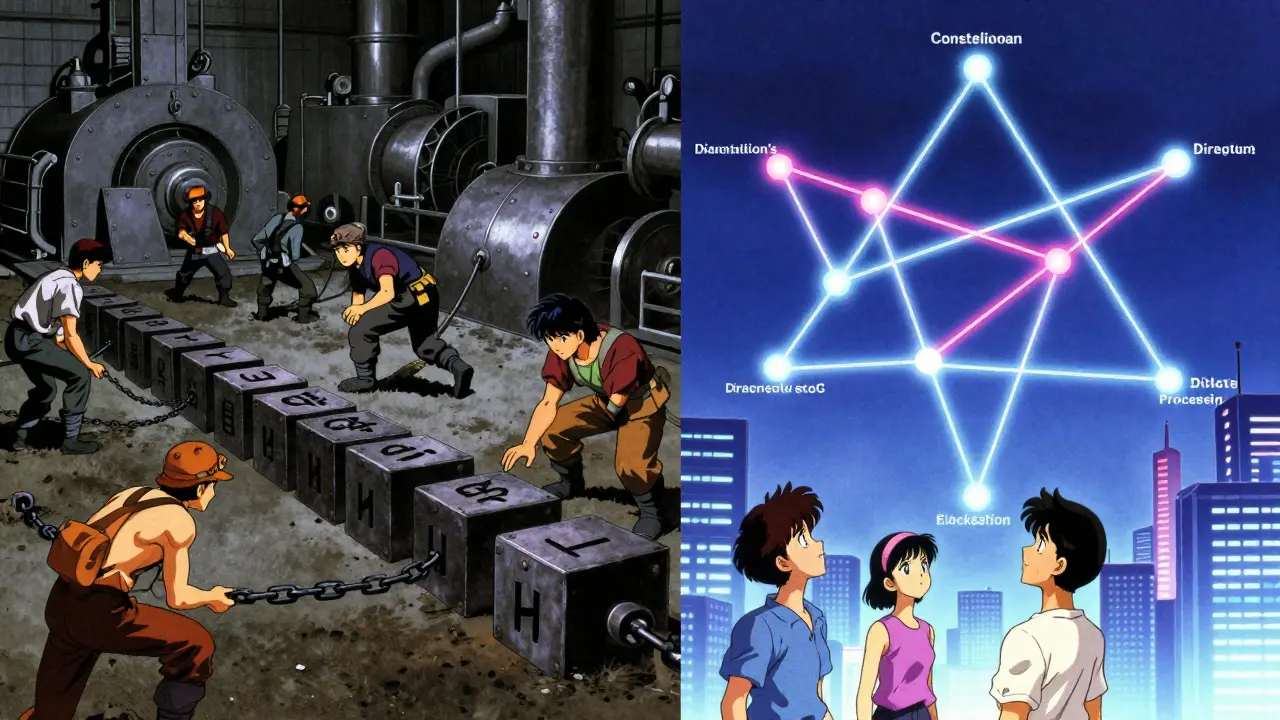
You might have seen Constellation, often referred to by its ticker symbol DAG, listed on exchanges. But what actually makes it different from Bitcoin or Ethereum? It’s not just another coin hoping for a price pump. Constellation is built on a completely different architecture called a Directed Acyclic Graph (DAG). This means it doesn’t use blocks. It doesn’t have miners burning electricity. And best of all for users, you pay zero fees to send transactions.
If you are tired of waiting for confirmations or paying high gas fees during network congestion, understanding how Constellation works could change how you view decentralized networks. Let’s break down the technology, the economics, and how you can actually use or stake your tokens without needing a server room in your garage.
The Core Problem: Why Blockchains Struggle with Scale
To understand why Constellation exists, you first need to look at the limitations of traditional blockchains like Bitcoin or early versions of Ethereum. These systems work like a digital ledger where transactions are grouped into "blocks." Miners compete to solve complex mathematical puzzles to add these blocks one after another. This sequential process creates a bottleneck. If too many people try to transact at once, the network gets clogged, speeds drop, and fees skyrocket.
Constellation was founded in 2017 by Benjamin Jorgensen, Benjamin Diggles, Mathias Goldmann, Wyatt Meldman-Floch, and Altif Brown specifically to solve this scalability issue. They asked a simple question: What if we didn’t organize data into linear blocks? Instead, they adopted a Directed Acyclic Graph structure. In a DAG, each transaction links directly to previous transactions, creating a web-like topology rather than a straight line. This allows the network to process thousands of transactions in parallel, meaning the network actually gets faster and more secure as more people use it, rather than slowing down.
How the Hypergraph Architecture Works
The backbone of the Constellation Network is the Hypergraph. Think of the Hypergraph as the foundation layer that connects everything else. It ensures security, scalability, and interoperability across the entire ecosystem. Unlike a standard blockchain that operates in isolation, the Hypergraph allows different parts of the network-called metagraphs-to communicate seamlessly with external datasets and other blockchains via APIs.
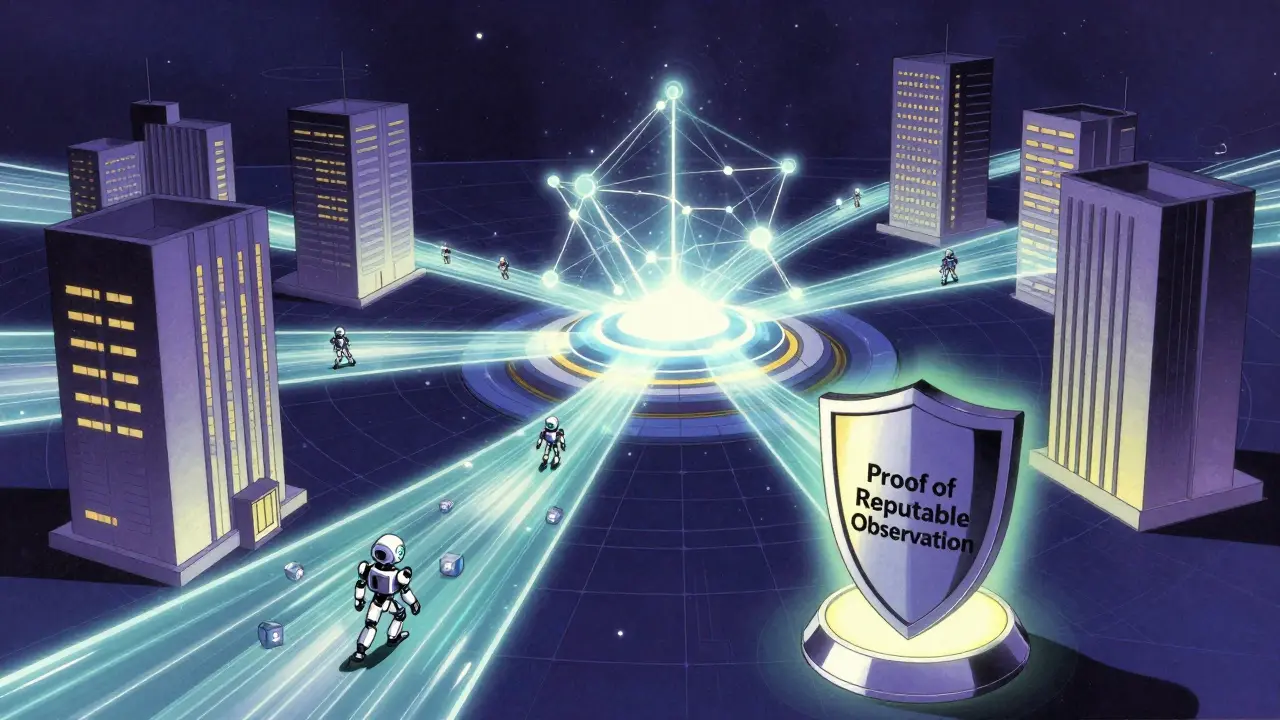
This architecture is crucial for enterprise applications. Companies dealing with big data need secure pipelines that can handle massive amounts of information without breaking. The Hypergraph provides this by using a consensus mechanism known as Proof of Reputable Observation. Instead of energy-intensive mining, nodes earn reputation based on their consistent and honest participation in validating the network. If a node acts maliciously, its reputation drops, and it loses its ability to validate transactions. This creates a self-policing system that is both efficient and secure.
The Zero-Fee Revolution: How Transactions Are Free
Here is the part that usually surprises new users: sending DAG tokens costs nothing. No gas fees. No hidden charges. This is possible because of Constellation’s unique economic model. In most cryptocurrencies, users pay fees to incentivize miners or validators. In Constellation, the end-user pays zero fees.
So, who pays for the network? The answer lies in Metagraphs. A metagraph is essentially a custom blockchain application built on top of the Constellation Hypergraph. Developers or businesses create these metagraphs for specific purposes, such as storing IoT data or managing supply chain records. These projects pay "snapshot fees" in DAG tokens to cover validation and storage costs. By shifting the cost burden from individual users to the enterprises building applications, Constellation removes the barrier to entry for everyday people. You can send DAG to a friend or move funds between wallets instantly without worrying about market volatility affecting your transaction cost.
| Feature | Bitcoin / Ethereum (Blockchain) | Constellation (DAG) |
|---|---|---|
| Structure | Linear blocks | Web-like graph (Parallel processing) |
| Transaction Fees | User pays gas/mining fees | Zero fees for end-users |
| Scalability | Limited by block size/time | Unlimited (improves with usage) |
| Consensus | Proof of Work / Proof of Stake | Proof of Reputable Observation |
| Energy Efficiency | High energy consumption (PoW) | Low energy consumption |
Staking and Earning Rewards with DAG
If you hold DAG tokens, you aren’t just sitting on a speculative asset; you are holding the fuel that secures the network. However, participating in the network has historically required technical know-how and significant capital. To become a validator, you must stake exactly 250,000 DAG tokens per node. This high threshold ensures that only serious, committed participants run the infrastructure, reducing the risk of spam or low-quality nodes.
For the average investor who doesn’t have 250,000 DAG or the technical skills to run a server, there is a solution: delegation. You can delegate your DAG holdings to existing validators. In return, you earn passive rewards while contributing to the network’s decentralization. This democratizes access to yield generation without requiring you to manage hardware or software updates.
Recent developments have made this even easier. The upcoming "deli" staking feature, which is designed to launch soon, will allow users to stake DAG directly from their Stargazer wallet. This eliminates the need to interact with complex command-line interfaces or third-party platforms. You will be able to choose specific nodes or metagraphs to support, giving you granular control over where your capital helps the ecosystem grow.
Using the Stargazer Wallet
Your gateway to the Constellation ecosystem is the Stargazer wallet. This isn’t just a place to store keys; it’s an interface for interacting with the broader network. Through Stargazer, you can send and receive DAG, monitor your staking rewards, and explore various metagraphs.
Users often praise the simplicity of the feeless experience within the wallet. When you initiate a transfer, it happens almost instantly because the network processes it in parallel with other transactions. There is no waiting for block confirmations. For developers, Stargazer also serves as a testing ground for smart contracts and microservices before deploying them to production metagraphs. The wallet’s design prioritizes security, ensuring that your private keys never leave your device, which is critical when dealing with decentralized assets.
Enterprise Applications and Big Data
While retail investors focus on price action, Constellation’s real strength lies in its utility for enterprise. The network is particularly well-suited for handling big data integrity. Industries like logistics, healthcare, and manufacturing generate vast amounts of data that need to be verified and stored securely. Traditional databases are centralized and vulnerable to tampering, while standard blockchains are too slow and expensive for high-volume data ingestion.
Constellation bridges this gap. Its serverless architecture and composable microservices allow companies to build secure data pipelines that scale horizontally. As more data flows through the network, the security increases due to the inverse network effects mentioned earlier. Each new participant helps validate the existing data, making the entire system more robust. This positions Constellation not just as a cryptocurrency, but as a foundational infrastructure layer for the next generation of decentralized applications.
Is Constellation Right for You?
Deciding whether to engage with Constellation depends on your goals. If you are looking for a quick flip, DAG may not offer the same volatility-driven opportunities as meme coins. However, if you value technological innovation, energy efficiency, and practical utility, Constellation offers a compelling proposition. The shift towards zero-fee transactions and scalable DAG architectures represents a significant step forward in blockchain evolution.
Consider your level of involvement. Are you willing to learn about metagraphs and delegation? Do you care about supporting a network that prioritizes enterprise adoption over speculation? If so, Constellation provides a transparent, efficient, and increasingly accessible platform. As the "deli" staking feature rolls out and more enterprises adopt the Hypergraph, the ecosystem is poised to expand further, potentially increasing the demand for DAG tokens as the primary utility asset.
What is the main difference between Constellation and Bitcoin?
The main difference is the underlying architecture. Bitcoin uses a linear blockchain structure where transactions are processed sequentially in blocks, leading to potential congestion and fees. Constellation uses a Directed Acyclic Graph (DAG) structure, allowing parallel processing of transactions. This results in higher speed, unlimited scalability, and zero transaction fees for end-users.
Do I have to pay fees to send DAG tokens?
No, end-users do not pay any fees to send DAG tokens or interact with the network. The cost of validation and storage is covered by metagraphs (applications built on the network) through snapshot fees paid in DAG. This model ensures free transactions for individuals while sustaining the network economically.
How much DAG do I need to stake as a validator?
To operate a validator node on the Constellation Network, you must stake exactly 250,000 DAG tokens. This high requirement ensures that only committed participants run the infrastructure. Users with fewer tokens can still earn rewards by delegating their DAG to existing validators.
What is the Stargazer wallet used for?
The Stargazer wallet is the primary interface for interacting with the Constellation Network. It allows users to store DAG tokens, send feeless transactions, delegate stakes to validators, and access decentralized applications (metagraphs). It is designed to be user-friendly while maintaining high security standards.
What is a metagraph in the Constellation ecosystem?
A metagraph is a custom blockchain application or sub-network built on top of the Constellation Hypergraph. Metagraphs serve specific purposes, such as data storage or smart contract execution, and they pay for network services in DAG tokens. This allows developers to create tailored solutions while leveraging the security and scalability of the main network.
Is Constellation environmentally friendly?
Yes, Constellation is highly energy-efficient. Unlike Bitcoin’s Proof of Work consensus, which requires massive computational power and electricity, Constellation uses Proof of Reputable Observation. Validators earn reputation through honest participation rather than solving energy-intensive puzzles, making it a sustainable choice for large-scale adoption.