
So, you've heard about TRIV and you're wondering if it's the right place to park your digital assets. Maybe you saw an ad on Instagram promising easy access to Bitcoin, or a friend mentioned they just bought some Solana with leverage. But here is the thing: when it comes to crypto exchanges, especially in Southeast Asia, "easy" doesn't always mean "safe." You need to know exactly what you are signing up for before you link your bank account.
This isn't just another generic list of features. We are looking at TRIV through the lens of a trader who cares about two things: keeping their money safe and actually making trades without hitting regulatory walls. As of late 2025 and heading into 2026, the landscape in Indonesia has shifted. The oversight of crypto assets is in a weird transition phase between Bappebti and OJK, and TRIV is right in the middle of that storm. If you are based in Jakarta, Surabaya, or anywhere else in Indonesia, this review breaks down whether TRIV deserves your trust or if you should look elsewhere.
What Exactly Is TRIV?
TRIV is an Indonesian cryptocurrency exchange platform headquartered in Jakarta, designed specifically to serve the local market with full compliance to national financial regulations. Unlike global giants like Binance or Coinbase that try to be everything to everyone, TRIV focuses heavily on being the "local champion." Founded by Gabriel Rey, the company launched its trading services around 2020-2021 and has since expanded aggressively.
The core appeal here is localization. TRIV integrates deeply with Indonesian banking systems, allowing for quick deposits and withdrawals in Rupiah (IDR). They also offer features tailored to retail investors, such as staking for over 25 different cryptocurrencies and, more recently, crypto-secured lending. But the biggest headline-grabber was their February 2025 launch of crypto futures trading, offering perpetual contracts with up to 25x leverage on major coins like Bitcoin, Ethereum, and Solana.
Is it for everyone? Probably not. If you are an international investor looking for deep liquidity across hundreds of altcoins, TRIV might feel limited. But if you are an Indonesian resident who wants a platform that speaks Bahasa Indonesia, accepts local bank transfers seamlessly, and operates under the watchful eye of local regulators, TRIV is built for you.
The Regulatory Reality: Bappebti vs. OJK
Let's talk about the elephant in the room: regulation. In the crypto world, regulation is often seen as a buzzword, but in Indonesia, it is a matter of survival. TRIV operates under the supervision of three key bodies: the Commodity Futures Trading Supervisory Agency (Bappebti), the Indonesian Crypto Exchange (CFX), and the Jakarta Futures Exchange (JFX).
Why does this matter? Because in early 2025, there was a planned transfer of crypto oversight from Bappebti to the Financial Services Authority (OJK). This shift caused quite a bit of anxiety in the market. While the transition faced delays due to pending government regulations, TRIV has positioned itself as a compliant player. CEO Gabriel Rey has publicly stated that their futures product is "officially authorized according to Indonesian regulations," aiming to reassure users that despite the bureaucratic shuffling, the platform remains legal and supervised.
However, don't confuse local compliance with global safety standards. TRIV lacks Tier-1 regulation (like those found in the US or EU). This means while they are legal in Indonesia, they don't have the same level of international scrutiny or investor protection funds that platforms like Kraken or OKX offer. For a local user, this is acceptable. For someone moving large sums from overseas, it’s a red flag.
Security Scorecard: Where Does TRIV Stand?
If you dig into third-party assessments, you'll find some conflicting data. According to Traders Union's 2025 evaluation, TRIV received a security score of 4.75 out of 10. That is significantly lower than industry leaders. Why so low? The assessment pointed to a lack of an investor protection fund and questions regarding the availability of Two-Factor Authentication (2FA) in certain contexts, although other sources claim 2FA is standard.
| Feature | TRIV | Global Leader (e.g., Kraken) |
|---|---|---|
| Regulatory Oversight | Bappebti, CFX, JFX (Indonesia) | Tier-1 (US, EU, etc.) |
| Investor Protection Fund | No | Yes |
| Two-Factor Authentication | Reported available (conflicting reports) | Mandatory & Robust |
| Cold Storage | Most funds offline | Majority offline |
| Security Score (Traders Union) | 4.75/10 | >8.0/10 |
TRIV claims to use multi-signature wallets and cold storage for most user funds. They also employ SSL encryption and conduct periodic audits. There is even mention of a hacker bounty program, though details on payouts are scarce. The discrepancy in 2FA reporting is concerning. Some tech reviews say it's missing; others say it's there. My advice? When you sign up, immediately check your security settings. If 2FA isn't obvious or easy to enable via an authenticator app, walk away.
Trading Features: Spot, Futures, and Staking
Now, let's look at what you can actually do on the platform. TRIV isn't just a buy-and-hold shop anymore. The introduction of perpetual futures contracts in early 2025 changed the game for Indonesian traders.
- Spot Trading: The bread and butter. You can trade major pairs like BTC/IDR and ETH/IDR. The interface is clean and mobile-first, which makes sense given that most Indonesians trade via smartphones.
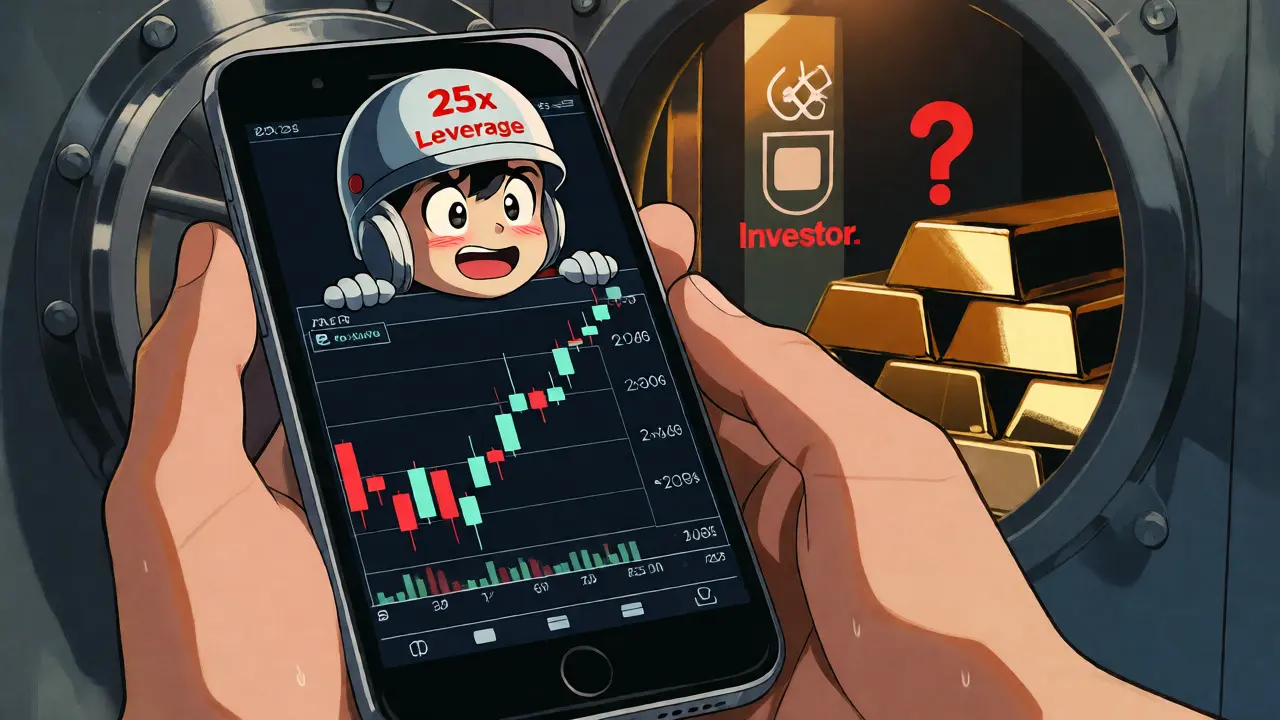
- Futures Trading: This is where the risk lives. You can get up to 25x leverage. Sounds exciting? It is. But remember, leverage cuts both ways. A small move against your position can liquidate you instantly. Since this feature is relatively new, ensure you understand the margin requirements before jumping in.
- Staking: TRIV offers staking for over 25 cryptocurrencies. This is great for passive income. Instead of letting your ADA or SOL sit idle, you earn rewards. The rates vary, so check the current APY before committing long-term.
- Lending: You can lend your crypto to earn interest. The minimum deposit is incredibly low-just IDR 100,000 (approx $6.50 USD). This lowers the barrier to entry significantly for students or first-time investors.
The accessibility is a huge plus. With no high minimums, you can start experimenting with small amounts. However, the depth of order books for smaller altcoins might not match global exchanges, meaning you could face higher slippage on larger trades.
Fees and Costs: What Will It Cost You?
Fees are often hidden in plain sight. TRIV generally follows a maker-taker model for spot trading. While specific percentages can change based on volume tiers, they are competitive within the Indonesian market. Often, using the native token or holding certain balances can reduce these fees.
Withdrawal fees are the other big cost. Always check the fee schedule for the specific coin you want to withdraw. Network congestion affects these costs globally, but local exchanges sometimes add a markup. For fiat withdrawals (back to your Indonesian bank), the process is usually fast-often real-time-but verify if there are flat fees involved.
One thing to note: because TRIV is localized, they may pass on local banking transaction costs to you. Compare this with PINTU or Indodax. Sometimes, paying a slightly higher spread on a competitor is cheaper than dealing with complex fee structures on TRIV. Run the numbers for your typical trade size.
User Experience and Support
The app experience is where TRIV shines for locals. The UI is intuitive, supporting both Web2 and Web3 functionalities through their 'Triv Shield' feature. Onboarding requires mandatory KYC (Know Your Customer) verification. You will need to upload a valid government ID (KTP) and proof of address. This adds friction compared to anonymous DEXs, but it’s a necessary evil for regulatory compliance.
Support quality is mixed. Reviews suggest that customer service responds quickly via chat, but resolution times can vary. Since the primary audience is Indonesian, support is heavily focused on Bahasa Indonesia. If you prefer English-only support, you might find the resources limited. Community forums are active, but mostly in Indonesian, so language barriers exist for non-local users.
The Verdict: Who Should Use TRIV?
Should you use TRIV? Here is the breakdown:
Use TRIV if:
- You are an Indonesian resident who values local regulatory compliance.
- You want seamless IDR deposits and withdrawals via local banks.
- You are interested in trying out futures trading with modest capital.
- You prefer a mobile-first experience with simple staking options.
Avoid TRIV if:
- You require Tier-1 international regulation (US/EU standards).
- You are concerned about the lower third-party security scores.
- You need access to obscure altcoins with deep global liquidity.
- You are uncomfortable with mandatory KYC processes.
In short, TRIV is a solid regional player. It solves the pain points of banking integration for Indonesians. But it is not a fortress like Coinbase. Treat it as a gateway, not necessarily a vault. Keep only what you are actively trading on the platform, and consider moving long-term holdings to a hardware wallet.
Is TRIV regulated in Indonesia?
Yes, TRIV is registered and supervised by Bappebti (Commodity Futures Trading Supervisory Agency), CFX (Indonesian Crypto Exchange), and JFX (Jakarta Futures Exchange). This ensures it operates legally within Indonesia's financial framework.
Does TRIV have an investor protection fund?
No, unlike some global competitors like OKX, TRIV does not currently advertise a dedicated investor protection fund. This means if the exchange faces insolvency, users may not have a separate pool of funds to recover losses beyond the assets held.
What is the minimum deposit on TRIV?
The minimum deposit requirement is very accessible, starting at IDR 100,000 (approximately $6.50 USD) or 0.0001 BTC. This makes it suitable for beginners testing the waters.
Can I trade futures on TRIV?
Yes, TRIV launched crypto futures trading in February 2025. Users can trade perpetual contracts on major cryptocurrencies like Bitcoin, Ethereum, and Solana with leverage up to 25x.
Is TRIV safe to use?
Safety is relative. Third-party assessments have given TRIV a moderate-to-low security score (around 4.75/10). While they use cold storage and encryption, the lack of Tier-1 regulation and investor funds means users should exercise caution and not store all their wealth on the platform.