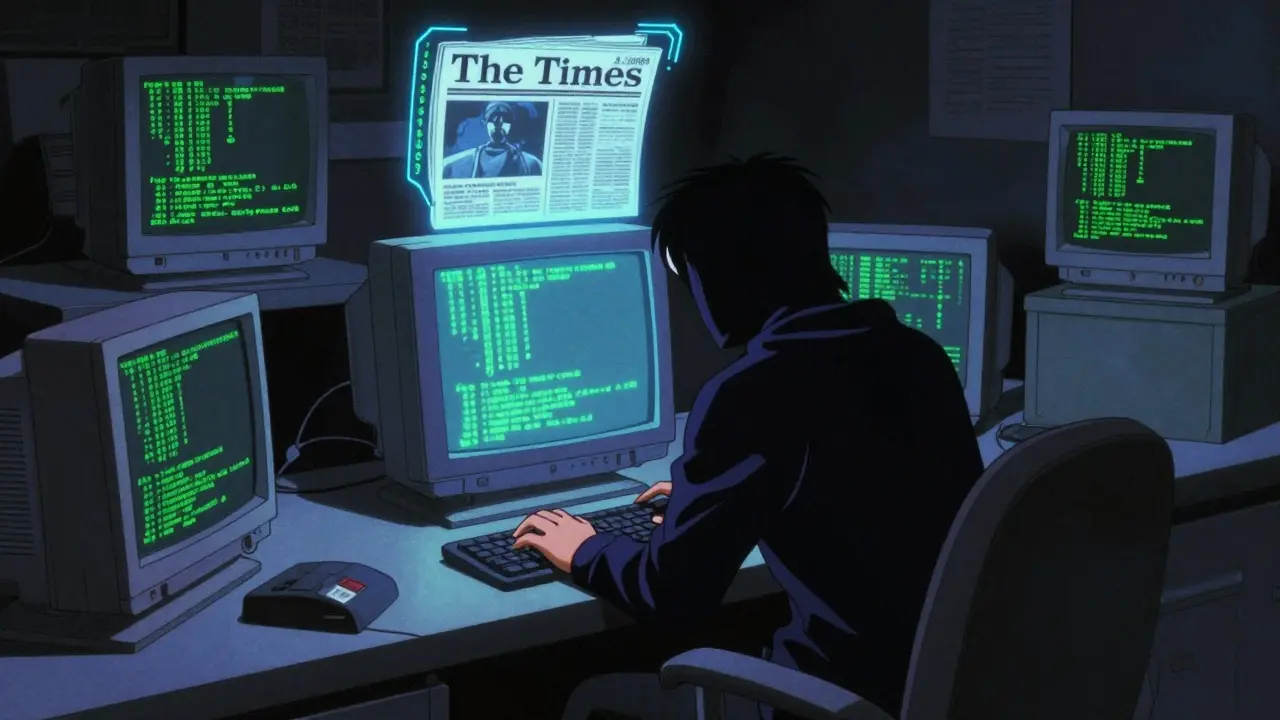
On January 3, 2009, at exactly 18:15:05 UTC, a computer somewhere in the world solved a complex mathematical puzzle. This wasn't just another routine calculation; it marked the birth of an entirely new financial system. The person behind this code, known only as Satoshi Nakamoto, didn't just create the first block of the Bitcoin blockchain. They left a secret note hidden inside the code-a newspaper headline that serves as both a timestamp and a political manifesto.
This single line of text defines why Bitcoin exists. It isn't just about digital money or faster transactions. It is a direct response to the failure of traditional banking systems during the global financial crisis. Understanding this hidden message is key to understanding the soul of cryptocurrency.
The Headline That Started It All
If you look at the raw data of the very first block-known as Block 0 or the Genesis Block-you will find a string of characters embedded in the coinbase transaction field. It reads:
"The Times 03/Jan/2009 Chancellor on brink of second bailout for banks"
This is not random text. It is a direct quote from the front page of The Times, a major British newspaper, published on that exact day. The headline referred to Alistair Darling, the UK Chancellor of the Exchequer, who was preparing to approve a massive government bailout for the banking sector following the collapse caused by risky mortgage-backed securities.
By embedding this specific date and headline, Satoshi achieved three things simultaneously:
- Proof of Time: It proves the block could not have been created before January 3, 2009. You can't fake a newspaper headline from the future.
- Political Commentary: It highlights the desperation of central banks, which were printing money to save failing institutions while ordinary people suffered.
- Ideological Foundation: It positions Bitcoin as the alternative-a system where no single entity can print infinite money or bail out bad actors.
This act aligns Bitcoin with the cypherpunk movement, a group of activists who believed cryptography should be used to protect privacy and enable social change. For them, the financial crisis wasn't just an economic event; it was proof that centralized control was broken.
Why the 50 Bitcoins Can Never Be Spent
Every time a miner creates a new block, they are rewarded with newly minted bitcoins. In the case of the Genesis Block, the reward was 50 BTC. Today, those coins would be worth hundreds of millions of dollars. Yet, they remain locked forever. Why?
The answer lies in how Satoshi structured the transaction. Normally, a bitcoin transaction requires a valid public key and a signature generated by a corresponding private key. If you have the private key, you can spend the coins. But in the Genesis Block, Satoshi did something unusual. He used an invalid public key.
Technically, the signature in the Genesis Block is self-signed using an Elliptic Curve Digital Signature Algorithm (ECDSA) process that reverses the standard verification method. Because the public key is invalid, no private key can ever satisfy the network's verification rules. Even if Satoshi still had the original code or the private key he might have used to generate the signature, the network would reject any attempt to move those funds because the math simply doesn't add up.
This makes the 50 BTC permanently unspendable. It’s a symbolic gesture. Satoshi demonstrated that he trusted the protocol more than personal wealth. He showed that the rules of Bitcoin are immutable-even for its creator.
| Attribute | Value / Detail |
|---|---|
| Block Height | 0 (Hardcoded into software) |
| Timestamp | January 3, 2009, 18:15:05 UTC |
| Previous Block Hash | All zeros (No predecessor) |
| Merkle Root | 4a5e1e4baab89f3a32518a88c31bc87f618f76673e2cc77ab2127b7afdeda33b |
| Nonce | 2083236893 |
| Block Reward | 50 BTC (Unspendable) |
| Hidden Message Source | The Times Newspaper, Jan 3, 2009 |
The Six-Day Gap and Biblical Parallels
There is another mystery surrounding the Genesis Block: timing. After creating Block 0 on January 3, 2009, Satoshi did not mine the next block immediately. There was a gap of six full days. Block 1 was finally mined on January 9, 2009, at 02:54:25 UTC.
Many observers have noted the parallel to the biblical creation story, where God rested on the seventh day after six days of creation. While some dismiss this as coincidence, others argue it reflects Satoshi’s personal beliefs or a deliberate nod to the idea of starting a new world order. Pieter Wuille, a prominent Bitcoin Core developer, has commented that while the timing appears deliberate, its exact significance remains one of Satoshi’s secrets.
This pause also served a practical purpose. It allowed Satoshi to test the network, ensure the code was stable, and verify that the cryptographic proofs held up under real-world conditions before inviting others to join the chain.
How to View the Genesis Block Yourself
You don’t need to be a cryptographer to see this message for yourself. However, you can’t find it using standard blockchain explorers like Blockchain.com or Mempool.space in the usual way, because the Genesis Block is hardcoded into the Bitcoin software rather than being part of the live peer-to-peer synchronization process.
To view it, you typically need to run a full node using Bitcoin Core. Here is how you can inspect it:
- Download and install Bitcoin Core (ensure you sync at least the initial headers).
- Open the Debug Console within the application.
- Type the command:
getblock "000000000019d6689c085ae165831e934ff763ae46a2a6c172b3f1b60a8ce26f" - In the output, look for the
coinbasefield in the first transaction. - Decode the hexadecimal string. You will see the ASCII text of the The Times headline embedded within the data.
For developers, the Genesis Block is defined in the source code file chainparams.cpp as a constant named GENESIS_BLOCK. This hardcoding ensures that every Bitcoin client agrees on the absolute start of the chain, preventing any ambiguity about what comes before Block 0.
Legacy and Influence on Other Cryptocurrencies
Satoshi’s choice to embed a political statement set a precedent. According to data from Santiment in late 2023, approximately 63% of the top 100 cryptocurrencies by market capitalization include some form of embedded timestamp, quote, or ideological statement in their own genesis blocks.
However, none carry the same weight. The Bitcoin Genesis Block is unique because it anchors the entire history of the longest-running blockchain. When Ethereum launched, for example, its genesis block contained a different kind of message focused on technological innovation rather than anti-banking sentiment. Litecoin’s genesis block included a reference to Dogecoin, highlighting the playful culture of altcoins.
But Bitcoin’s message remains the most cited. In educational materials surveyed by the Blockchain Education Network, the Genesis Block headline appears in 100% of resources. It is the starting point for discussions on decentralization, monetary policy, and trustless systems.
Criticisms and Counterarguments
Not everyone views the Genesis Block message purely positively. Some critics argue that it frames Bitcoin too narrowly as a reaction against banks, rather than a proactive solution for global finance. Dr. Vili Lehdonvirta from the Oxford Internet Institute suggested in a 2021 paper that the message overstates Bitcoin’s revolutionary potential, pointing out that cryptocurrency markets have since become heavily speculative and intertwined with traditional financial systems.
Others question whether the unspendable 50 BTC is a waste of potential value. However, proponents argue that the unspendability is precisely what gives it value. It proves that Bitcoin’s supply cap of 21 million coins is a hard rule, not a suggestion. If Satoshi could spend those coins, it would undermine the core promise of fixed supply.
Why This Matters Today
In 2026, as Bitcoin approaches maturity and faces regulatory scrutiny worldwide, the Genesis Block serves as a reminder of its roots. The U.S. Securities and Exchange Commission has acknowledged the Genesis Block as part of Bitcoin’s immutable historical record, distinguishing it from newer tokens that may be classified as securities.
For investors, developers, and users, the hidden message is more than trivia. It explains why Bitcoin resists changes to its block size, why it prioritizes censorship resistance, and why it refuses to allow central authorities to reverse transactions. Every feature of Bitcoin today can be traced back to that single newspaper headline from 2009.
The next time you hear someone say Bitcoin is just "digital gold," remember the Genesis Block. It wasn't built to be gold. It was built to be a protest. And that protest is still ongoing.
What is the exact message in the Bitcoin Genesis Block?
The message is: "The Times 03/Jan/2009 Chancellor on brink of second bailout for banks." It is a headline from The Times newspaper, embedded in the coinbase transaction of Block 0.
Can the 50 BTC in the Genesis Block be spent?
No. The 50 BTC reward is permanently unspendable because Satoshi used an invalid public key in the transaction. No private key can generate a valid signature for this specific setup, making the coins locked forever.
Why did Satoshi choose that specific newspaper headline?
Satoshi chose the headline to critique the traditional banking system's reliance on government bailouts during the 2008 financial crisis. It serves as a timestamp and a political statement advocating for a decentralized alternative.
Who created the Bitcoin Genesis Block?
The Genesis Block was created by Satoshi Nakamoto, the pseudonymous individual or group who developed Bitcoin. Their true identity remains unknown.
When was the Bitcoin Genesis Block created?
The Genesis Block was created on January 3, 2009, at 18:15:05 UTC.
Is the Genesis Block part of the live blockchain?
Yes, but it is hardcoded into the Bitcoin Core software. Unlike subsequent blocks, it is not propagated through the peer-to-peer network in the same way, ensuring all nodes agree on the absolute starting point.
What is the significance of the six-day gap after the Genesis Block?
The six-day gap before Block 1 was mined has led to speculation about biblical parallels (creation week). Practically, it likely allowed Satoshi to test the network stability and cryptographic integrity before opening it to other miners.