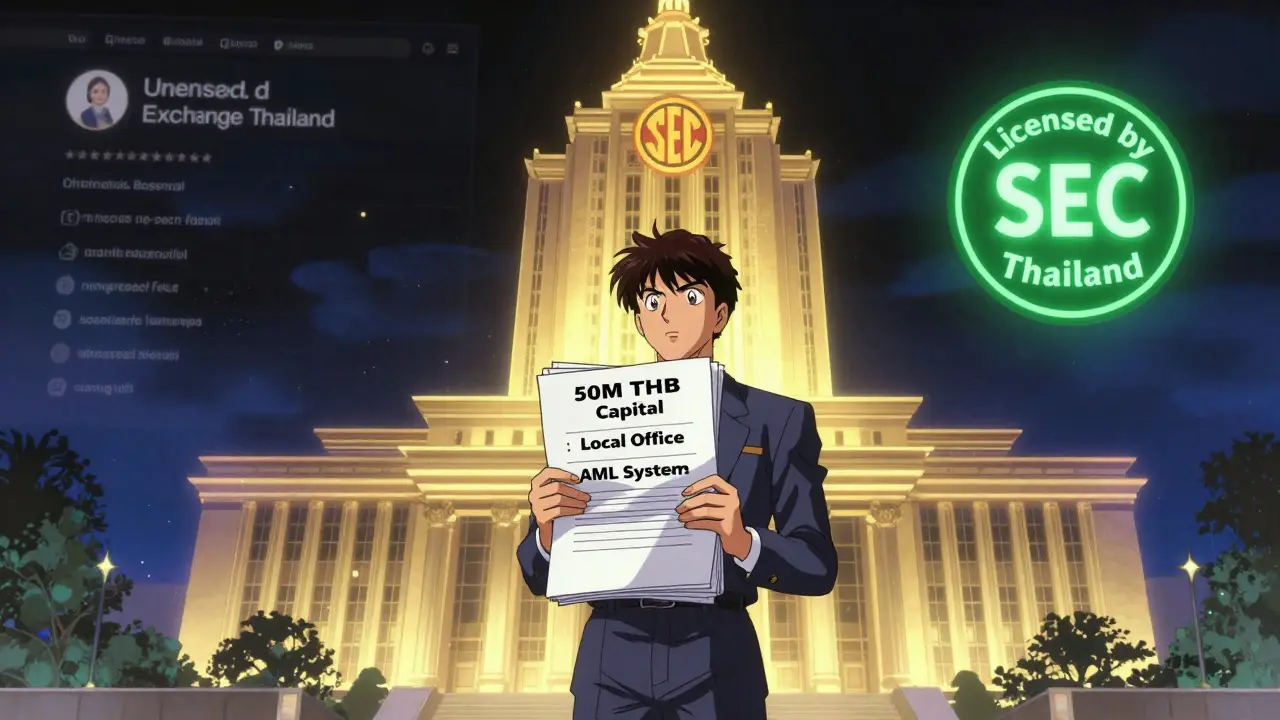
If you're thinking about launching or using a cryptocurrency exchange in Thailand, you need to understand one thing upfront: Thailand's crypto licensing system isn't just strict-it's one of the most detailed and well-structured in Southeast Asia. This isn't a place where you can set up a website, start accepting users, and hope for the best. The government has built a clear, expensive, and demanding framework that separates serious operators from everyone else. And as of April 2025, even foreign platforms targeting Thai users must play by the same rules.
Who Regulates Crypto Exchanges in Thailand?
The Ministry of Finance handles the actual licensing process, but the Securities and Exchange Commission (SEC) of Thailand is the agency that oversees compliance, conducts audits, and enforces penalties. Think of it like this: the Ministry gives you the license, but the SEC watches everything you do after that. They don’t just check your paperwork once and forget about you. They monitor your systems, your staff, your security protocols, and even how you handle customer funds.
The legal foundation comes from two major documents: the Emergency Decree on Digital Asset Businesses B.E. 2561 (2018) and the updated Royal Decree on the Operation of Digital Asset Businesses (No. 2) B.E. 2568, which took effect in April 2025. The 2025 update was a big deal-it closed the loophole that let foreign exchanges operate in Thailand without a local license. Now, if your platform even accidentally serves a Thai resident, you need to be licensed. No exceptions.
What Licenses Do You Need?
Thailand doesn’t give you one blanket crypto license. You have to pick your path. There are three main types of licenses for exchange operators:
- Digital Asset Exchange - This is for platforms that match buyers and sellers, like Binance or Kraken. You hold orders, execute trades, and manage order books.
- Digital Asset Broker - You act as an agent for clients, buying or selling crypto on their behalf. You don’t hold their funds, but you facilitate transactions.
- Digital Asset Dealer - You trade crypto yourself, buying and selling from your own inventory. This is more like a market maker than a traditional exchange.
There are also other, less common licenses for things like ICO portals, custodial wallets, fund managers, and advisors. But if you’re running a trading platform, you’re almost certainly applying for the first one: the Exchange license.
The Financial Hurdles: It’s Not Cheap
Let’s talk numbers. If you’re serious about this, you need to be ready to invest serious capital. Here’s the breakdown:
- Minimum Share Capital: 50 million THB (about $1.4 million USD). This money must be deposited into a Thai bank account when you incorporate your company. You can’t use crypto. You can’t use foreign accounts. It has to be Thai baht in a Thai bank.
- Licensing Fee: 2.5 million THB (roughly $700,000 USD). This is a non-refundable application fee paid to the Ministry of Finance.
- Total Upfront Cost: Around 52.5 million THB, or $2.1 million USD. That’s before you even start building your tech stack, hiring staff, or setting up compliance systems.
And this isn’t a one-time cost. You’ll need ongoing audits, cybersecurity certifications, legal counsel, and compliance officers-all paid in Thai baht. Most companies spend over $500,000 more on legal, technical, and operational setup before they even submit the application.
What You Need to Build Before Applying
It’s not enough to just have the money. The SEC wants proof you can operate safely and legally. Here’s what they require before they’ll even look at your application:
- Local Legal Entity: You must incorporate a Thai company. Foreign-owned companies are allowed, but they still need to be registered under Thai corporate law.
- Physical Office: You need a registered business address in Thailand, complete with office space and a local phone line.
- Thai Employees: You must hire at least one full-time Thai employee for compliance and operations. This person must be on payroll and have proper work permits.
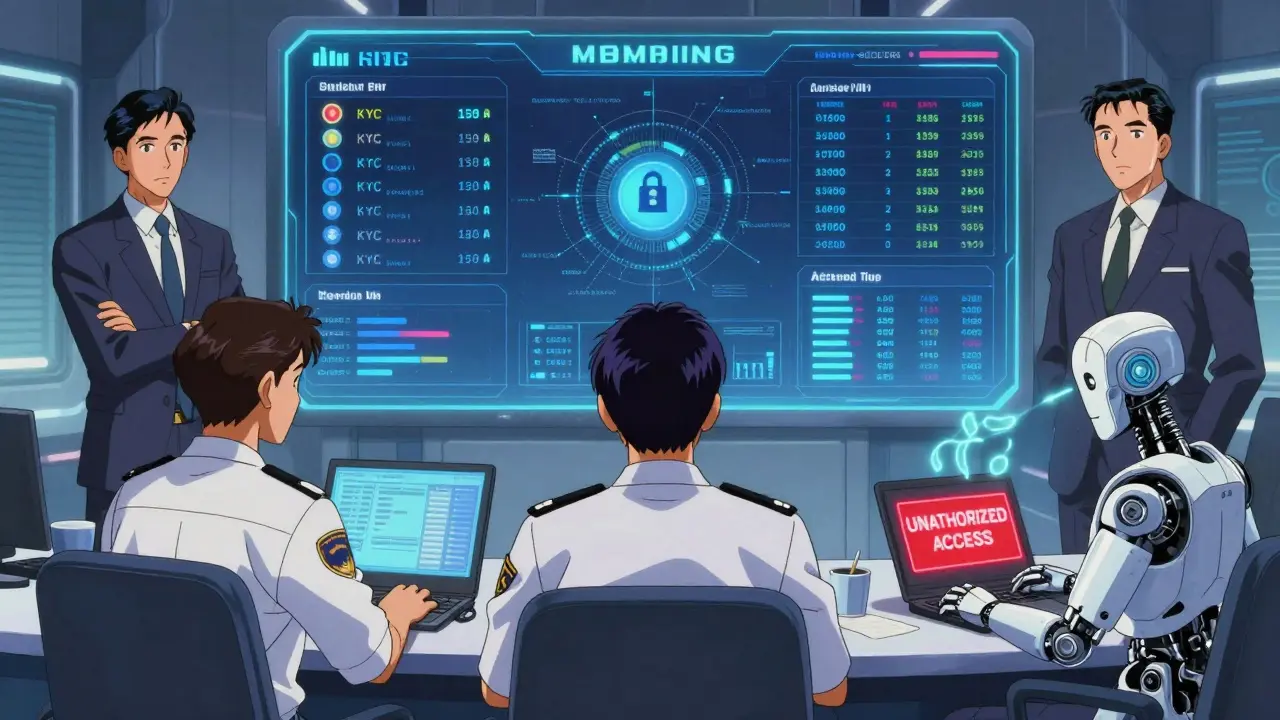
- AML/CFT System: Anti-Money Laundering and Counter-Financing of Terrorism policies aren’t optional. You need software that verifies identities, flags suspicious transactions, and reports to Thai authorities in real time.
- KYC and Due Diligence: You must collect and verify government-issued IDs, proof of address, and source of funds for every user-no exceptions.
- Cybersecurity Infrastructure: Your systems must meet Thai government standards for data protection, encryption, and threat detection. Third-party audits are required.
- Business Plan: A detailed document showing your operational model, projected user growth, cash flow, and technical architecture. This isn’t a one-pager. It’s a 50+ page technical and financial dossier.
On average, companies spend 6 to 12 months preparing just to reach the point where they can submit the application. And that’s if everything goes smoothly.
The Application Process: 150 Days and No Shortcuts
Once you submit everything, the Ministry of Finance has 150 days to review your application. During that time, they might ask for clarifications, request additional documents, or even send inspectors to your office. There’s no way to speed this up. No bribes. No fast-track options.
And if your application gets rejected? You can reapply, but you’ll have to pay the 2.5 million THB fee again. No refunds. No partial credits. That’s why most companies hire specialized Thai legal firms like LegalBison or Silk Legal to guide them through the process.
What Happens After You Get Licensed?
Getting the license is just the beginning. The SEC doesn’t stop monitoring you. You’ll need to:
- Submit quarterly financial and operational reports
- Undergo annual external audits
- Keep all user data stored locally in Thailand
- Report any system breaches within 24 hours
- Update your compliance systems whenever regulations change
There’s also a new requirement as of 2025: all licensed exchanges must offer a way for tourists to convert crypto to fiat during short visits. It’s part of a broader push to make Thailand a crypto-friendly travel destination. So even your user experience has to adapt to regulatory experiments.
How Does Thailand Compare to Other Countries?
Thailand’s approach is somewhere between Singapore and Hong Kong. It’s not as flexible as Singapore’s sandbox model, but it’s far more transparent than countries that ban crypto outright. The big difference? Thailand doesn’t just say "be compliant." They give you a checklist, a price tag, and a timeline. You know exactly what you’re getting into.
Compare that to places like the U.S. or EU, where rules are still evolving and enforcement is patchy. In Thailand, the rules are fixed, and the penalties for breaking them are severe. That’s why licensed Thai exchanges are trusted by institutional investors and traditional banks. They’re the only crypto platforms in the region that can open bank accounts with local banks like Kasikornbank or Siam Commercial Bank.
Market Reality: Only 12 Licensed Exchanges
As of 2025, there are only 12 licensed crypto exchanges in Thailand. That’s not because demand is low-it’s because the cost and complexity are so high. The market has around 8.43 million users, and the sector is expected to generate $805 million in revenue by 2026. Yet, only a dozen companies have cleared the regulatory bar.
Meanwhile, there are 13 licensed brokers and 3 dealers. But for custodial wallets, fund managers, and advisors? Only two companies each have licenses. That tells you something: the market is open, but the door is narrow.
Users in Thailand are aware of this. They check the SEC’s official website before depositing money. They look for the green "Licensed by SEC Thailand" badge. And they avoid any platform that doesn’t show it.
What’s Next for Thai Crypto Regulation?
The 2025 update was major, but it didn’t cover everything. DeFi protocols, NFT marketplaces, and tokenized assets still operate in gray areas. The SEC has signaled it’s working on rules for these, likely by late 2026. Expect more clarity soon.
For now, Thailand’s message is clear: if you want to operate here, you need to be serious, well-funded, and fully compliant. There’s no middle ground. But for those who make it through, the reward is legitimacy, trust, and access to one of Asia’s fastest-growing crypto markets.
Can a foreign company get a Thai crypto exchange license?
Yes, foreign companies can apply, but they must incorporate a legal entity in Thailand, open a local bank account, hire Thai employees, and meet all capital and compliance requirements. Ownership structure doesn’t matter-only compliance does.
What happens if I operate without a license?
Operating without a license in Thailand is illegal. The SEC can freeze assets, block websites, fine operators up to 10 million THB (about $280,000 USD), and pursue criminal charges against directors. Foreign platforms targeting Thai users are actively tracked and shut down.
Do I need to store user data in Thailand?
Yes. All user data, transaction records, and KYC documents must be stored on servers located within Thailand. Cross-border data transfers are restricted unless approved by the SEC and compliant with Thai data protection laws.
How long does the licensing process take?
The official review period is 150 days after submission. But most companies spend 6 to 12 months preparing their application. The clock only starts ticking once all documents are complete and correctly filed.
Can I use cryptocurrency to pay the licensing fee?
No. All fees and capital requirements must be paid in Thai baht through a Thai bank. Cryptocurrency cannot be used for any financial obligation under the licensing framework.


