WINR Token: What It Is, Where It's Used, and What You Need to Know
When you hear about WINR token, a utility token built for gaming rewards and community engagement on the Binance Smart Chain. Also known as WINR, it’s not just another meme coin—it’s designed to let players earn and spend tokens inside specific apps and games. But here’s the catch: most people don’t know if it’s real, if it’s still active, or if the airdrops they’re seeing are legit.
WINR token relates directly to WINR airdrop, a campaign that promised free tokens to users who completed simple tasks like joining Discord or following social media. But unlike verified airdrops from projects like Stader ETHx or Wrapped BONES, the WINR airdrop never had a public contract, no clear team, and no transparent distribution timeline. That’s a red flag. Many users got caught up in fake claims, thinking they’d get rich from a few clicks—only to lose time, and sometimes funds, to phishing sites.
The token runs on Binance Smart Chain, a blockchain that allows fast, low-cost transactions and is often used by smaller crypto projects. That makes it easy to trade on decentralized exchanges like PancakeSwap—but also makes it a target for rug pulls. Unlike ETHx or WBONES, which are tied to real DeFi protocols with audits and active development, WINR has no public roadmap, no team bios, and almost no trading volume. If you’re looking at a WINR price chart, don’t get fooled by spikes—those are usually pump-and-dump schemes driven by bots, not real demand.
People ask: Can you still buy WINR? Yes, technically. But should you? If you’re chasing a quick flip, you’re playing Russian roulette with your crypto. If you’re looking for a project with real utility, WINR doesn’t deliver. Compare it to EarthFund or TajCoin—both had similar hype, zero adoption, and vanished without a trace. WINR follows the same pattern.
What you’ll find in the posts below isn’t a guide on how to buy WINR. It’s a collection of real stories, warnings, and breakdowns of similar tokens that looked promising but turned out to be empty promises. You’ll see how P2P networks and no-KYC exchanges are used to move tokens like this, how IP tracking can expose your wallet activity, and why most "free token" campaigns end in losses. This isn’t about getting rich overnight. It’s about staying out of the loop when the loop is rigged.
-
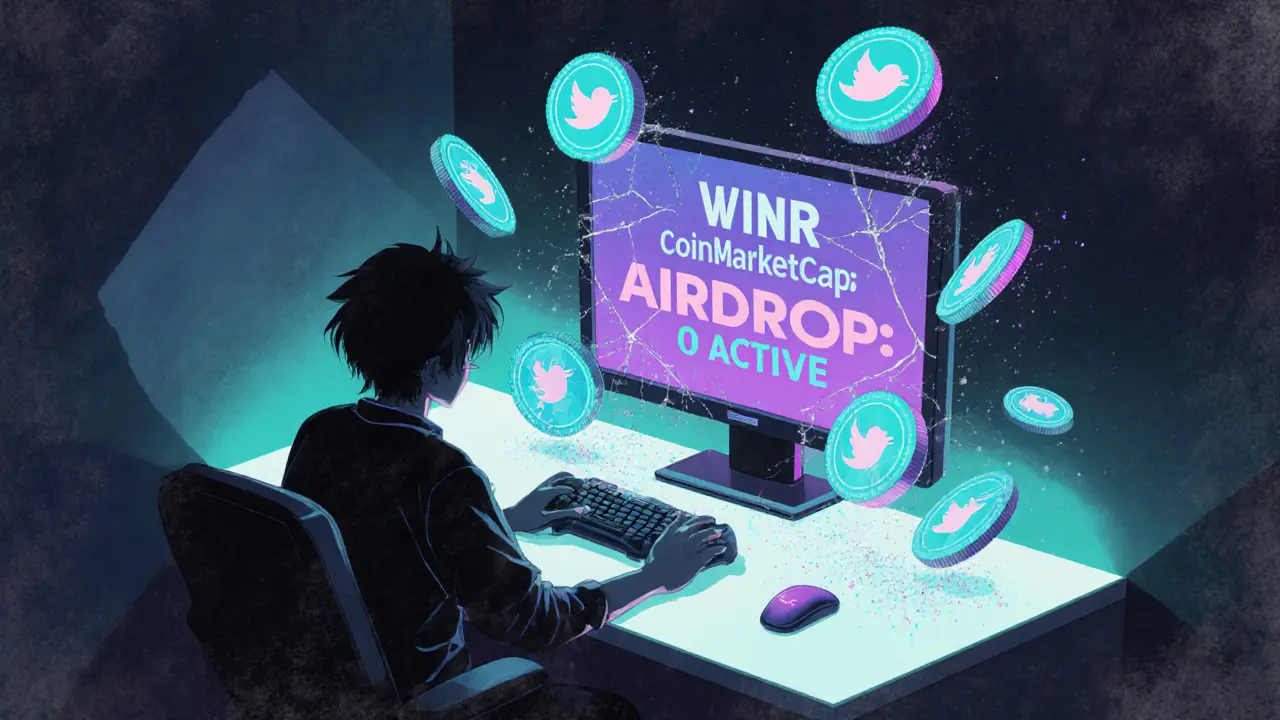
WINR JustBet X CoinMarketCap Airdrop: How to Participate and What You Need to Know
Learn how the WINR JustBet X CoinMarketCap airdrop works, why the token is currently worth $0, and whether it's worth participating in. Get the real facts behind the hype.