Baby Shark Token: What It Is, Why It’s Gone, and What to Watch For
When you hear Baby Shark Token, a meme-inspired cryptocurrency that surged briefly in 2021 with no real utility or team. Also known as BABYSHARK, it was one of dozens of coins built on hype, not code. It didn’t have a whitepaper, a working product, or even a real roadmap. Just a catchy name, a viral meme, and a pump-and-dump cycle that left most buyers with nothing.
It’s not alone. X World Games (XWG), a blockchain game token that never launched a game, and Gunstar Metaverse (GSTS), a metaverse coin with no metaverse followed the same path. So did ChessCoin (CHESS), a token for chess players that no one played with. These aren’t failures—they’re warnings. They show how easy it is to create a token that looks real but has no substance behind it.
What makes these coins dangerous isn’t just that they vanish. It’s that they look like opportunities. You see a trending name, a Telegram group full of excited users, and a price chart that’s going up. You think, "What if this is the next Dogecoin?" But Dogecoin had a community, a culture, and a purpose—even if it was silly. Baby Shark Token had none of that. No team, no updates, no exchange listings. Just a dead contract and a fading memory.
And here’s the thing: the same playbook is still being used today. New meme coins pop up every week with names like "Baby Doge Billionaire," "CryptoShips," or "TajCoin." They all promise big returns. They all vanish. The only difference now is that people are smarter. They know to check for trading volume, team anonymity, and whether the project even has a working product. If you can’t find a single real update in six months, it’s not a coin—it’s a ghost.
That’s why the posts below matter. They don’t just list dead tokens. They show you how to spot them before you buy. You’ll find real breakdowns of abandoned projects, how to check if a token is legit, and what to do when an airdrop turns out to be fake. You’ll learn why some coins die fast, why others linger as zombie assets, and how to protect yourself from the next Baby Shark Token before it even launches.
-
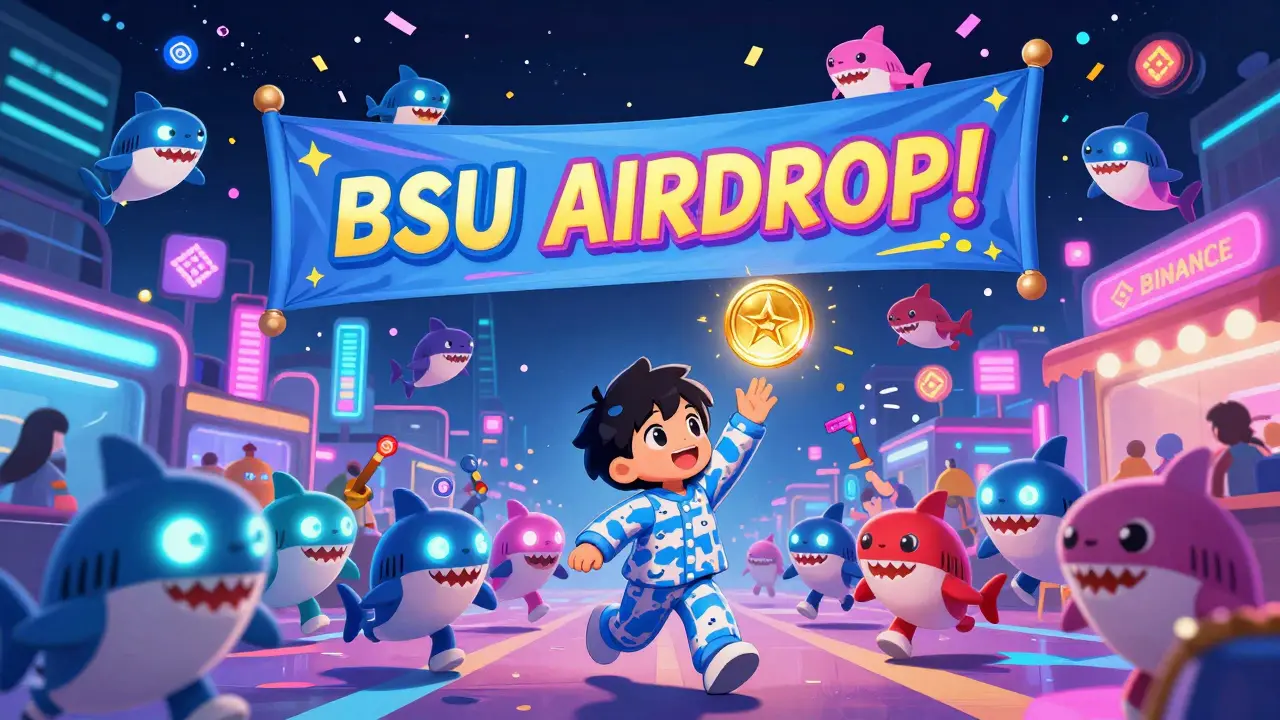
Baby Shark Token Airdrop: How to Claim BSU on Binance Alpha and What You Need to Know
The Baby Shark Token (BSU) airdrop on Binance Alpha offered 510 tokens to users with 200 Alpha Points. It was a cultural experiment, not a financial project - and it worked.