
The landscape for cryptocurrency in the Philippines shifted dramatically on May 30, 2025. The Securities and Exchange Commission (SEC), the country's primary regulator for securities, issued two critical memoranda that fundamentally changed how crypto businesses must operate. These were SEC Memorandum Circular No. 4 and SEC Memorandum Circular No. 5. Together, they established the Crypto-Asset Service Provider (CASP) regulatory framework. This wasn't just a minor update; it was the first comprehensive legal structure for digital assets in the nation, designed to protect investors after global collapses like FTX.
If you are trading crypto in the Philippines, these rules matter. They don't ban trading, but they do ban unregistered platforms. By July 5, 2025, the clock started ticking for exchanges to comply or face severe penalties. As of early 2026, the enforcement phase is in full swing, with major global names already exiting or facing blocks. Here is what you need to know about the new reality of Philippine crypto.
The Birth of the CASP Framework
To understand the enforcement, you first need to understand the rules. The SEC created a specific category called Crypto-Asset Service Providers (CASPs). Any entity providing crypto services to Filipinos-whether it’s an exchange, wallet provider, or broker-must register as a domestic corporation under this classification.
Why did the SEC move so fast? Chairperson Emilio B. Aquino led this initiative to close loopholes that allowed foreign scams to target local users. The goal was clear: stop fraud, market manipulation, and money laundering. The SEC made it explicit in August 2025 that this is not a ban on cryptocurrency. Instead, it is a mandatory registration requirement. If you want to serve Filipino clients, you must play by the book.
The requirements are strict. Here is what every CASP had to deliver:
- Minimum Capital: A paid-up capital of 100 million Philippine pesos (roughly $1.8 million USD). This ensures the company has enough skin in the game.
- Local Incorporation: You cannot just register a branch office. You must be a Philippine domestic corporation.
- Physical Presence: A physical office within the country is mandatory. No more anonymous servers overseas.
- Fund Segregation: Customer funds must be kept separate from company assets. This prevents companies from spending user money on operations or bad investments.
- Reporting: Monthly financial reports to the SEC’s PhiliFintech Innovation Office.
Additionally, platforms must implement blockchain analytics tools to monitor transactions over 50,000 PHP ($900 USD) to comply with anti-money laundering laws. Security protocols now require multi-factor authentication, cold storage for 95% of customer assets, and regular third-party audits. The bar is high, intentionally so.
The Binance Precedent: How Enforcement Works
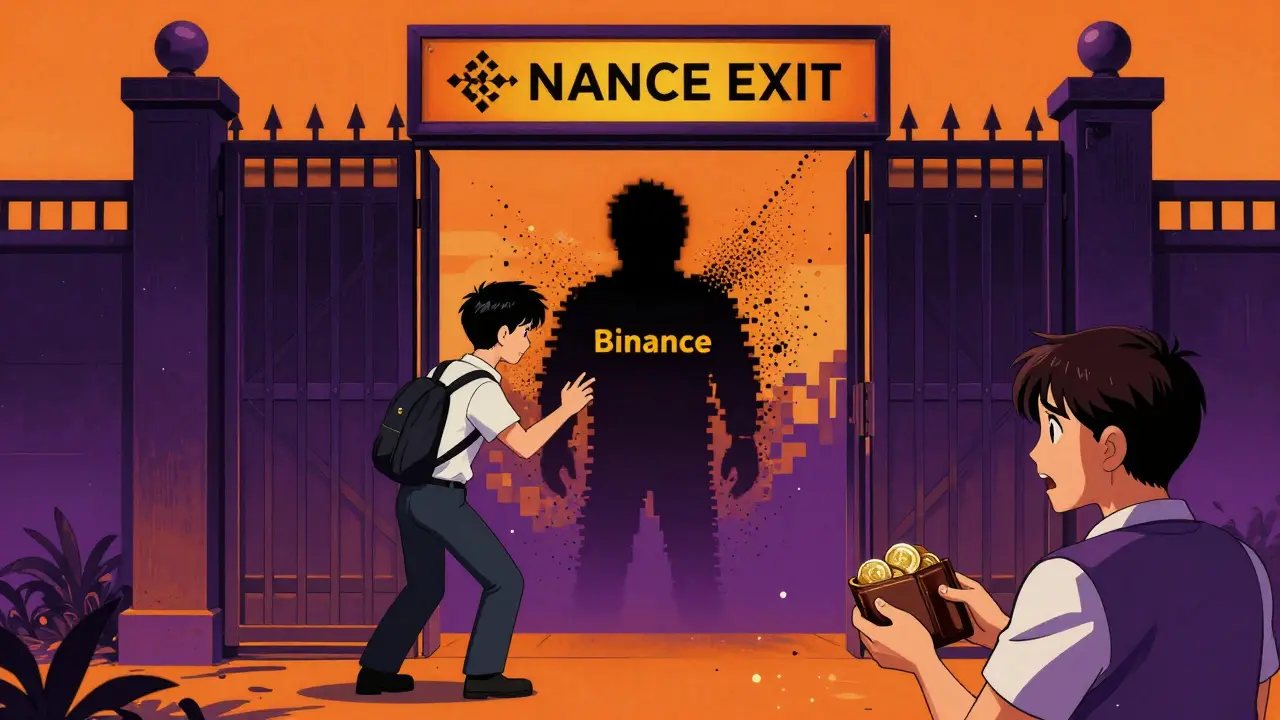
You might wonder if these rules are just paper tigers. The answer is no. The SEC proved its teeth with the Binance case in 2024. Binance, one of the world’s largest exchanges, operated without proper authorization. The SEC didn’t just send a letter; they coordinated with internet service providers (ISPs) to restrict access, requested app store removals, and issued public warnings.
Binance was given a 90-day exit period. During this time, users could withdraw their funds. According to the SEC’s November 2024 post-enforcement report, 78% of affected users completed their withdrawals. While 12% reported verification difficulties, the platform eventually withdrew completely from the Philippine market. This set a powerful precedent: non-compliance leads to total exclusion.
The impact was immediate. The Philippine National Police’s Cybercrime Division reported a 67% decrease in crypto-related fraud cases in 2024 following these actions. For ordinary investors, this meant safer waters, even if it meant fewer platform choices.
August 2025: The Crackdown on Global Exchanges
Building on the Binance success, the SEC launched a broader enforcement wave in August 2025. On August 1, 2025, a public advisory named ten major global exchanges operating without authorization. The list included heavyweights like OKX, Bybit, KuCoin, Kraken, LBank, and CoinW.
The strategy mirrors the Binance blockade. The SEC is working with the National Telecommunications Commission (NTC) to block access to these sites. Website blocking is expected to begin September 1, 2025, following a 30-day notice period. App stores are also being pressured to remove these applications.
Atty. Paolo Ong, Assistant Director of the SEC’s Enforcement and Investor Protection Department, stated clearly during Philippine Blockchain Week 2025: "The rules will give more teeth to our enforcement team, and they can be more assertive in going after unregistered platforms." He emphasized that fund segregation is the key measure protecting investors from the fate of those who lost everything in collapsed exchanges.
Penalties for Non-Compliance
If you are running a crypto business targeting Filipinos, ignore these rules at your peril. The penalties are severe and cumulative:
- Initial Fines: Ranging from 50,000 to 10 million PHP ($900 to $180,000 USD) per violation.
- Daily Penalties: An additional 10,000 PHP ($180 USD) for every day the violation continues.
- Criminal Liability: Under the Securities Regulation Code, operators face up to 2 million PHP ($36,000 USD) in fines and five years imprisonment.
This isn't just about money; it’s about criminal records. The SEC’s Cyber and Forensics Division provides technical support for investigations, making it harder for offenders to hide behind anonymity.
Impact on Traders and the Market
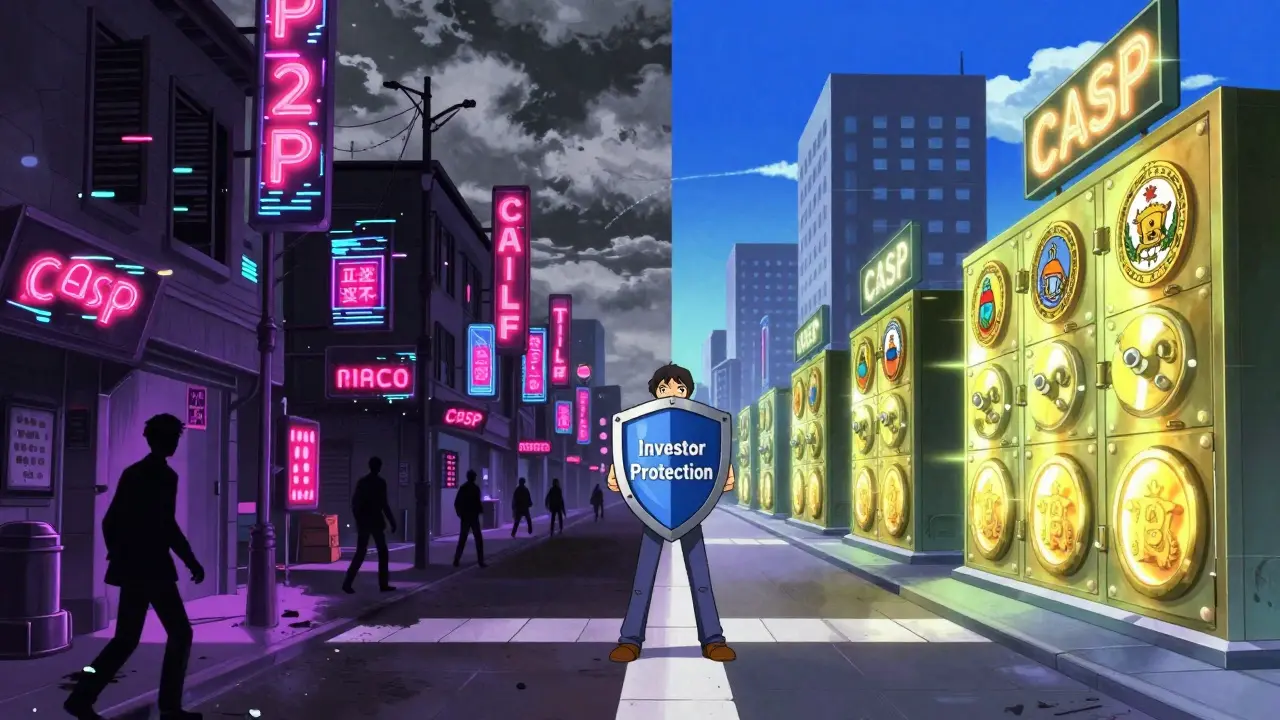
For the average Filipino trader, the changes are significant. Chainalysis data from 2024 showed 15 million active crypto users in the Philippines, representing 9% of the population. About 85% of these users accessed services through unlicensed international platforms. Now, those platforms are disappearing.
Social media sentiment reflects mixed feelings. On Reddit’s r/PhilippinesCrypto, thread #2874 generated hundreds of comments. User 'CryptoPH2020' noted, "I lost 150,000 PHP on Celsius in 2022 - these rules might be strict but they'll save others from the same fate." Trendrr’s sentiment analysis showed 58% positive sentiment on Twitter/X, with praise for "protecting ordinary investors" (42% of positive comments).
However, criticisms remain. 61% of negative comments focused on reduced access to international platforms. Some fear activity will migrate to riskier, unregulated channels or peer-to-peer networks. The Asian Development Bank estimates that 15-20% of current crypto activity could shift to harder-to-regulate channels like VPNs or P2P deals.
Market volume is expected to dip initially. Fitch Ratings projects a 35-40% reduction in transaction volume in the short term. However, long-term growth projections were revised from 22% to 14% annually, with significantly reduced volatility. Stability is prioritized over speed.
| Feature | Pre-July 2025 | Post-July 2025 (Current) |
|---|---|---|
| Platform Access | Open to all global exchanges | Restricted to registered CASPs only |
| Capital Requirement | None | 100 Million PHP minimum |
| Fund Safety | No mandate for segregation | Mandatory segregation of customer funds |
| Enforcement | Advisory warnings | Site blocking, fines, criminal charges |
| User Base | 15 Million (mostly via unlicensed apps) | Expected initial drop, then stabilization |
What About DeFi?
A common question is whether Decentralized Finance (DeFi) protocols are covered. Currently, the CASP framework specifically excludes DeFi protocols from registration requirements. However, there is a catch. CASPs are prohibited from offering yield-generating products exceeding 20% annual percentage yield (APY) without additional SEC approval. This limits the ability of regulated exchanges to promote high-risk DeFi products.
Looking ahead, SEC Commissioner Maria Lourdes Limgenco indicated in July 2025 that the next phase of regulation will address smart contract risks and liquidity pool vulnerabilities by 2027. DeFi won’t be ignored forever.
How to Comply: The Registration Process
If you are a crypto business owner, you have a window to comply. The implementation timeline allows 90-120 days for full registration. The SEC’s PhiliFintech Innovation Office aims to process applications within 30 business days of complete submission, though early adopters report average processing times of 45 days.
You will need:
- Proof of capitalization (100M PHP).
- Detailed business plans.
- Organizational structure documents.
- Risk management frameworks.
- Cybersecurity protocols meeting ISO 27001 certification standards.
The SEC has launched a dedicated CASP registration portal with video tutorials in Tagalog and English. Support includes weekly virtual town halls every Wednesday at 10 AM Philippine Standard Time. Fewer than 5% of current Philippine crypto service providers meet all requirements as of August 2025, according to Chainalysis estimates.
Future Outlook: Compensation Funds and Beyond
The SEC is not stopping at enforcement. Plans are underway to establish a Crypto-Asset Investor Compensation Fund by Q1 2026. This fund will be financed by CASP registration fees, set at 0.05% of gross revenue. It is projected to accumulate 250 million PHP ($4.5 million USD) annually. This creates a safety net for investors if a registered CASP fails.
The Philippines’ approach is distinctive in Asia. Unlike Singapore, which allows local registration, the Philippines requires full domestic incorporation. Baker McKenzie noted in August 2025 that this makes the Philippines’ framework one of Asia’s most stringent, second only to China’s outright ban. Indonesia and Malaysia have implemented similar registration requirements recently, suggesting a regional trend toward tighter control.
For the Filipino investor, the era of wild west crypto is over. The new era demands caution, compliance, and trust in regulated entities. While access to some favorite global platforms may be restricted, the protection against fraud and loss is stronger than ever.
Is cryptocurrency illegal in the Philippines?
No, cryptocurrency itself is not illegal. Trading and investing in crypto are permitted. However, using unregistered platforms to trade is prohibited. All Crypto-Asset Service Providers (CASPs) must register with the SEC. The SEC explicitly stated that the CASP Rules do not prohibit cryptocurrency trading or investment, but rather establish safeguards.
Which crypto exchanges were banned by the SEC in 2025?
In August 2025, the SEC initiated enforcement actions against ten major global exchanges operating without authorization, including OKX, Bybit, KuCoin, Kraken, LBank, and CoinW. Previously, Binance was forced to exit the market in 2024 due to non-compliance. These platforms face website blocking and app removal.
What are the penalties for running an unregistered crypto exchange?
Penalties include initial fines of 50,000 to 10 million PHP per violation, daily penalties of 10,000 PHP for ongoing violations, and potential criminal liability carrying maximum penalties of 2 million PHP and 5 years imprisonment under the Securities Regulation Code.
Do I need to register my crypto business as a domestic corporation?
Yes. The CASP framework mandates that all entities providing crypto-asset services to Filipinos must register as domestic corporations with the SEC. Foreign branches or representative offices are not sufficient; full local incorporation is required.
Are DeFi protocols regulated under the CASP rules?
Currently, decentralized finance (DeFi) protocols are excluded from registration requirements. However, CASPs are prohibited from offering yield-generating products exceeding 20% APY without additional SEC approval. Future regulations expected by 2027 will likely address smart contract risks and DeFi vulnerabilities.
What happens to my funds if I use a blocked exchange?
If an exchange is blocked, access to your funds may become difficult or impossible. The SEC advises users to withdraw funds from unregistered platforms immediately. In the case of Binance, users were given a 90-day exit window. Using unregistered platforms carries significant risk of loss.
When does the Crypto-Asset Investor Compensation Fund start?
The SEC plans to establish the Crypto-Asset Investor Compensation Fund by Q1 2026. It will be funded by CASP registration fees (0.05% of gross revenue) and is projected to accumulate 250 million PHP annually to protect investors in case of CASP failures.