
You’ve probably seen the ads. Maybe a friend sent you a link, or an influencer on social media swore by it. The promise is always the same: high returns on Ethereum with zero risk, powered by some secret "AI" technology. The platform in question is called Ring Exchange. But here is the hard truth that most promotional videos skip: after digging through regulatory databases, user reviews, and security audits, there is virtually no evidence that Ring Exchange is a legitimate business.
In fact, everything points to it being a potential cryptocurrency scam. This isn’t just a hunch; it’s based on how these fraudulent operations typically behave. If you are thinking about depositing money into Ring Exchange, stop. Read this guide to understand why it fails every basic safety check and what you should look for instead to keep your digital assets secure.
The Missing Evidence: Why Legitimacy Fails Here
When you evaluate any financial platform, especially one dealing with volatile assets like cryptocurrency, transparency is non-negotiable. A legitimate exchange operates in the open. You can find their physical address, their CEO’s name, and their registration numbers with government bodies. With Ring Exchange, you hit a wall of silence.
We checked the major regulatory watchdogs. In the United States, the California Department of Financial Protection and Innovation (DFPI) maintains a public tracker of crypto scams. They list hundreds of fraudulent entities, from btc01.org to capnovas.com, but Ring Exchange doesn’t even appear as a registered entity. That absence is telling. Legitimate platforms register as Money Services Businesses (MSBs) with the Financial Crimes Enforcement Network (FinCEN) to comply with anti-money laundering laws. No such record exists for Ring Exchange.
Furthermore, independent verification sites that track exchange reliability-such as CoinGecko and CoinMarketCap-do not list Ring Exchange. These platforms aggregate trading volume and liquidity data from thousands of verified sources. If an exchange isn’t listed there, it usually means it has no real trading volume. Without real volume, you aren’t trading against a market; you are trading against the house, which controls the price and your ability to withdraw.
| Feature | Legitimate Exchange (e.g., Kraken, Binance) | Ring Exchange |
|---|---|---|
| Regulatory Registration | Registered with FinCEN, SEC, or local equivalents | No verifiable registration found |
| Public Leadership | Named CEOs and team members with LinkedIn profiles | Anonymous or fake stock-photo teams |
| User Reviews | Thousands of verified reviews on Trustpilot/Reddit | Few or no independent reviews; mostly bot-generated |
| Trading Volume | Listed on CoinGecko/CoinMarketCap | Not listed on major trackers |
| Withdrawal Process | Clear fees, standard processing times | Hidden fees, "tax" demands before withdrawal |
How the Trap Works: Common Scam Tactics
If Ring Exchange isn’t a real market, how does it lure people in? It uses psychological triggers that exploit hope and fear. Understanding these tactics helps you spot them before you lose money.
The "Too Good to Be True" Profit Promise
Scammers often claim they use advanced algorithms or AI to guarantee profits. They might show screenshots of accounts growing by 10% or 20% daily. Remember this rule: if someone could consistently double their money with an app, they wouldn’t need your investment. They would just borrow from banks at low interest rates. Real trading involves risk. Guaranteed returns are a myth.
Social Media Recruitment
According to data from the Massachusetts Attorney General’s office, nearly 80% of crypto scam victims are recruited through social media. You might get a DM on Instagram, WhatsApp, or Telegram from someone who seems friendly. They build a relationship first-this is known as a "pig butchering" scam. Once you trust them, they introduce you to Ring Exchange. They might even send you a small amount of money to prove it works, encouraging you to deposit much more.
The Withdrawal Block
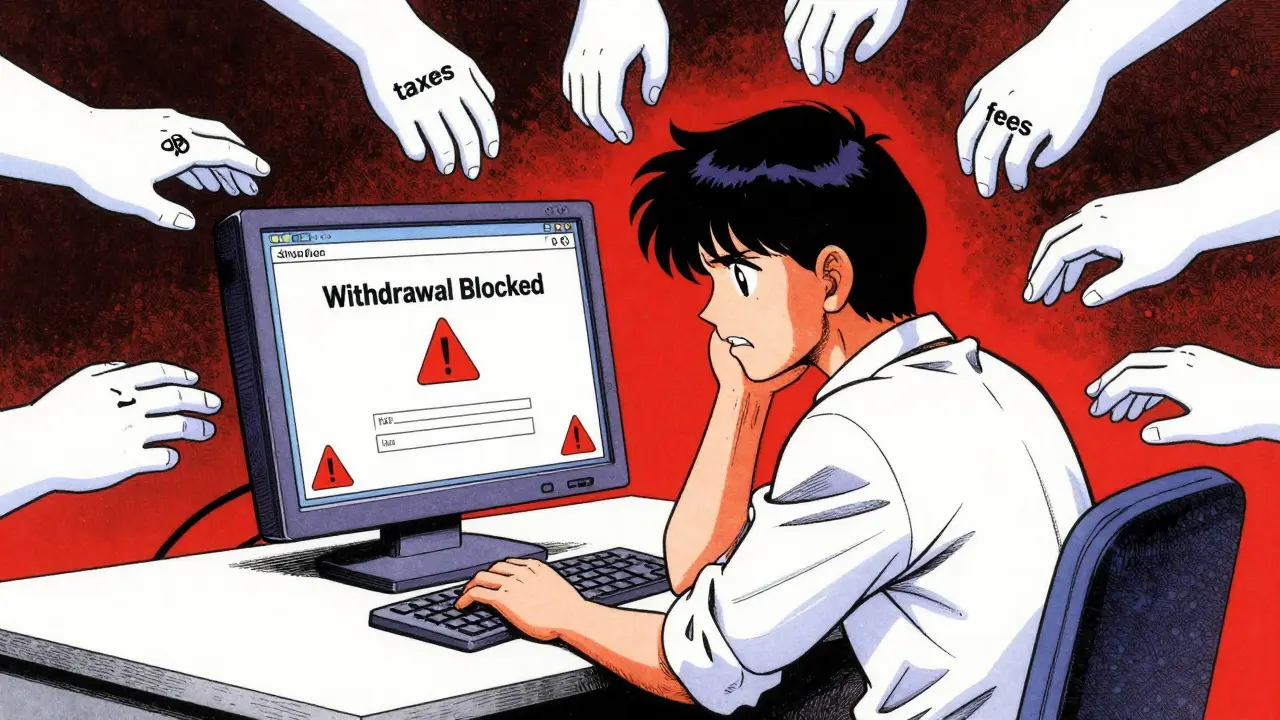
This is where the trap snaps shut. You log in, see your balance has doubled, and try to withdraw your funds. Suddenly, the button is grayed out. Customer support tells you that you need to pay a "verification fee," a "tax," or a "security deposit" to release your money. They might demand $500, then $1,000, then $5,000. Each payment buys you nothing. The goal is to extract as much cash as possible before shutting down the site.
Red Flags You Must Watch For
You don’t need to be a cybersecurity expert to spot a shady platform. Look for these specific warning signs. If you see three or more, walk away immediately.
- Pressure to Act Fast: Phrases like "limited-time offer" or "window closing soon" are designed to bypass your logical thinking. Legitimate investments take time to research.
- Unverifiable Claims: If they mention "partnerships" with big companies like Visa or Microsoft, check those companies’ official press releases. Scammers often steal logos without permission.
- Poor Website Quality: Check the URL. Does it have strange characters? Is it a new domain (less than a year old)? Use tools like WHOIS lookup to see when the domain was registered. New domains selling "proven" tech are suspicious.
- Lack of Contact Info: A real company has a physical address and a working phone number. If you only have a chatbot or a generic email form, that’s a red flag.
- Confusing Fee Structures: Legitimate exchanges publish clear fee schedules. If you can’t find out exactly how much they charge for deposits and withdrawals, assume they will charge whatever they want later.
Safe Alternatives for Trading Ethereum
Avoiding a scam doesn’t mean you have to stay out of the crypto market. There are dozens of reputable, regulated exchanges that make it easy to buy, sell, and store Ethereum safely. Here are three top-tier options that pass rigorous security and compliance checks.
1. Coinbase
Coinbase is publicly traded on the NASDAQ, meaning its financials are audited and transparent. It is one of the most trusted names in the industry, serving millions of users. While fees can be higher for instant buys, their security infrastructure is top-notch, including insurance for digital assets held in custody.
2. Kraken
Known for its strong focus on privacy and security, Kraken has never been hacked. It offers a wide range of trading pairs and competitive fees for active traders. They provide detailed proof-of-reserves reports, allowing you to verify that your funds are actually backed by real assets.
3. Binance
Binance handles the highest trading volume in the world. It offers advanced features for experienced traders and a simplified interface for beginners. While it has faced regulatory scrutiny in various countries, it remains a dominant player with robust security measures like two-factor authentication (2FA) and cold storage for the majority of user funds.

What To Do If You’ve Already Deposited
If you suspect you’ve already sent money to Ring Exchange, act quickly. Time is your biggest enemy in these cases.
- Stop Sending Money: Do not pay any "fees" to withdraw your funds. These payments will disappear. The initial deposit is likely gone, but further payments are guaranteed losses.
- Contact Your Bank or Card Issuer: If you deposited via credit card or bank transfer, call them immediately. Explain that you were defrauded. They may be able to reverse the transaction if caught early enough.
- Report the Scam: File a report with your local consumer protection agency. In the US, use the Federal Trade Commission (FTC) ReportFraud portal. In California, report to the DFPI. Providing details helps authorities track and shut down these operations.
- Secure Your Accounts: Change passwords for any accounts where you used similar credentials. Enable two-factor authentication everywhere.
Final Thoughts on Staying Safe
The cryptocurrency space moves fast, and scammers adapt quickly. Platforms like Ring Exchange thrive on information asymmetry-they know more than you do. By doing basic due diligence, you level the playing field. Always ask: Who runs this? Where are they registered? Can I verify the reviews independently? If the answers are vague, trust your gut. Your money is worth protecting.
Is Ring Exchange a legitimate crypto exchange?
There is no verifiable evidence that Ring Exchange is a legitimate business. It lacks regulatory registration, appears on no major tracking sites like CoinGecko, and exhibits common scam characteristics such as anonymous leadership and unrealistic profit promises.
How can I tell if a crypto exchange is a scam?
Look for red flags like pressure to invest quickly, lack of physical address or contact info, unverified user reviews, and demands for "taxes" or "fees" before you can withdraw funds. Legitimate exchanges are transparent about their fees and regulatory status.
What should I do if I lost money to Ring Exchange?
Stop sending any more money immediately. Contact your bank or credit card issuer to request a chargeback. Then, file a report with your local consumer protection agency, such as the FTC in the US or the DFPI in California.
Are there safe alternatives for buying Ethereum?
Yes. Reputable, regulated exchanges include Coinbase, Kraken, and Binance. These platforms are publicly tracked, have transparent fee structures, and employ robust security measures like two-factor authentication and cold storage.
Why don't scammers just let me withdraw my money?
Scammers use "fake balances" on their websites. The numbers you see are just code; they don't represent real assets. When you try to withdraw, they block you to force you to pay more "fees," extracting maximum value before disappearing.