
Most crypto exchanges feel like trading terminals. You deposit money, click buy or sell, and hope the interface doesn’t crash during a market spike. PointPay is a comprehensive cryptocurrency banking platform that combines an exchange, digital wallet, and payment system into one ecosystem. It launched in 2018 and has grown to serve over 3 million users across 200 countries. Instead of just offering charts and order books, PointPay tries to act like a bank. You can earn interest on stablecoins, take out loans using crypto as collateral, and even stake their native PXP token for high returns. But does this “crypto banking” model actually work in practice, or is it just marketing fluff? Let’s break down what you get when you sign up.
What Is PointPay Really?
PointPay positions itself differently from giants like Binance or Coinbase. While those platforms focus heavily on trading volume and liquidity, PointPay focuses on utility. Think of it as a financial super-app. The headquarters are spread across St. Vincent & the Grenadines, Estonia, and Lithuania. This multi-jurisdictional setup isn’t random. The Lithuanian subsidiary, UAB Point Pay EU, holds an official license to operate with digital assets. This gives European users a layer of regulatory compliance that many offshore-only exchanges lack. For users outside Europe, the global entity still operates, but the legal protections vary by region.
The core promise is accessibility. They claim anyone with internet access can use their services. In reality, this means they accept users from most countries, though local regulations may restrict specific features like fiat deposits or lending. If you’re looking for a place to store your Bitcoin and forget about it, PointPay might be overkill. If you want to earn yield on your idle USDT while keeping everything in one dashboard, it’s worth a closer look.
Trading Experience: Classic, Advanced, or Quick?
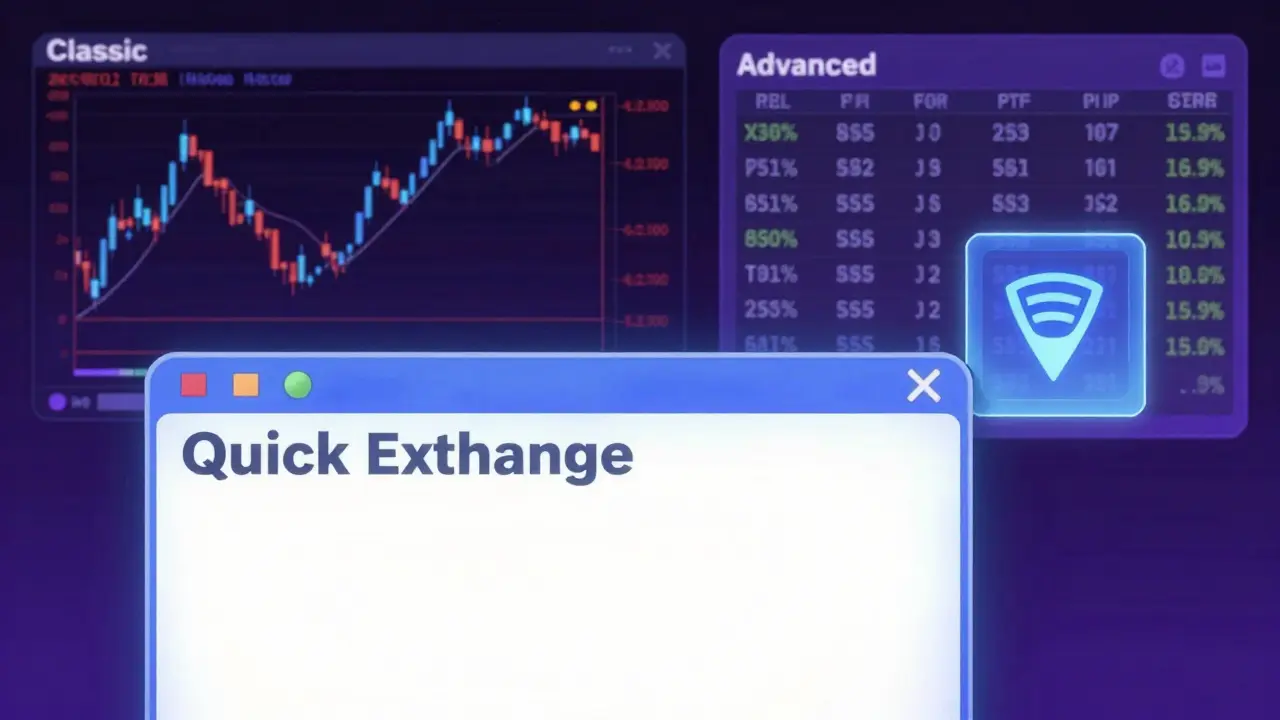
Not everyone wants to stare at candlestick charts all day. PointPay recognizes this by offering three distinct interfaces. The Quick Exchange is designed for beginners. It works like a simple swap widget: select the coin you have, select the coin you want, and confirm. There are no complex order types here. It’s fast, clean, and perfect for moving funds between wallets or buying small amounts of altcoins.
For active traders, the Classic and Advanced versions provide more control. These interfaces support market orders, limit orders, and stop-limit orders. The execution speed is reportedly high, which matters when you’re trying to enter or exit a position during volatile moves. Liquidity is decent for major pairs like BTC/USDT and ETH/USDT, but smaller altcoin pairs might suffer from wider spreads. If you trade large volumes daily, you’ll notice the difference compared to top-tier exchanges. For average retail traders, however, the liquidity is sufficient.
Fees are a big part of the equation. PointPay claims some of the lowest trading and withdrawal fees in the market. While exact numbers fluctuate based on your VIP level and PXP holdings, the structure generally rewards active users and those who hold the platform’s token. Always check the current fee schedule before executing large trades, as promotional rates often expire.
Earning Money: Interest, Lending, and Staking
This is where PointPay shines. Most exchanges offer minimal interest on balances, maybe 1-2% APY if you’re lucky. PointPay pushes much higher numbers. Through their Checking or Savings accounts, you can earn up to 8% APY on popular stablecoins like USDT, USDC, and DAI. This beats traditional savings accounts by a wide margin. The catch? You need to keep your funds in their Earn accounts, not just sitting in a Spot wallet.
The real kicker is the PXP token staking. By locking your PXP tokens for 3, 6, or 12 months, you can earn up to 20% per year. The reward scale progresses based on how much you invest and how long you lock it. This is aggressive pricing. To sustain these yields, PointPay likely uses a portion of transaction fees and new user inflows. As with any high-yield product, monitor the sustainability. If the user base grows slower than expected, yields could drop.
They also offer a lending system. You can borrow USDT against seven popular cryptocurrencies as collateral. No credit checks are required because your crypto secures the loan. This is useful if you need cash without selling your assets and triggering capital gains taxes. Just watch your collateral ratio closely. If the market crashes, your coins could be liquidated.
Security and Regulatory Status
Security is non-negotiable in crypto. PointPay describes its storage measures as “state-of-the-art.” While they don’t publish detailed technical audits publicly, they do employ multi-layered security protocols. This typically includes cold storage for the majority of funds, two-factor authentication (2FA) for logins, and anti-phishing codes. I always recommend enabling every available security feature on your account immediately after signing up.
Regulation is another key factor. The Lithuanian license is a significant plus for EU residents. It means PointPay must adhere to strict anti-money laundering (AML) and know-your-customer (KYC) rules. This adds friction during onboarding-you’ll need to upload ID documents-but it also adds legitimacy. For users in unregulated regions, the platform still operates, but you assume more risk regarding dispute resolution and fund recovery.
| Feature | PointPay | Binance | Coinbase |
|---|---|---|---|
| Stablecoin Yield | Up to 8% APY | Variable (often lower) | N/A |
| Native Token Staking | Up to 20% APY | BNB Staking (lower) | N/A |
| Loan Collateral | Crypto-backed loans | Crypto-backed loans | Limited |
| EU Regulation | Lithuanian License | Varies by region | US/EU Compliant |
| User Interface Options | 3 Types (Quick, Classic, Advanced) | Standard + Pro | Simple Only |
The PXP Token: Utility or Speculation?
The PXP token is central to PointPay’s economy. It trades on several exchanges including MXC, WhiteBIT, and Bitrue. Currently, it hovers around $0.0239 per token. The primary use cases are fee discounts and staking rewards. Holding PXP reduces your trading costs, making it attractive for frequent traders. Staking it generates that high 20% yield mentioned earlier.
Is it a good investment? That depends on your view of PointPay’s growth. If the platform continues to attract millions of users and expands its DEX module, demand for PXP could rise. However, low-priced tokens can be volatile. The weekly price swings can be sharp. Don’t allocate more than you can afford to lose. Treat PXP as a utility tool first, speculation second.

Future Roadmap: DEX and Debit Cards
PointPay isn’t resting on its laurels. Their roadmap includes a DEX module with Automated Market Maker (AMM) capabilities. This will allow users to trade directly from their wallets without going through the centralized order book. It bridges the gap between CEX (Centralized Exchange) convenience and DeFi (Decentralized Finance) privacy. Liquidity pools will also be introduced, letting users provide liquidity and earn fees.
Another upcoming feature is crypto debit cards. This allows you to spend your crypto balance at any merchant that accepts Visa or Mastercard. The conversion happens instantly behind the scenes. This solves the biggest pain point for crypto holders: spending your assets in the real world. Once live, this feature will make PointPay a true competitor to traditional banks.
Who Should Use PointPay?
If you’re a passive investor who wants to earn yield on stablecoins, PointPay is excellent. The 8% APY on USDT is hard to beat. If you’re a trader who wants flexible interfaces and low fees, it’s a solid choice. If you’re a developer or institutional client, their open API provides deep integration possibilities.
Avoid PointPay if you’re a high-frequency day trader needing ultra-low latency and massive depth on obscure altcoins. Stick to Binance or Kraken for that. Also, if you refuse KYC verification, PointPay won’t work for you due to their regulatory compliance requirements.
Is PointPay safe to use in 2026?
PointPay employs state-of-the-art security measures including cold storage and 2FA. Its Lithuanian subsidiary holds a valid digital asset license, adding regulatory oversight for EU users. However, no exchange is immune to risks. Always enable all security features and never share your private keys or passwords.
How much interest can I earn on stablecoins?
You can earn up to 8% APY on popular stablecoins like USDT, USDC, and DAI by placing them in PointPay’s Checking or Savings Earn accounts. Rates may vary based on market conditions and total deposits.
What is the PXP token used for?
The PXP token is used for paying trading fees at discounted rates and for staking to earn up to 20% annual returns. It also serves as a governance token within the PointPay ecosystem.
Can I take out a loan on PointPay?
Yes, PointPay offers instant crypto-backed loans. You can use seven popular cryptocurrencies as collateral to borrow USDT. No credit checks are required, but your collateral may be liquidated if the value drops below a certain threshold.
Does PointPay have a mobile app?
Yes, PointPay offers a mobile application that supports trading, wallet management, and earning features. It provides full functionality similar to the web platform, allowing you to manage your portfolio on the go.