Imagine spending months building a collection of digital art, only to lose it all in seconds because you clicked the wrong link. It’s not just a nightmare scenario; it’s reality for thousands of collectors. The NFT market is massive-valued at over $14 billion-but it’s also a wild west where traditional financial safety nets like chargebacks don’t exist. If your wallet gets drained, that money is gone forever.
In 2025 and heading into 2026, fraud attempts have surged by 45% year-over-year. Scammers are getting smarter, using AI deepfakes and sophisticated phishing tactics to trick even experienced users. But here’s the good news: most thefts aren’t due to unbreakable code hacks. They happen because users skip basic security steps. By following a few strict best practices, you can protect your assets better than 90% of people in this space.
Mastering Wallet Infrastructure: Cold vs. Hot Storage
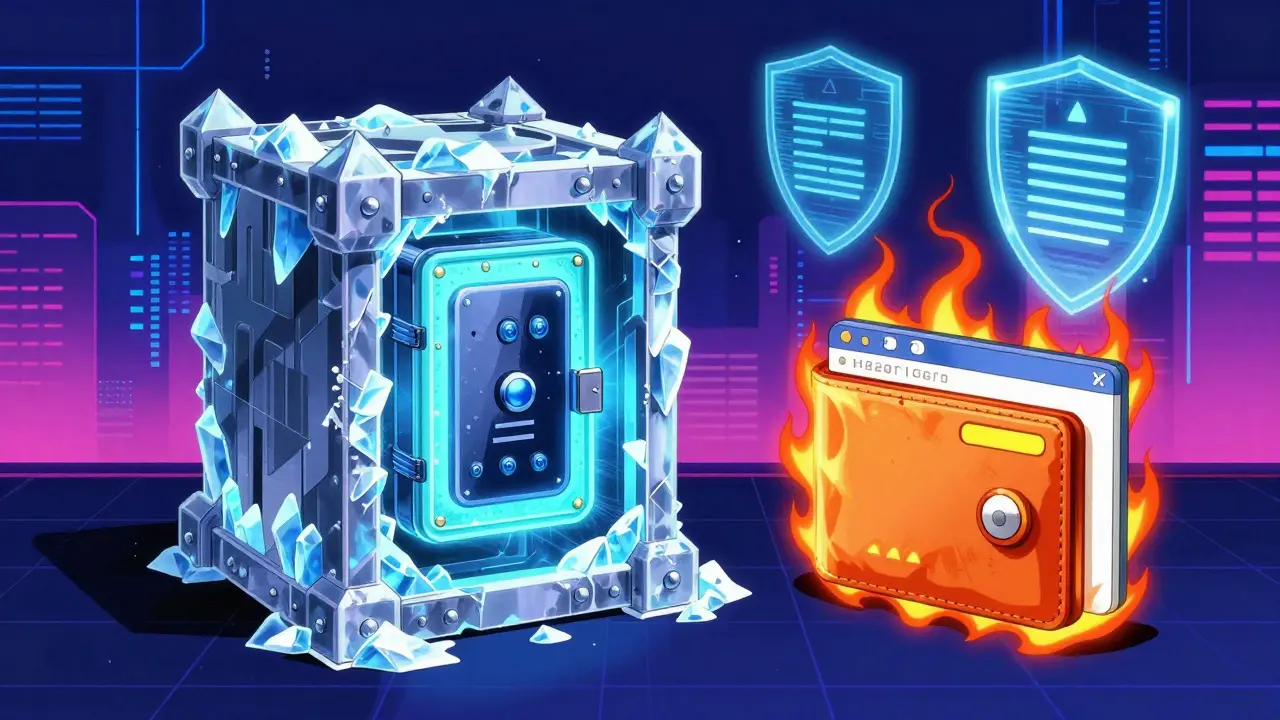
Your wallet is your bank account, your ID, and your vault all rolled into one. How you store it determines how safe it is. There are two main types: hot wallets and cold wallets. Understanding the difference is the single most important step in securing your NFTs.
Hot Wallets are software-based wallets connected to the internet, such as MetaMask or browser extensions. They are convenient for daily trading but vulnerable to remote attacks. In 2025, data showed that 18.7% of theft incidents involved compromised browser extension wallets. To harden a hot wallet like MetaMask (version 11.19.1), you must use a unique 20-character password with special characters, enable biometric authentication, and always activate transaction simulation features to preview what a smart contract is actually asking for before you sign.
Cold Wallets are hardware devices that keep private keys offline, isolating them from internet threats. Devices like the Ledger Nano X (firmware 2.3.0) and Trezor Model T (firmware 2.6.1) reduce vulnerability to remote attacks by 98% compared to hot wallets. According to internal data from Ledger in 2025, only 0.02% of theft incidents involved properly used hardware wallets. For any holding exceeding $5,000 in value, experts agree that moving assets to a cold storage device is non-negotiable.
- Use separate accounts: Create different wallet addresses for different activities. Keep your high-value PFPs (Profile Pictures) on a cold wallet, while using a separate, funded hot wallet for low-risk interactions or gas fees.
- Physical backup: Never write your 24-word seed phrase on paper alone. Invest in a metal backup plate ($25-$100) to protect against fire or water damage. This is your ultimate recovery key.
- Avoid SMS 2FA: Use authenticator apps like Authy instead of SMS for two-factor authentication. SIM-swapping attacks are common, and SMS is easily intercepted.
The Silent Killer: Managing Token Approvals
If there is one thing that causes more losses than phishing links, it’s forgotten token approvals. When you interact with an NFT marketplace, you often grant that platform permission to move your tokens. Many users approve "unlimited" amounts for convenience. Months later, if that marketplace gets hacked or a malicious contract exploits that old permission, your assets are drained without you ever clicking a new link.
David Li, CTO of Numen Cyber, warned in early 2025 that 73% of NFT thefts originated from dormant approvals rather than direct wallet compromises. The average user had 14.3 active permissions they didn’t recognize. Each one is a backdoor waiting to be opened.
You need to audit your permissions regularly. Tools like Etherscan’s Token Approval Checker allow you to see every contract that has access to your wallet. Revoke any approval from platforms you no longer use or contracts that seem suspicious. This simple action reduced attack surfaces significantly for the 28% of experienced traders who made it a habit. Think of it like canceling credit cards you no longer carry-it’s boring, but it saves you when things go wrong.
Verifying Smart Contracts and Collections
Not all NFT projects are created equal. Some are legitimate communities with years of history; others are copycat scams designed to steal your ETH. Before you connect your wallet to buy or mint, you must verify the source.
Smart Contract Audits are third-party reviews of code by firms like OpenZeppelin to identify vulnerabilities. Legitimate projects usually undergo these audits, which cost between $15,000 and $50,000. In Q1 2025, Etherscan reported that 78% of fraudulent NFT projects deployed unverified contracts, whereas 92% of legitimate ones were audited. Always check if the contract address matches the official project website. Copy-paste directly from trusted sources, never from social media DMs.
Marketplaces are also stepping up. OpenSea’s "Collection Verification" program (launched in late 2023) adds a blue checkmark to verified collections. Verified collections showed 94% fewer counterfeit listings than unverified ones. However, adoption isn’t universal. Some top projects delayed verification, leaving collectors confused. Always cross-reference the contract address on multiple official channels-the project’s Twitter, Discord, and website-before trusting a listing.
| Platform | Key Security Feature | Verification Status | User Responsibility |
|---|---|---|---|
| OpenSea | Mandatory EIP-712 signing; Transaction Guard (AI flags) | Optional Collection Verification (Blue Check) | High (Non-custodial) |
| Rarible | Multi-sig treasury management; Simplified permission UI | Curated Project Listings | Medium-High |
| Foundation | Mandatory KYC (Identity Verification) | Invite-only / Curated | Low (Higher friction) |
| NBA Top Shot | Custodial Control (Dapper Labs holds keys) | Official Platform Only | Very Low (Platform liable) |
Combating Phishing and Social Engineering
Technology can fail, but human psychology is easier to exploit. Phishing remains the #1 threat vector. In Q1 2025, 63% of verified NFT theft incidents involved victims clicking links in fake Discord DMs or Telegram messages. Scammers create urgency, claiming your wallet needs an "emergency migration" or offering a "free airdrop" that requires a small gas fee first.
Check Point Research introduced the "Skepticism Filter" framework in their 2025 handbook. It’s simple: if an opportunity feels too good to be true, or if someone pressures you to act quickly, stop. Verify through three independent official channels. Did the project’s official Twitter post about it? Is it in the pinned message of the official Discord? Does the URL match exactly?
Also, watch out for deepfake verification. Emerging threats in mid-2025 involve AI-generated videos of project founders announcing fraudulent contract migrations. These already caused hundreds of thousands in losses. Never trust a video call or voice note alone. Cross-check with text-based official announcements.
- The Five-Minute Rule: Before signing any transaction, wait five minutes. Check the URL, the contract address, and the recipient. This pause prevented 63% of phishing losses in a 2025 collector survey.
- Beware of Urgency: Countdown timers and "last chance" warnings are classic scam tactics. Legitimate projects rarely rush you.
- Bookmark Official Sites: Don’t search for NFT marketplaces via Google ads. Bookmark the exact URLs you know are correct. Typosquatting sites (like opensea.com vs opesnea.com) are rampant.
Network and Device Hygiene
Your computer is the gateway to your wallet. If your device is infected with malware, even a hardware wallet can be compromised during the transaction signing process (via screen overlay attacks). Secure your environment.
Use WPA3-encrypted Wi-Fi connections whenever possible. Avoid public Wi-Fi for NFT transactions entirely. Install privacy extensions like Privacy Badger to block malicious tracking scripts that could facilitate session hijacking. Additionally, consider using DNS filtering services like Cloudflare Gateway to block known malicious domains at the network level.
Password hygiene matters more than ever. A Magnft survey found that 41% of collectors under 25 used the same password across multiple platforms, making them prime targets for credential-stuffing attacks. Use a reputable password manager to generate unique, complex passwords for every exchange, marketplace, and email account linked to your crypto journey.
Building a Sustainable Security Routine
Security isn’t a one-time setup; it’s a habit. Setting up comprehensive security takes about 10-15 hours initially, but maintaining it requires regular attention. Carnegie Mellon University’s Blockchain Security Lab found that users who followed comprehensive security checklists reduced successful attack rates by 89%.
Create a ritual. Every time you connect a wallet, ask yourself: "Do I trust this site? Do I need unlimited approval?" Review your token approvals monthly. Update your firmware on hardware wallets immediately when patches are released. Join community resources like the NFT Security Discord server, where real-time scam alerts help users stay ahead of emerging threats.
As we move through 2026, expect platforms to integrate more AI-powered transaction analysis. OpenSea’s "Transaction Guard" already blocked thousands of attempted thefts in its first week by flagging high-risk operations. Embrace these tools, but don’t rely on them blindly. Your vigilance is the final layer of defense.
What is the safest way to store NFTs in 2026?
The safest method is using a hardware wallet (cold storage) like Ledger Nano X or Trezor Model T. These devices keep your private keys offline, reducing vulnerability to remote attacks by 98%. For holdings over $5,000, hardware wallets are considered mandatory by security experts.
How do I revoke unused token approvals?
You can use free tools like Etherscan’s Token Approval Checker or Revoke.cash. Connect your wallet to these services to view all active permissions. Identify contracts you no longer use and click "Revoke" to remove their access. This prevents hackers from draining assets via old, forgotten permissions.
Is OpenSea safe to use?
OpenSea is generally safe if you follow best practices. It uses EIP-712 typed data signing to prevent signature spoofing and has launched "Transaction Guard" to flag risky moves. However, it is non-custodial, meaning you are responsible for your own security. Always verify collection contract addresses and avoid clicking external links from DMs.
What should I do if I think my wallet was phished?
Act immediately. Move any remaining assets to a new, secure wallet with a fresh seed phrase. Revoke all token approvals on the compromised wallet using Etherscan. Change passwords for associated email accounts and enable 2FA. Consider the original wallet compromised and never reuse its seed phrase.
Why are smart contract audits important?
Audits by firms like OpenZeppelin identify vulnerabilities in code that could allow hackers to drain funds. In 2025, 78% of fraudulent NFT projects had unverified contracts, while 92% of legitimate ones were audited. Checking for an audit report is a quick way to assess a project's legitimacy.