
Most decentralized exchanges operate on a simple, static model: you provide liquidity, you earn a tiny percentage of fees, and you pray you don't get crushed by impermanent loss. But what if the exchange actually charged more when the market went crazy, funneling those massive spikes in fees directly to the people taking the risk? That is the core gamble behind Meteora DAMM v2 is a decentralized exchange protocol on the Solana blockchain that uses a Dynamic Automated Market Maker model to adjust fees based on market volatility. If you're tired of the pennies earned on traditional pools, this system offers a high-risk, high-reward alternative that turns market chaos into a profit center.
How the Dynamic Model Actually Works
Unlike your standard swap shop, Meteora doesn't just use one giant pool of money. It uses a bin-based liquidity system. Think of it like a series of price buckets. As a liquidity provider (LP), you don't just dump your tokens into a void; you strategically place your assets into specific price bins. This creates concentrated liquidity, meaning your capital is working much harder in a narrow price range rather than being spread thin across every possible price point.
The real magic, however, is the dynamic fee structure. In a typical AMM (Automated Market Maker), fees are fixed-say 0.3%. If the market crashes or moons, the fee stays the same. Meteora flips this. When volatility spikes, fees can rocket up to 50%. This serves two purposes: it protects LPs from being "picked off" by arbitrageurs during fast moves and it generates massive yields for those who provide liquidity during the storm. Once the price stabilizes, the fees decay automatically to keep trading volume flowing.
The Numbers: Performance and Trade-offs
If you're looking at the hard data, Meteora holds a strong position in the Solana ecosystem. It captures about 8.3% of the network's DEX trading volume, trailing behind giants like Raydium and Orca. The most active pair is consistently SOL/USDC, which handles over 37% of the platform's total volume. While the average bid-ask spread is around 0.656%-slightly wider than Raydium's 0.48%-the trade-off is the potential for astronomical LP returns.
| Feature | Meteora DAMM v2 | Standard AMM (e.g., Raydium) | Concentrated AMM (e.g., Orca) |
|---|---|---|---|
| Fee Structure | Dynamic (0% to 50%) | Fixed (e.g., 0.3%) | Tiered / Fixed |
| Liquidity Type | Bin-based / Dynamic | Constant Product | Concentrated Ranges |
| Volatility Reward | Very High (Fee Spikes) | Low/Consistent | Moderate |
| Complexity | High (Bin Management) | Low (Set & Forget) | Medium |

The LP Experience: High Yields vs. Harsh Lessons
The feedback from actual users is a tale of two extremes. On one side, you have the "volatility hunters." There are documented cases of traders turning tiny 0.1 SOL positions into 10x or even 100x returns by catching a price swing in a high-fee pool. When a token's price swings wildly, those 50% fees accumulate rapidly, rewarding the LPs who had their bins positioned correctly.
On the other side, there is a steep learning curve. Many beginners have reported losing a significant chunk of their capital-some as much as 60%-not because the protocol failed, but because they didn't understand bin configuration. If you place your liquidity in a bin and the price moves far away from it, your assets sit idle, and you may suffer from severe impermanent loss. This isn't a "set-and-forget" investment; it's more like active trading.
Getting Started and Practical Tips
To use Meteora, you'll need a Solana-compatible wallet like Phantom or Backpack. The process takes about 30 to 45 minutes for a first-timer to set up their first pool. If you're diving in, avoid the temptation to jump straight into volatile "moon-shots." Start with a stable pair like SOL/USDC to get a feel for how the bins move.
A pro tip for new LPs: start with a very small position-roughly 0.05 to 0.1 SOL. Use this as "tuition money" to learn how price movements affect your specific bins. You'll want to spend at least 15-20 hours studying volatility patterns and bin management before committing significant capital. The system rewards precision, and a misplaced bin is essentially dead capital.
The Ecosystem and Future Outlook
Meteora doesn't exist in a vacuum. It often works in tandem with Jupiter Swap, which acts as an aggregator. Jupiter finds the best price across various DEXs and often routes trades through Meteora's pools. This gives Meteora a steady stream of volume without needing to attract every single trader via their own front-end.
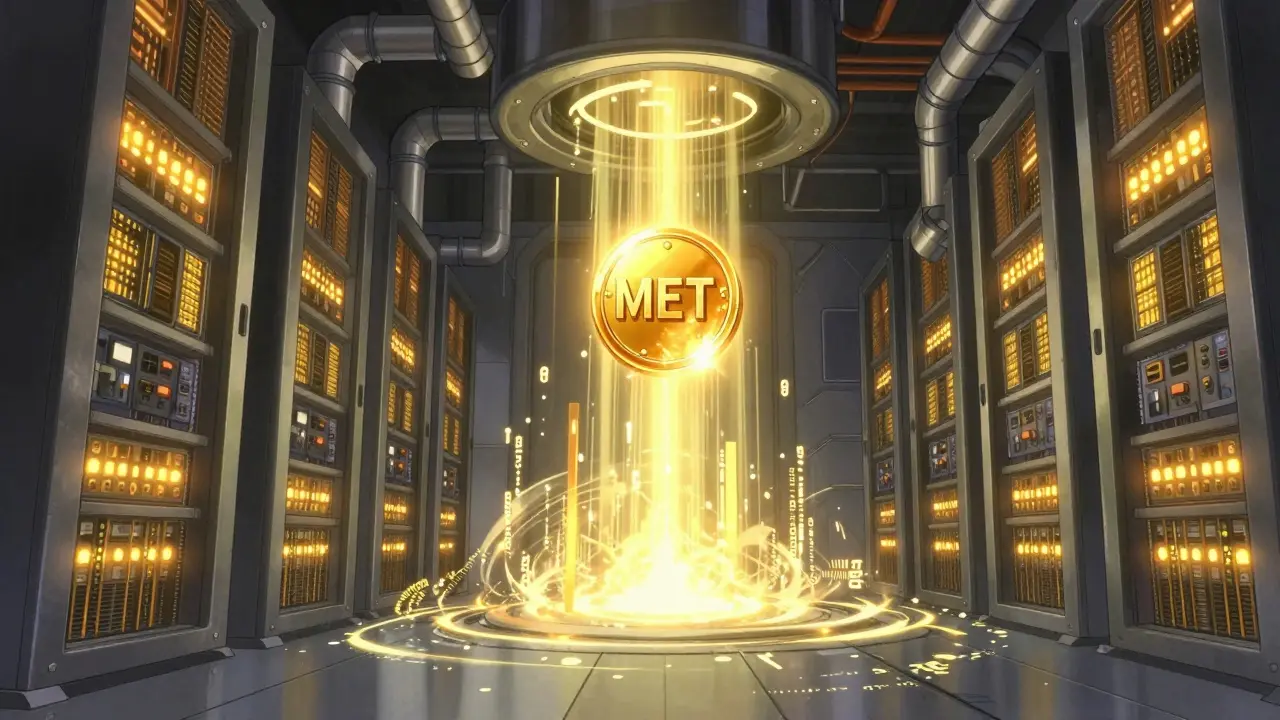
Looking ahead, there are two big things to watch. First, the MET governance token is expected to launch in early 2025, with a significant portion allocated to airdrops for active LPs. This adds a layer of incentive beyond just fee collection. Second, the integration with the Firedancer validator client should push performance even higher, potentially reducing the latency that can sometimes plague DeFi during extreme spikes.
What is the maximum fee in Meteora DAMM v2?
Fees can reach up to 50% during periods of extreme market volatility. This high ceiling is designed to protect liquidity providers and reward them for the risk of providing liquidity during unstable price movements.
How does bin-based liquidity differ from traditional pools?
Traditional pools spread liquidity across all prices from zero to infinity. Bin-based liquidity allows you to place your funds in specific price "buckets." This means your capital is only used when the asset price is within those specific bins, allowing for much higher efficiency and potential returns.
Is Meteora DAMM v2 safe for beginners?
It has a steep learning curve. About 78% of users find it complex, and many beginners report significant losses due to improper bin configuration. It is recommended to start with very small amounts and study the mechanics before investing heavily.
Which wallets are compatible with Meteora?
Since it is built on Solana, any compatible wallet like Phantom or Backpack will work. You will need a small amount of SOL to cover transaction fees on the network.
What is the risk of impermanent loss here?
Impermanent loss is a major risk, especially with concentrated liquidity. If the price moves entirely out of your selected bins, you may be left holding only the less valuable asset of the pair, which can lead to significant losses if the price doesn't return to your range.


