
Livecoin has been around since 2013 - longer than most crypto exchanges that came and went during the 2018 bear market and the 2022 crash. That alone says something. But longevity doesn’t mean safety, and it doesn’t mean ease. If you’re looking at Livecoin as a place to trade altcoins, especially ones you can’t find on Coinbase or Kraken, you need to know what you’re getting into. This isn’t a shiny new app with TikTok-style tutorials. It’s a functional, no-frills platform that works - if you’re okay with slow deposits, low liquidity, and the occasional frozen wallet.
What Livecoin Actually Offers
Livecoin’s biggest strength is its selection of crypto-fiat pairs. While most exchanges only let you buy Bitcoin or Ethereum directly with USD or EUR, Livecoin supports over 100 combinations. You can deposit euros and trade them for Shiba Inu, or send rubles to buy Chainlink. That’s rare. If you live in Europe or Russia, or just want to trade obscure tokens without first buying Bitcoin, Livecoin gives you a path most others don’t.
The platform supports dozens of altcoins - including some so obscure they barely have a website. Tokens like DibCoin (DIBC), which had a major outage in 2023, are still listed. That’s both a pro and a con. You get access to niche projects, but you also get stuck with coins that vanish without warning. There’s no vetting process here. If a project pays the listing fee, it goes live.
Fees: Lower Than Average, But Not Always Better
Livecoin charges a flat 0.18% fee for both makers and takers. That’s slightly below the industry average of 0.25%. High-volume traders can drop to 0.02%, which is competitive. But here’s the catch: you need to trade tens of millions of dollars a month to get there. For most people, 0.18% is just a small perk.
Withdrawal fees are where Livecoin shines. Bitcoin withdrawals cost 0.0005 BTC - about $30 at current prices - which is lower than Binance’s 0.0005 BTC (same) and way below Kraken’s 0.0004 BTC equivalent in USD fees. Other coins like Ethereum and Litecoin also have below-average withdrawal costs. Deposits, however, are slow. Bitcoin deposits can take up to an hour to confirm, even on a busy network. That’s longer than most top exchanges.
Why Trading Volume Matters - And Why It’s a Problem
One user on G2 wrote: “The not so nice thing about Livecoin is the volume of trading. It is often quite low, even for more popular currencies.” That’s not an outlier. Multiple reviews mention this. If you want to buy 100 ETH or sell 500,000 SHIB, you’ll likely get slapped with massive slippage. The order book is thin. You’ll see prices jump 3-5% just from a medium-sized trade.
This isn’t a bug - it’s a feature of how Livecoin operates. It doesn’t have institutional liquidity. It’s not integrated with hedge funds or market makers. It’s a retail-focused exchange with limited depth. If you’re day trading or scalping, you’ll feel it. If you’re buying a few hundred dollars of a new altcoin and holding it, you probably won’t notice.
Security and Stability: A Mixed Bag
Livecoin claims it’s never been hacked. That’s true - according to public records since 2013, there’s been no major breach. But that doesn’t mean it’s secure. There’s no proof of reserves. No regular audits. No transparency about cold storage. You’re trusting them to hold your coins, and they don’t show you how.
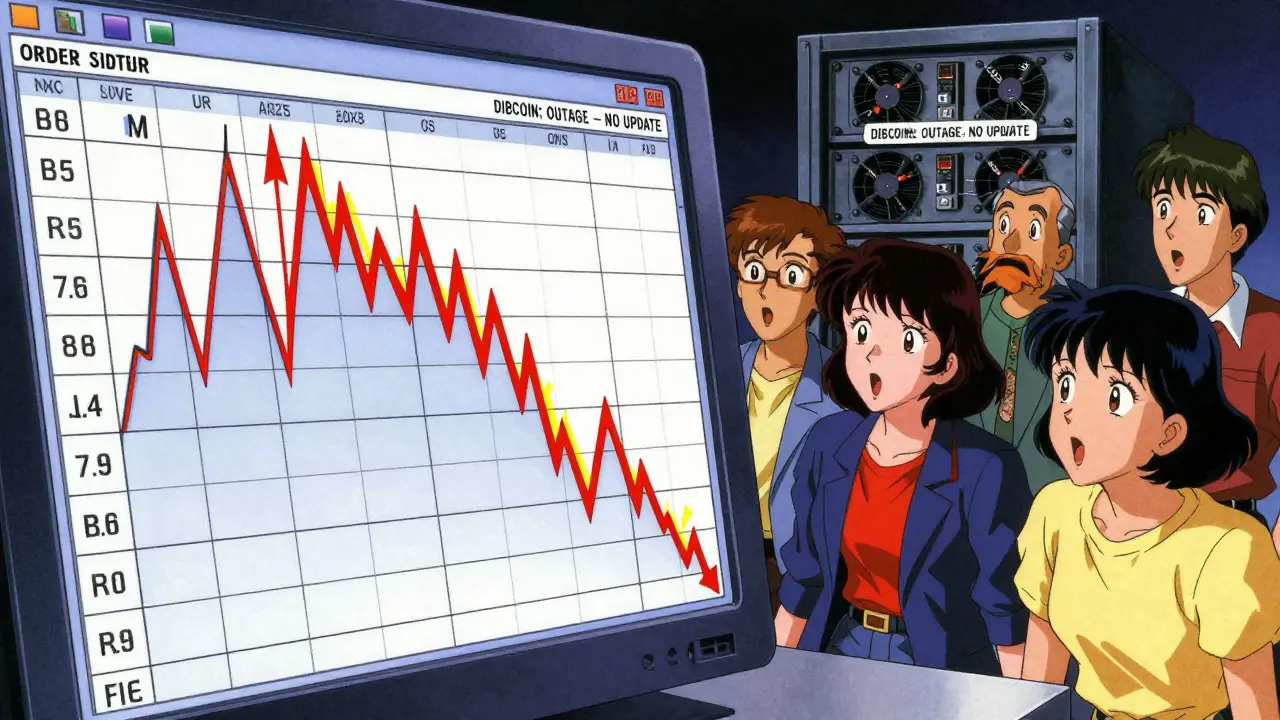
Then there’s the DibCoin incident. In late 2023, the token’s smart contract glitched. Trading froze. Wallets locked. Users lost access to over $200 in assets for two weeks. No updates. No explanation. Just silence. That’s not a hack - it’s poor project management. But Livecoin didn’t step in. They didn’t communicate. They just left users hanging.
That’s the real risk. Not being hacked. But being abandoned when things go wrong.
User Experience: Simple? Not Really
Livecoin says its interface is simple. That’s misleading. The homepage looks clean - until you try to deposit. You’ll need to navigate through multiple layers: choose your coin, pick your network, confirm your address, wait for confirmation, then hope it shows up. No instant buy button. No guided onboarding. No tutorial videos.
Verification for higher withdrawal limits is vague. You’re told to submit ID, but there’s no clear checklist. Users report being asked for utility bills, bank statements, or even selfie videos - inconsistently. One person on Reviews.io said they spent three weeks reactivating their old account just to get their money back. They got it - eventually. But not without frustration.

Customer Support: Multilingual, But Unreliable
Livecoin offers support in English, Russian, and Chinese. That’s good for international users. But response times vary wildly. Basic questions - like “Where’s my deposit?” - get answered within hours. Complex issues? Forget it. If your problem involves a third-party blockchain or a delisted token, you’re on your own.
Trustpilot’s rating dropped to 2.2/5 in January 2026 based on 56 reviews. That’s a sharp fall from 3.5+ just a year ago. People aren’t just complaining about fees or speed. They’re saying: “I lost money and no one helped.”
Who Should Use Livecoin?
Livecoin isn’t for beginners. It’s not for Americans. It’s not for traders who need fast execution or high liquidity.
It’s for:
- International users who want to trade altcoins directly with EUR, RUR, or other local currencies
- People who already hold obscure tokens and need a place to sell them
- Traders who don’t mind slow deposits and thin order books because they’re not moving large amounts
If you’re looking for a safe, simple, fast exchange - go with Kraken or Binance. If you need to trade something like $XMR or $DIBC and can’t find it anywhere else - Livecoin might be your only option. Just know the risks.
The Bottom Line in 2026
Livecoin is a relic that still works - barely. It’s not going away. It’s not collapsing. But it’s not improving either. The platform feels like it’s running on autopilot. No new features. No UI upgrades. No transparency reports. Just the same interface from 2019, with the same fee structure, and now, growing user frustration.
The 0.18% fee and low withdrawal costs are real advantages. The altcoin selection is unmatched. But the lack of communication, the thin liquidity, and the recent drop in Trustpilot ratings tell a different story. You can still use Livecoin - but you’re using it at your own risk.
Is Livecoin safe to use in 2026?
Livecoin hasn’t been hacked since 2013, which is impressive. But safety isn’t just about hacking. It’s about transparency, communication, and accountability. Livecoin doesn’t publish proof of reserves, doesn’t do public audits, and has left users stranded during token outages. It’s not unsafe - but it’s not trustworthy either. Use only what you can afford to lose.
Can I use Livecoin if I live in the United States?
No. Livecoin explicitly blocks U.S. users. If you try to sign up with a U.S. address or IP, your account will be rejected or suspended. This is a legal decision, not a technical one. If you’re in the U.S., look at Kraken, Coinbase, or Binance.US instead.
Why are deposits so slow on Livecoin?
Deposits are processed manually in some cases, especially for lesser-known cryptocurrencies. Bitcoin deposits can take up to an hour because Livecoin’s system waits for multiple blockchain confirmations before crediting your account. This is slower than exchanges like Binance, which use automated systems. There’s no way to speed it up - you just have to wait.
What cryptocurrencies are best to trade on Livecoin?
Stick to coins with decent volume: Bitcoin, Ethereum, Litecoin, Dogecoin, and Chainlink. Avoid obscure tokens like DibCoin, Solana-based memecoins, or tokens with under 100 daily trades. Low volume means wide spreads and slippage. If you’re trading something new, assume you’ll lose 5-10% just from price movement.
Does Livecoin have a mobile app?
No. Livecoin only has a web platform. There’s no official iOS or Android app. Some users use mobile browsers, but the interface isn’t optimized for small screens. Trading on the go is possible, but it’s clunky and prone to errors.
Are there better alternatives to Livecoin?
Yes, depending on your needs. If you want altcoins + fiat: Kraken and Bybit offer more liquidity and better support. If you want low fees: Binance has 0.1% for makers and 0.04% for takers. If you want safety and regulation: Coinbase or Kraken are far better. Livecoin only wins if you need a rare crypto-fiat pair that no one else supports.
If you're still considering Livecoin, start small. Deposit $50. Test a withdrawal. See how long it takes. Try trading one altcoin. If everything works without drama, you might stick with it. But if you hit a wall - and you likely will - don’t waste time. Move on.


