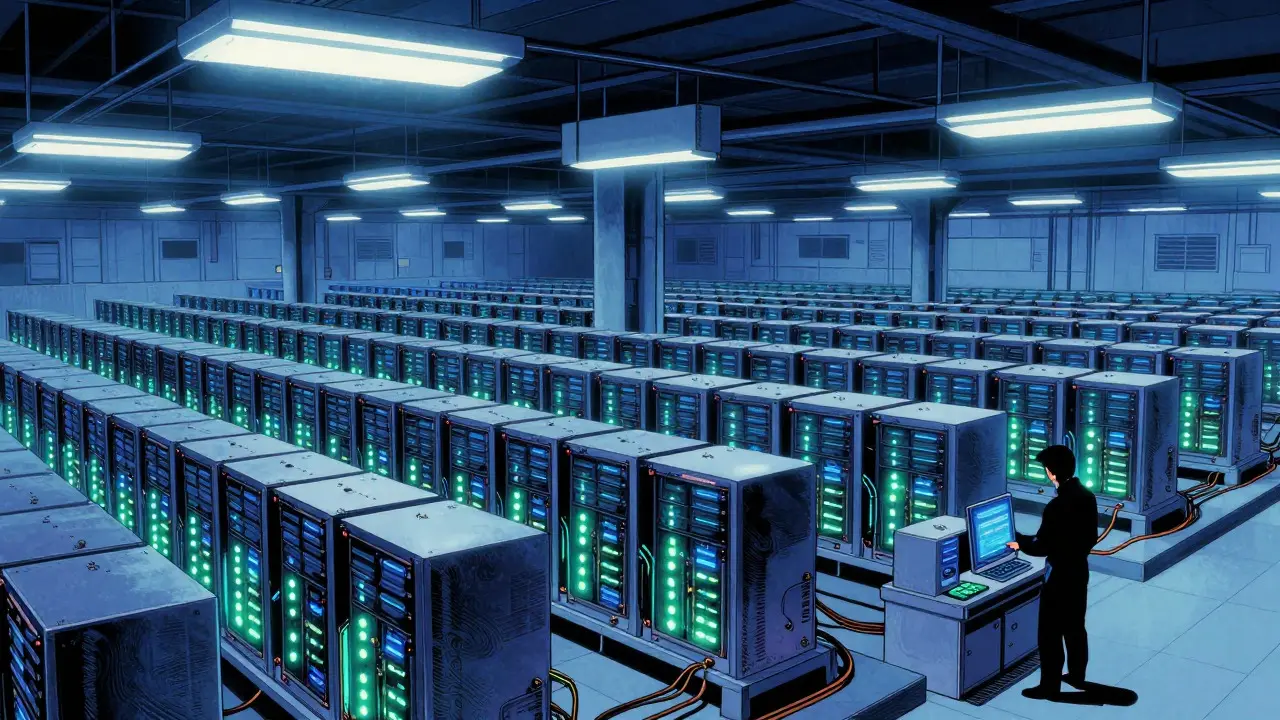
Why Iranian Electricity Is the Cheapest Fuel for Bitcoin
If you think mining Bitcoin is expensive, look at Iran. The country offers some of the lowest electricity rates in the world, creating a unique economic environment where cryptocurrency mining operations can thrive despite international sanctions and infrastructure challenges. For miners, this isn't just about saving money; it's about accessing an energy source that costs a fraction of what competitors pay globally.
The core driver here is the state-controlled energy subsidy system. In many countries, industrial users pay market rates for power. In Iran, the government provides heavily subsidized electricity to specific sectors. According to reports from early 2025, these rates can drop as low as $0.01 to $0.05 per kilowatt-hour (kWh) for certain licensed users. Compare this to Italy, where mining costs can skyrocket due to higher tariffs, or the United States, where renewable energy integration doesn't always guarantee rock-bottom prices for heavy industry. This price gap creates a profit margin that is hard to ignore.
| Country | Electricity Cost (USD/kWh) | Estimated BTC Production Cost | Primary Energy Source |
|---|---|---|---|
| Iran | $0.01 - $0.07 | ~$1,300 | Natural Gas / Subsidized Grid |
| Italy | $0.15 - $0.25+ | ~$306,000* | Mixed Grid / Renewables |
| Kazakhstan | $0.05 - $0.10 | ~$5,000 | Coal / Nuclear |
| United States | $0.04 - $0.12 | ~$15,000 - $25,000 | Hydro / Wind / Solar |
*Note: The figure for Italy reflects peak tariff scenarios and regulatory penalties cited in 2025 analyses, highlighting the volatility of non-subsidized markets.
The Hidden Cost: Strain on the National Power Grid
Cheap energy comes with a catch. The Iranian power grid is already under significant stress due to decades of underinvestment and rising demand. When you add millions of ASIC miners to the mix, the impact is measurable and severe. Mohammad Allahdad, deputy director of power generation at Tavanir, stated in July 2025 that cryptocurrency mining consumes nearly 2,000 megawatts (MW) of electricity. That represents about 5% of the country's total consumption but accounts for 15-20% of the electricity imbalance.
To put that in perspective, mining a single Bitcoin requires over 300 megawatt-hours of electricity. That is roughly the daily power usage of 35,000 Iranian households. During summer months, when air conditioning demand surges by 30-40%, the grid struggles to keep up. The result? Blackouts. Residents in cities like Tehran and Ahvaz have reported blackouts lasting 8 to 12 hours during peak summer weeks. Social media sentiment analysis from June 2025 showed that 92% of complaints regarding outages blamed mining operations.
This tension creates a cycle. The government needs foreign currency, so it allows mining. But the public suffers from heat and darkness, leading to protests. The solution often involves temporary bans or forced shutdowns, which disrupt the very industry the state relies on for revenue.

Licensed vs. Illegal Mining: A Dual Reality
Not all mining in Iran is created equal. The Central Bank of Iran (CBI) and the Ministry of Industry maintain a strict licensing regime. To operate legally, miners must:
- Obtain approval from the Ministry of Industry for equipment imports.
- Register with the Iran Power Generation Company for electricity quotas.
- Receive CBI authorization to sell mined coins for trade settlement.
However, the process is slow. Approval rates sit below 40%, and the wait time can stretch from three to six months. Meanwhile, the incentive to cut corners is huge. Licensed miners pay industrial tariffs of $0.04-$0.07/kWh, while illegal operators tap into household lines at $0.01-$0.02/kWh. This discrepancy has fueled a massive underground economy.
Estimates suggest that illegal miners consume up to two gigawatts of power daily-equivalent to the entire electricity usage of Tehran. In mid-2025, a nationwide internet outage coincided with a 2,400 MW drop in power consumption, suggesting that over 900,000 illegal devices were offline simultaneously. The government has responded with crackdowns, offering rewards for citizens who report illegal setups. In the first half of 2025 alone, authorities processed over 8,000 reports and shut down more than 2,000 operations.
Who Controls the Mines? The Role of the IRGC
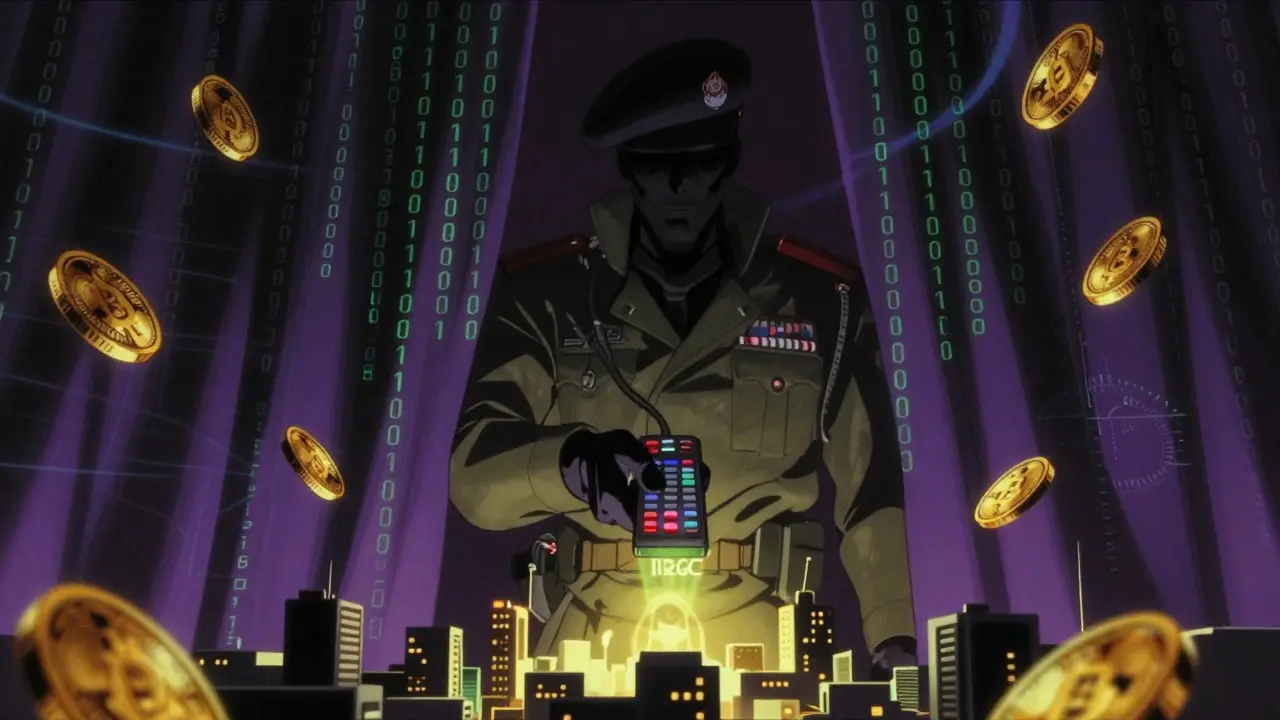
Beyond the economics, there is a political layer. The Islamic Revolutionary Guard Corps (IRGC) plays a dominant role in the sector. Analysts estimate that the IRGC controls approximately 60% of illegal mining operations and holds significant stakes in legal facilities through front companies. This control generates an estimated $400-$500 million in annual revenue for the group, bypassing central bank oversight.
Critics argue this creates a "parallel economy." Dr. Saeed Laylaz, an economic advisor, noted that the IRGC controls both the energy supply and the output, effectively monetizing public resources without transparent accountability. For ordinary Iranians, this means their subsidized electricity is being diverted to enrich powerful military entities while they endure blackouts.
Regulatory Shifts and Future Outlook
The government is trying to balance these competing interests. Recent regulations require all mining operations to use smart meters for real-time monitoring and register with industrial-scale facilities. Tariffs for licensed miners have been adjusted to $0.05-$0.08/kWh, still cheap globally but higher than before to discourage abuse.
Looking ahead, the International Energy Agency predicts that without major grid upgrades, power shortages could increase by 25-30% by 2027. The likely outcome is continued periodic bans during peak demand periods, particularly in summer, while maintaining mining as a tool for circumventing sanctions. For investors and miners, the opportunity remains, but the risk of sudden shutdowns and regulatory changes is high.
Key Takeaways for Investors and Observers
- Cost Advantage: Iran offers some of the lowest mining costs globally ($1,300/BTC vs. $306,000 in peak Italy).
- Infrastructure Risk: Frequent blackouts and seasonal bans disrupt consistent operations.
- Political Control: The IRGC dominates the sector, influencing policy and resource allocation.
- Public Backlash: Widespread frustration over energy theft leads to stricter enforcement and potential instability.
- Regulatory Uncertainty: Licensing is difficult, and rules change frequently based on grid capacity.
How much does it cost to mine one Bitcoin in Iran?
As of 2025, the estimated cost to mine one Bitcoin in Iran is approximately $1,300. This is significantly lower than global averages due to heavily subsidized electricity rates ranging from $0.01 to $0.07 per kWh.
Is cryptocurrency mining legal in Iran?
Yes, but with strict conditions. Miners must obtain licenses from the Ministry of Industry and the Central Bank of Iran. However, a large portion of mining activity remains illegal, operating off residential power lines to avoid higher industrial tariffs.
How does crypto mining affect Iran's power grid?
Mining consumes nearly 2,000 MW of electricity, accounting for 15-20% of the country's electricity imbalance. This contributes significantly to frequent blackouts, especially during summer months when air conditioning demand peaks.
What role does the IRGC play in crypto mining?
The Islamic Revolutionary Guard Corps (IRGC) is estimated to control around 60% of illegal mining operations and holds substantial interests in legal mines. This allows them to generate hundreds of millions in revenue, often bypassing standard financial oversight.
Are there risks for investors in Iranian mining operations?
Yes. Risks include sudden government-imposed blackouts, seasonal bans during high-demand periods, complex licensing requirements, and political instability. Additionally, the dominance of state-aligned entities can limit opportunities for independent operators.