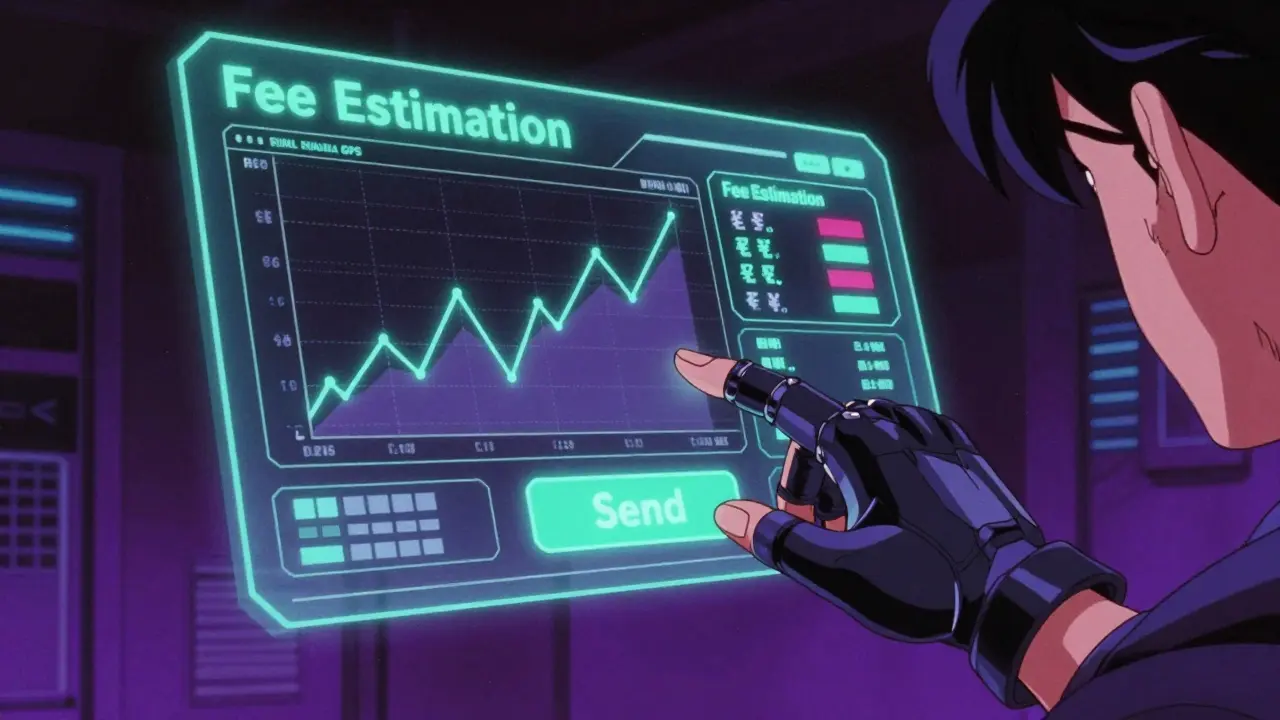
If you've ever wondered why a transaction that cost $1 yesterday costs $50 today, you're dealing with network congestion. To get your transaction processed, you have to compete with everyone else in the transaction fee estimation tools ecosystem. Most users just rely on their wallet's default setting, but for power users, developers, and businesses, that's a gamble. You need a way to see inside the "waiting room" of the blockchain to make an informed decision.
The Engine Under the Hood: How Fee Prediction Works
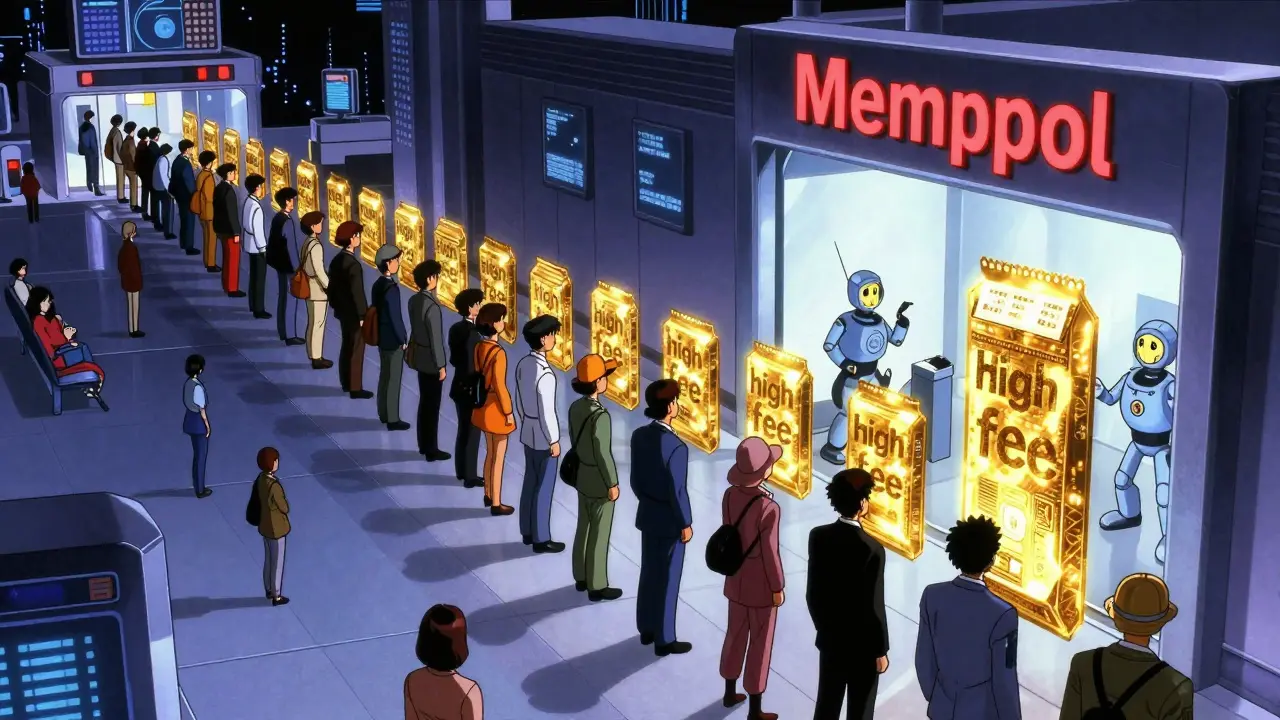
To understand how these tools work, you first have to understand the Mempool is the memory pool, a node's waiting area for unconfirmed transactions before they are added to a block . Think of the mempool as a crowded airport security line. The people who pay for "priority boarding" (higher fees) get to go first. Estimation tools constantly scan this line to see what the lowest successful fee was in the most recent blocks.
Most basic tools use a simple analytical model: they look at the last 10 to 20 blocks and average the fees. However, this is often too slow. During a sudden market crash or a popular NFT drop, fees can spike in seconds. This is where advanced systems come in. For instance, the FENN (Fee Estimation Neural Network) is a machine learning framework that uses neural networks to predict fees by analyzing transaction details and blockchain environments in real-time . Unlike basic calculators, FENN doesn't just look at the past; it identifies patterns to predict the immediate future, significantly reducing the error rate during volatile periods.
Bitcoin vs. Ethereum: Different Languages, Same Goal
Depending on which chain you are using, the way you estimate fees changes completely. It's not as simple as "one size fits all."
On the Bitcoin is a decentralized peer-to-peer electronic cash system using a Proof-of-Work consensus network, fees are measured in satoshis per virtual byte (sat/vB). If the network is quiet, you might only pay 10 sat/vB. During peak congestion, that can jump to 120 sat/vB or more. Because Bitcoin blocks have a limited size, the competition is purely about who pays the most per byte of data.
Ethereum handles things differently through Gas is a unit that measures the amount of computational effort required to execute specific operations on the Ethereum network . Since August 2021, the network has used a system called EIP-1559 is an Ethereum Improvement Proposal that changed the fee structure to include a base fee and a priority fee . Now, your total cost is calculated as: Gas Units × (Base Fee + Priority Fee). The base fee is burned by the network, and the priority fee (or tip) goes directly to the validator to encourage them to pick up your transaction quickly.
| Network | Unit of Measure | Primary Driver | Typical Range (Normal to Peak) |
|---|---|---|---|
| Bitcoin | sat/vB | Block Space / Size | 10 - 120+ sat/vB |
| Ethereum | Gwei (Gas) | Computational Complexity | 10 - 500+ Gwei |
| TRON | Energy/Bandwidth | Resource Staking | Variable (often 0 if staked) |
Top Commercial Tools and APIs for 2026
If you're a developer building an app or a trader managing a portfolio, you can't manually check a website every five minutes. You need an API. Several industry leaders provide this data in real-time.
- Cobo is a digital asset custody provider that offers comprehensive fee estimation APIs for various blockchain networks : They are known for providing tiered fee selection (fast, standard, economical), allowing developers to let their users choose their own speed.
- CryptoAPIs is a provider of multi-chain blockchain data services including real-time fee estimations : This is a go-to for those who need coverage across multiple chains (like BSC, Ethereum, and Bitcoin) without managing five different API keys.
- Tatum is a blockchain development platform providing a unified API for multiple blockchain networks : Tatum excels at providing comparison tools that show how different fee structures work across networks like TRON and Ethereum side-by-side.
- Lightspark is a company focusing on the Lightning Network to scale Bitcoin payments : Their tools are specialized for the Lightning Network is a Layer 2 scaling solution for Bitcoin that enables fast, low-cost payments , focusing on how to bridge on-chain fees with off-chain speed.
Common Pitfalls: Why Your Estimation Might Fail
Even with the best tools, things can go wrong. The biggest mistake users make is trusting a "standard" fee during a period of extreme volatility. In some cases, users on Reddit have reported that estimates can be off by 200-300% during weekend congestion on the Bitcoin network. Why? Because most tools rely on historical data, but the mempool is forward-looking.
Another issue is the "stuck transaction" trap. If you set a fee that is too low, your transaction sits in the mempool. If you then try to send another transaction from the same address, it may get queued behind the first one. To fix this, you have to use a technique called Replace-By-Fee (RBF), which allows you to broadcast a new version of the same transaction with a higher fee to entice miners to pick it up.

How to Implement Fee Estimation in Your App
For developers, adding fee estimation isn't just about calling an endpoint; it's about the user experience. If you just provide a number, users will be confused. Instead, provide them with a choice based on their urgency.
- Define Urgency Levels: Create three tiers: "Fast" (1 confirmation), "Standard" (6-12 confirmations), and "Economical" (can take hours or days).
- Integrate a Real-time API: Use a service like Cobo or CryptoAPIs. Your request should include the
chain_idandrequest_type(e.g., a simple transfer vs. a complex smart contract call). - Implement a Refresh Buffer: Blockchain state changes every block (roughly every 12 seconds for Ethereum). Ensure your app refreshes the fee estimate every 30-60 seconds so the user doesn't submit a transaction with outdated pricing.
- Handle Rate Limits: Commercial APIs have limits. Implement a caching layer so you aren't hitting the API every single time a user opens the payment screen.
What happens if I pay too little in fees?
Your transaction will enter the mempool but won't be picked up by miners because they prioritize the highest-paying transactions. It may stay there for hours or days. If the network congestion clears, it might eventually be confirmed. If not, you'll need to use Replace-By-Fee (RBF) to increase the fee or wait for the transaction to expire and be dropped from the mempool.
Is it possible to avoid transaction fees entirely?
On main layers (Layer 1), no. You must pay a fee to secure the network. However, you can use Layer 2 solutions like the Lightning Network for Bitcoin or Arbitrum and Optimism for Ethereum, which offer significantly lower fees. Some networks like TRON also allow you to "stake" tokens to gain energy and bandwidth, making many transactions effectively free.
How does EIP-1559 affect fee estimation on Ethereum?
EIP-1559 introduced a "base fee" that is automatically set by the network based on demand. Estimation tools now focus on predicting the base fee and suggesting a "priority fee" (tip). This makes fees more predictable than the old blind auction system, though costs still spike during high demand.
Which tool is best for a non-technical user?
For most people, a reputable software wallet (like BlueWallet for Bitcoin or MetaMask for Ethereum) is enough, as they integrate estimation tools in the background. However, using a dedicated web-based fee checker (like Mempool.space) can give you a clearer view of the current network state before you hit "send."
Why do fees fluctuate so much during the weekend?
Fluctuations are usually tied to market events, not the day of the week. However, some users report weekend volatility due to different trading patterns or scheduled maintenance in some centralized exchanges that push many transactions onto the chain at once, causing temporary spikes in the mempool.
Next Steps for Different Users
For Casual Users: Start using a blockchain explorer that shows a live fee heatmap. This helps you visualize when the network is "red" (expensive) and when you should wait to send your funds.
For Traders: Look into API-driven wallets that allow for dynamic fee adjustment. This ensures your trades execute in the next block during high-volatility events, preventing slippage or missed opportunities.
For Developers: Evaluate the trade-off between a simple REST API and a custom machine learning model. If your app handles thousands of transactions per minute, investing in a FENN-style predictive model can save your users millions in cumulative overpayments.


