
The economic reality in Iran is a country facing severe inflation and currency devaluation, driving citizens to seek alternative financial preservation methods has forced millions to look beyond the traditional banking system. With the rial losing value at an alarming rate-often exceeding 40% annual inflation-holding cash feels like watching money evaporate. For many Iranians, Cryptocurrency is digital assets used as a hedge against inflation and a tool for cross-border transactions despite government restrictions isn't just a speculative investment; it’s a survival mechanism. However, navigating this landscape requires understanding a complex web of regulations, technical hurdles, and evolving evasion tactics.
In 2025, the Central Bank of Iran (CBI) implemented strict measures including bans on crypto advertising and blocking payment gateways to control capital flows tightened its grip significantly. They blocked most crypto-to-rial payment gateways and banned all advertising. Yet, they left a loophole: mining is legal if you pay steep energy tariffs. This hybrid approach creates a confusing environment where buying crypto is technically restricted, but owning it isn’t explicitly criminalized for personal use, provided you don’t use it for domestic payments. The goal here isn’t to encourage illegal activity, but to provide factual, safety-focused information on how people are managing their finances in this constrained environment.
Understanding the Regulatory Landscape
To navigate restrictions, you first need to know what they actually are. The CBI’s strategy is not a total ban but a controlled suppression. They want to prevent capital flight while capturing revenue from mining. In February 2025, they banned all crypto ads online and offline. Later that year, they blocked direct payment gateways on Iranian websites. This means you can’t simply buy Bitcoin with a local bank card on a standard exchange anymore.
However, the government allows licensed exchanges to operate under strict supervision. These platforms require full KYC (Know Your Customer) compliance mandatory identity verification processes required by regulated exchanges to track user transactions, meaning your identity is tied to every transaction. For those seeking privacy or access to global markets, these domestic options are insufficient. This gap has driven users toward Peer-to-Peer (P2P) networks and international platforms accessed via circumvention tools.
The Shift to Stablecoins and Low-Fee Networks
When Tether froze a major stablecoin issuer that temporarily restricted Iranian-linked wallets in July 2025 froze dozens of Iranian-linked wallets in July 2025, it sent shockwaves through the community. Over 1.2 million users saw their liquidity disrupted overnight. This event was a wake-up call: relying on centralized stablecoins issued by entities subject to US sanctions is risky.
The response was swift. Users migrated en masse to DAI is a decentralized stablecoin pegged to the US dollar, favored for its resistance to censorship and lower regulatory risk. Unlike Tether, DAI is algorithmic and decentralized, making it harder for any single entity to freeze. But there’s another critical factor: network fees. Transferring DAI on the Polygon Network offers a blockchain scaling solution providing near-instant transactions with fractions of a cent in fees compared to Ethereum costs less than $0.001 per transaction. Compare that to Ethereum’s average fee of $1.75 or even TRC-20’s higher latency. For someone trying to preserve small amounts of wealth, high fees eat into profits. Polygon’s speed (finality in seconds) and low cost make it the preferred choice for daily transfers among savvy users.
| Asset/Network | Avg. Fee | Speed | Censorship Risk | Best For |
|---|---|---|---|---|
| USDT (TRC-20) | $1-$2 | ~13 seconds | High (Centralized) | Large transfers, established exchanges |
| DAI (Polygon) | <$0.001 | <1 second | Low (Decentralized) | Daily transactions, privacy focus |
| USDC (Ethereum) | $1.50+ | ~15 seconds | Very High | Avoid due to sanction risks |
Accessing Global Markets: VPNs and P2P Trading
If you want to trade on international platforms like Binance or Bybit, you face two barriers: internet filtering and IP blocking. The Iranian internet infrastructure actively throttles connections to known exchange IPs. To get around this, approximately 78% of users rely on VPNs are virtual private networks that encrypt internet traffic and mask IP addresses to bypass regional blocks. Not all VPNs work equally well. Services like NordVPN, ExpressVPN, and Surfshark dominate because they offer obfuscation servers-servers designed to look like regular HTTPS traffic, making them harder for deep packet inspection tools to detect.
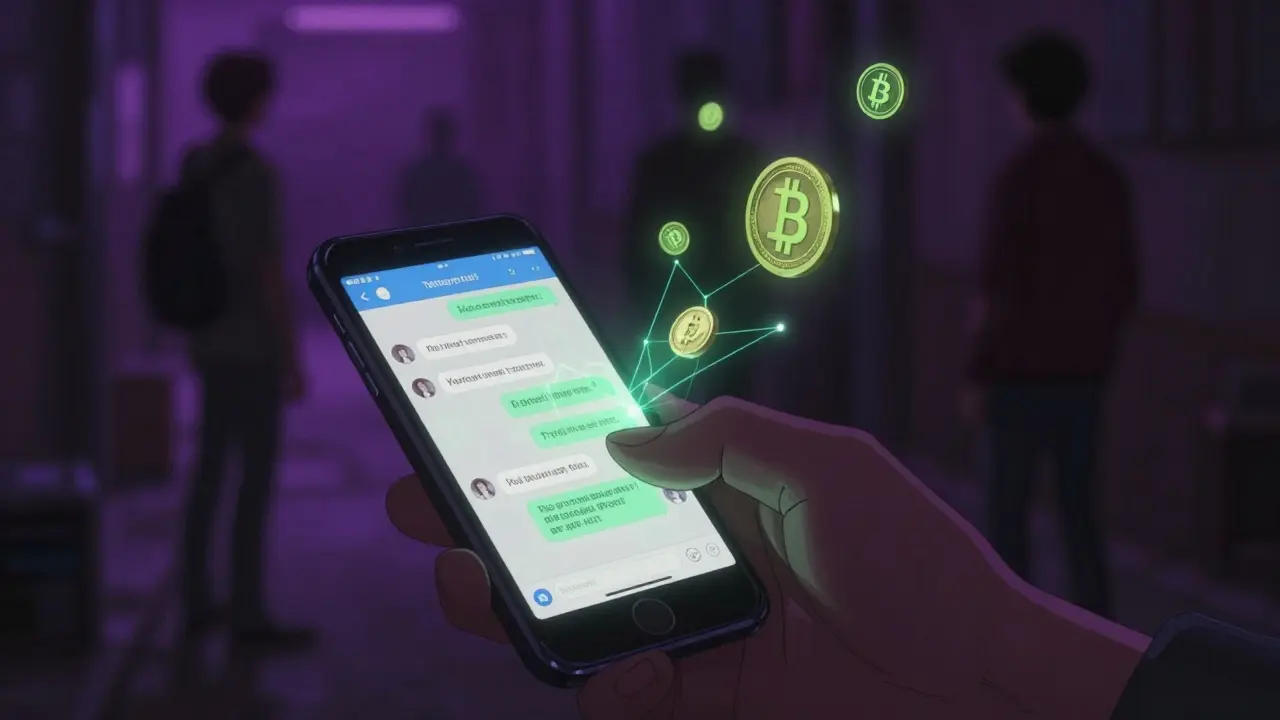
Even with a good VPN, connection stability hovers around 68%. This is why Peer-to-Peer (P2P) Trading has become decentralized trading between individuals without a central intermediary, often conducted via Telegram groups so dominant. As of late 2025, P2P accounts for over 50% of all crypto transactions in Iran. Platforms like LocalBitcoins are largely inaccessible, so users turn to Telegram bots and dedicated groups. Here, you find a counterparty willing to sell you USDT or DAI in exchange for Rials transferred via bank app or e-wallet. It’s manual, it requires trust, and it carries scam risks, but it works.
A common workflow looks like this:
- Join a verified Telegram group with a strong reputation (look for long-standing communities).
- Find a seller offering DAI on Polygon.
- Negotiate the rate (usually slightly above market price to compensate for risk).
- Use a multisig wallet or escrow service if available to secure the deal.
- Transfer Rials only after confirming the crypto is in your wallet.
Safety First: Wallets and Security Practices
Your security depends entirely on your setup. Using custodial wallets on unverified exchanges is dangerous. If the exchange gets hacked or freezes your account, you have no recourse. The standard recommendation is a non-custodial wallet like MetaMask is a popular browser extension and mobile wallet allowing users to manage private keys and interact with dApps. It gives you full control over your private keys. However, MetaMask alone isn’t enough. You need to configure it to support the Polygon network to keep fees low.
Advanced users are increasingly adopting Multisig Wallets provide enhanced security by requiring multiple private keys to authorize a transaction, reducing single-point failure risks. This adds complexity but significantly reduces the risk of theft from a single compromised device. Given that 74% of Iranian users can now configure these within 48 hours of learning, the barrier to entry is dropping. Always store your seed phrase offline. Never write it down digitally. A piece of paper hidden securely is better than a note in your phone.
Beware of phishing attacks. Scammers create fake Telegram bots and websites mimicking legitimate services. Always double-check URLs. Use bookmarked links rather than searching for new ones each time. If a deal seems too good to be true, it is. The average transaction value in Iran is around $2,450, kept deliberately below the $10,000 threshold that triggers mandatory reporting under CBI rules. Staying under the radar is part of the strategy.

The Digital Rial: Why It’s Failing
The government’s answer to crypto is the Digital Rial is a state-backed Central Bank Digital Currency (CBDC) launched on Kish Island with limited adoption due to strict ID linkage. Piloted on Kish Island, it’s meant to replace dollars and crypto for domestic transactions. But it has failed to gain traction. Why? Because it’s linked directly to your national ID. Every transaction is visible to the state. And crucially, you can’t send it abroad. For Iranians looking to diversify assets or send remittances, the Digital Rial is useless. With only 12,400 active users out of nearly 15 million crypto-active citizens, it’s clear that privacy and utility drive adoption, not government mandates.
Practical Steps for Beginners
If you’re new to this, start small. Don’t invest life savings. Treat this as learning. Here’s a basic roadmap:
- Learn the Basics: Spend 15-20 hours understanding wallets, networks, and security. Use free resources on YouTube alternatives like Aparat.
- Get a Reliable VPN: Invest in a reputable provider with obfuscation features. Cheap, free VPNs often leak data.
- Set Up MetaMask: Install it on your desktop and mobile. Add the Polygon network manually.
- Start with Small P2P Trades: Buy a small amount of DAI from a trusted seller in a Telegram group. Practice sending it to yourself.
- Join Communities: Engage with groups like CoinJan or r/IranCrypto. Knowledge sharing is your best defense against scams.
Remember, the landscape changes fast. Regulations tighten, networks upgrade, and scams evolve. Stay informed, stay cautious, and prioritize security over convenience.
Is it legal to own cryptocurrency in Iran?
Owning cryptocurrency for personal investment is not explicitly criminalized, but using it for domestic payments is banned. Mining is legal only with a license and high energy tariffs. Buying/selling without a license exists in a gray area, often enforced through P2P networks.
Why do Iranians prefer DAI over USDT?
After Tether froze Iranian wallets in 2025, users shifted to DAI for its decentralization and censorship resistance. Additionally, using DAI on the Polygon network offers significantly lower fees ($0.001 vs $1+) and faster transactions than USDT on TRC-20 or Ethereum.
What is the safest way to buy crypto in Iran?
Peer-to-Peer (P2P) trading via reputable Telegram groups is currently the most common method. Use escrow services when available, verify seller reputations, and always use non-custodial wallets like MetaMask to store assets. Avoid centralized exchanges unless you fully comply with KYC and accept the privacy trade-offs.
Can I use the Digital Rial instead of crypto?
The Digital Rial is limited to domestic use, linked to your national ID, and cannot be transferred internationally. Due to lack of privacy and functionality, it has seen minimal adoption (<0.02% of crypto users). Most users prefer crypto for asset preservation and cross-border flexibility.
How much does it cost to maintain a crypto setup?
Expect to spend around $7.80 monthly on a reliable VPN. Transaction fees on Polygon are negligible (<$0.001). The main cost is time: expect 17-22 hours of learning to master security basics, wallet configuration, and safe P2P trading practices.


