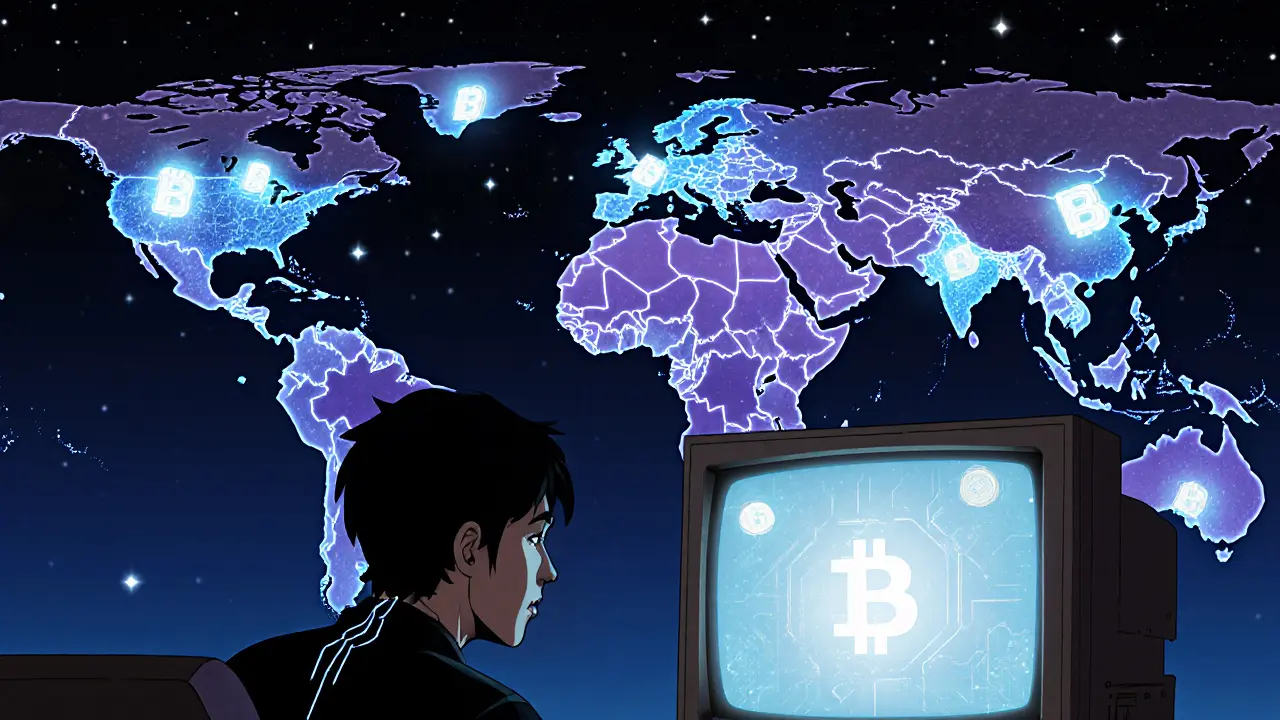
P2P Network Resilience Simulator
How P2P Networks Stay Connected
Imagine a network of 100 nodes (like the Bitcoin network). When you remove some nodes, how many connections remain? In this simulation, you can see how a decentralized network maintains connectivity even when parts are offline.
Key Insight: Unlike centralized systems that fail when a single server goes down, P2P networks stay connected because there are multiple paths between nodes.
Simulation Results
Imagine sending money directly to someone across the world without a bank, app, or middleman taking a cut. That’s not science fiction-it’s how Bitcoin and other cryptocurrencies work, thanks to P2P networks. These networks are the invisible backbone of every major crypto system, making them resistant to censorship, control, and single points of failure. Unlike traditional banking, where your money flows through centralized servers, crypto moves through a global web of computers, each one talking directly to the others. No CEO. No headquarters. Just code, cryptography, and consensus.
What Exactly Is a P2P Network?
A peer-to-peer (P2P) network is a flat, decentralized structure where every participant-called a node-has equal power. There’s no boss server. No central database. Each node acts like both a client and a server. When you send Bitcoin, your computer doesn’t reach out to a bank. It broadcasts the transaction to nearby nodes, which then pass it along to others, like a game of telephone-but with math, not whispers. In Bitcoin’s case, every full node keeps a complete copy of the blockchain. That’s over 500 gigabytes of transaction history as of 2025. Every time a new block is added, every node checks it against the same set of rules. If even one transaction breaks the rules-say, someone tries to spend the same Bitcoin twice-the network rejects it. No vote. No appeal. Just math. This isn’t just clever engineering. It’s a radical shift in how trust works. In traditional finance, you trust Visa, your bank, or PayPal to keep records accurate. In crypto, you trust the network. And the network trusts no one. That’s why it’s called “trustless.”How Bitcoin’s P2P Network Actually Works
Bitcoin’s network runs on a simple but powerful protocol. Nodes connect over TCP port 8333 and exchange four main types of messages: transactions, blocks, addresses, and headers. When you make a transaction, your wallet sends it to a few nearby nodes. Those nodes validate it using cryptographic signatures and check if the Bitcoin being spent hasn’t already been used. If it checks out, they forward it to their peers. Within seconds, that transaction spreads across the globe. Studies show Bitcoin transactions reach 95% of nodes in about 8.6 seconds under normal conditions. During peak times, it can take longer-up to 40 seconds-but it still gets there. No central server gets overwhelmed. No single data center goes down. The network just keeps going. Full nodes are the backbone. As of late 2023, there were around 14,000 publicly reachable Bitcoin full nodes. To run one, you need a computer with at least 2GB of RAM, 50GB of free storage (and growing), and a stable internet connection. Most people run them on old laptops or Raspberry Pis. You don’t need to be a tech wizard. But you do need patience. Syncing the blockchain for the first time can take 72 hours-even on a 1Gbps connection.Why P2P Beats Centralized Systems (And Why It Falls Short)
Compare Bitcoin’s P2P network to Visa. Visa handles 65,000 transactions per second. Bitcoin? About 7. That’s a huge difference. So why bother? Because speed isn’t everything. Visa can shut down your account. It can freeze your funds. It can reverse transactions at a bank’s request. Bitcoin’s P2P network can’t. Once a transaction is confirmed, it’s final. That’s why people in countries with unstable banks or capital controls use crypto. It’s why remittances from the U.S. to Mexico or the Philippines are cheaper and faster on crypto networks than through Western Union. In 2020, when Twitter’s API went down, centralized crypto exchanges like Coinbase and Binance lost connectivity. Users couldn’t withdraw. But Bitcoin’s P2P network? Still running. Nodes kept broadcasting transactions. People kept sending money. No downtime. No corporate outage. But P2P has costs. Running a full node uses bandwidth and storage. You don’t get paid for it. That’s the “tragedy of the commons.” In 2020, the number of public Bitcoin nodes dropped to 5,000 because many users gave up. It recovered only after better tools and guides made setup easier. P2P networks also struggle with scalability. Bitcoin’s 7 TPS limit means congestion during high demand. Fees spike. Transactions take hours. That’s why second-layer solutions like the Lightning Network exist. It’s a P2P network built on top of Bitcoin, handling millions of tiny payments off-chain, then settling the final balances on the main blockchain. As of late 2023, Lightning processes $1.2 billion monthly across 18,000 nodes.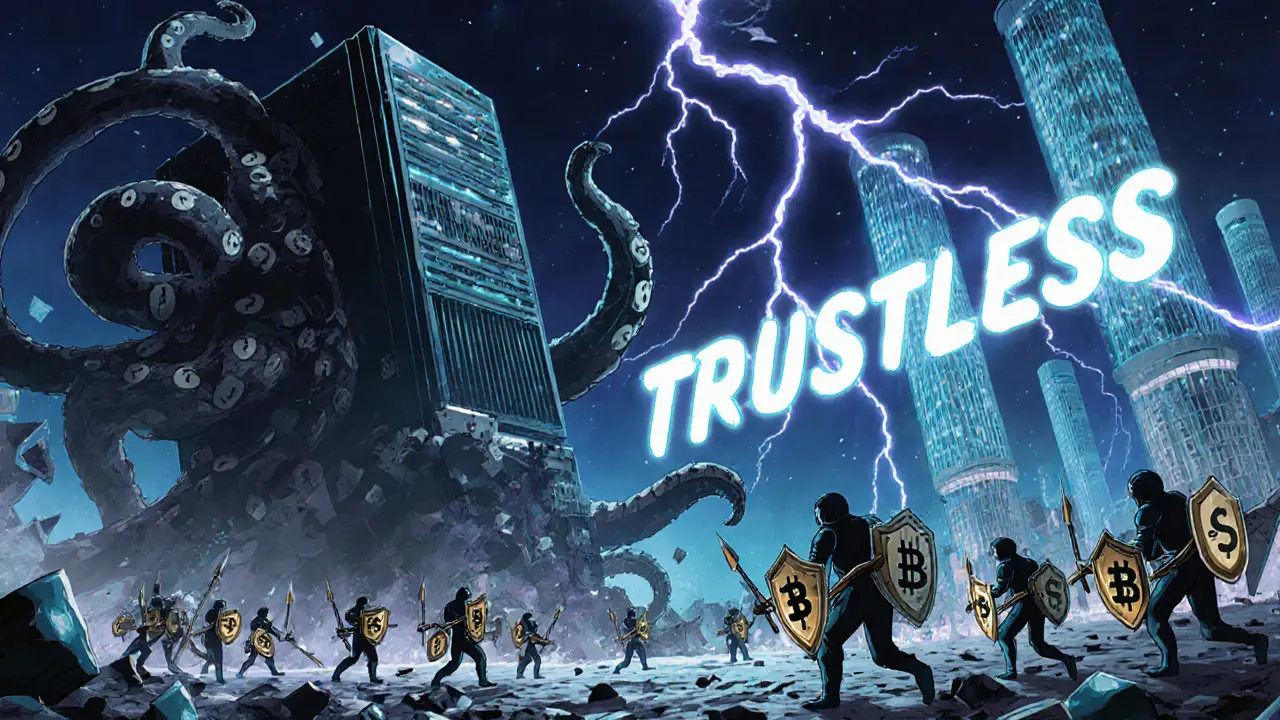
The Human Side: Real People, Real Challenges
People who run full nodes often describe it as a form of digital citizenship. One Reddit user, u/NodeRunner89, wrote: “Syncing took three days. My SSD whirred nonstop. But now I feel like I’m part of the network’s security.” That’s the emotional payoff: contributing to something bigger than yourself. But not everyone has that patience. On Bitcoin Stack Exchange, a user in March 2023 complained their transaction took 72 hours to confirm because fees were too low. Another user on Trustpilot said they needed three YouTube tutorials just to get their node working. The learning curve is real. Enterprise users face different hurdles. Banks like Santander and Westpac use blockchain-based P2P systems for cross-border payments. But they need dedicated 100Mbps connections per node and specialized software like Blockdaemon. Setup takes weeks, not hours. It’s not for hobbyists.What’s Changing in P2P Networks Today
The tech is evolving fast. Ethereum switched from proof-of-work to proof-of-stake in 2022. That cut its energy use by 99.95%. P2P networks still exist, but now they’re lighter, faster, and greener. Bitcoin’s Taproot upgrade in 2021 made transaction relay 25% more efficient. Future upgrades like Erlay aim to slash bandwidth use by 80%. Ethereum’s next big project, PeerDAS, is testing a way for nodes to verify only parts of the blockchain instead of the whole thing. That could let more people run nodes on phones or cheap hardware. Even the internet’s standards body, IETF, is working on a formal “Blockchain P2P Transport Protocol.” That means crypto networks might one day speak the same language as the rest of the internet.
Who’s Using This Tech-and Why It Matters
As of 2025, the total market value of cryptocurrencies sits at over $1.17 trillion. Bitcoin and Ethereum make up more than half of that. In the U.S., nearly 1 in 5 adults owns crypto. Institutions like Fidelity and BlackRock are investing billions. Why? Because P2P networks offer something no bank can: true ownership. Regulators are catching up. The EU’s MiCA law, effective December 2024, officially recognizes P2P network participants as legal entities. In the U.S., it’s still messy. But the trend is clear: decentralized systems aren’t going away. Emerging chains like Solana use hybrid models-part P2P, part centralized-to get speed. But purists argue that’s not real decentralization. Bitcoin and Ethereum stick to pure P2P, even if it’s slower. They’re betting on resilience over speed.What Comes Next?
The big question isn’t whether P2P networks work-it’s whether they’ll scale enough to support billions of users. Quantum computing could break today’s cryptography by 2035. Researchers are already working on post-quantum algorithms. The P2P architecture is flexible enough to adapt. For now, the network keeps running. Nodes keep syncing. Transactions keep propagating. People keep sending money across borders, without permission. That’s the quiet revolution. No press releases. No IPOs. Just code, nodes, and a global group of people who believe in a system that doesn’t need to be trusted.Do I need to run a full node to use cryptocurrency?
No. Most people use wallets like Exodus, BlueWallet, or Coinbase that connect to public nodes. Running a full node gives you maximum security and privacy, but it’s optional. You can still send and receive crypto without one.
Can a P2P network be shut down?
Not easily. Since there’s no central server, you’d need to take down every single node worldwide. Even if governments block access in one country, nodes in others keep the network alive. Bitcoin has survived internet shutdowns in countries like Nigeria and Iran.
Why are there so few Bitcoin full nodes compared to users?
Running a full node requires storage, bandwidth, and technical effort. Most users prefer lightweight wallets. But even with only 14,000 public nodes, the network remains secure because each node validates every transaction independently. You don’t need millions of nodes-just enough to prevent collusion.
Is Bitcoin’s P2P network faster than Ethereum’s?
In terms of transaction propagation speed, they’re similar-both spread transactions in under 10 seconds under normal conditions. But Ethereum’s proof-of-stake consensus allows faster block times (around 12 seconds vs. Bitcoin’s 10 minutes), meaning transactions confirm quicker overall. Bitcoin’s P2P network is optimized for security and decentralization, not speed.
What’s the difference between a full node and a light node?
A full node downloads and verifies the entire blockchain and enforces all consensus rules. A light node (or SPV wallet) only downloads block headers and trusts other nodes for transaction data. Light nodes are faster and use less storage but are less secure-you’re relying on others to tell you the truth.
Can I make money running a Bitcoin node?
Not directly. Running a Bitcoin full node doesn’t pay you. Miners earn rewards, not node operators. But you gain privacy, security, and contribute to network health. Some people run nodes to support decentralization-not for profit.
Are P2P networks used only for Bitcoin?
No. Every major cryptocurrency uses some form of P2P network-Ethereum, Litecoin, Dogecoin, Monero. Even newer chains like Solana and Cardano use P2P for data propagation, though they add centralized components for performance. Bitcoin was the first, but it’s far from the only one.


