
Indonesia doesn’t ban cryptocurrency - but it doesn’t let you use it like cash either. If you’re trading crypto here, you’re doing it as an investment, not a payment tool. And if you don’t follow the rules, you risk fines, account freezes, or worse. As of 2025, the system is clearer than ever - but also stricter. Here’s exactly how Indonesians trade crypto legally today.
Only Licensed Exchanges Are Allowed
You can’t just sign up on Binance or KuCoin and start trading if you want to stay legal. Since January 2025, all crypto trading platforms operating in Indonesia must be licensed by the Financial Services Authority, known locally as OJK. This replaced the old regulator, BAPPEBTI, and brought crypto under the same oversight as stocks and bonds. There are only 22 licensed exchanges as of June 2025. The biggest are Indodax, Tokocrypto, and Pintu. You can find the full list on the OJK website. Any platform not on that list is operating illegally - and if you trade on them, you’re on your own when it comes to legal protection. These exchanges have to meet tough requirements: minimum capital of IDR 5 billion (about $325,000), ISO 27001 cybersecurity standards, real-time AML monitoring, and integration with Indonesia’s National Single Window for tax reporting. If they fail any of these, OJK shuts them down immediately.Here’s How to Get Started (Step by Step)
Trading legally means jumping through a few hoops. It’s not instant, but it’s straightforward if you follow the steps:- Choose an OJK-licensed exchange - Indodax, Tokocrypto, or Pintu are the most popular. All have Indonesian-language interfaces and local customer support.
- Submit your ID documents - You need your KTP (national identity card) and NPWP (tax ID number). No NPWP? You can’t trade. The tax number is mandatory.
- Pass the financial literacy test - A 15-question quiz on crypto risks, volatility, and scams. You need 80% to pass. Most people fail the first time - it’s designed to make you think before you invest.
- Link a local bank account - Only accounts registered with Bank Indonesia work. You can’t use foreign wallets or e-wallets like PayPal to deposit rupiah.
- Wait for approval - Onboarding now takes 3 to 7 business days. Under the old system, it was under 48 hours. The extra checks are real.
The Tax Rules Changed - Big Time
The biggest shift came on August 1, 2025, with PMK 50/2025. This new tax law scrapped VAT on crypto trades and replaced it with a simple final income tax system. Here’s what you pay now:- 0.21% - If you trade on a licensed Indonesian exchange (like Indodax or Tokocrypto). This is automatically deducted when you sell.
- 1% - If you trade on foreign platforms (Binance, Coinbase, etc.) or report your own trades. This applies even if you’re just holding crypto on a foreign wallet and selling later.

What You Can’t Do (And Why)
Even if you’re licensed and paying taxes, there are hard limits:- No using crypto as payment - You can’t buy a phone with Bitcoin. The rupiah is the only legal tender. Violating this can trigger AML investigations.
- No cross-border transfers over IDR 100 million - Sending crypto overseas above $6,500 requires special OJK approval. Most people avoid this entirely.
- No DeFi or staking rewards yet - Platforms can’t offer yield farming or staking. The government hasn’t clarified if these count as income. Right now, any reward you earn from DeFi is in a legal gray zone.
- No advertising crypto as an investment - You can’t run ads on Instagram or TikTok saying “Earn 20% monthly with Bitcoin.” That’s banned under OJK rules.
Who’s Trading, and How Much?
As of June 2025, Indonesia has 14.3 million active crypto users - nearly 5% of the population. Most are young: 68% are under 35. Men make up 76% of users. And over half live in Java - Jakarta, Bandung, Surabaya. Trading volume hit IDR 17.4 quadrillion ($1.13 trillion) in the first half of 2025. But after the new tax rules came in, volume dropped 15.3% in one quarter. Why? Because the 1% tax on foreign platforms scared off big traders. Some moved to offshore exchanges. Others just paused. The three big exchanges still control 91% of the market. Indodax alone has 8.7 million users. But smaller players are struggling. The $325,000 capital requirement is too high for many startups. Experts predict only 12 to 15 exchanges will survive by 2026.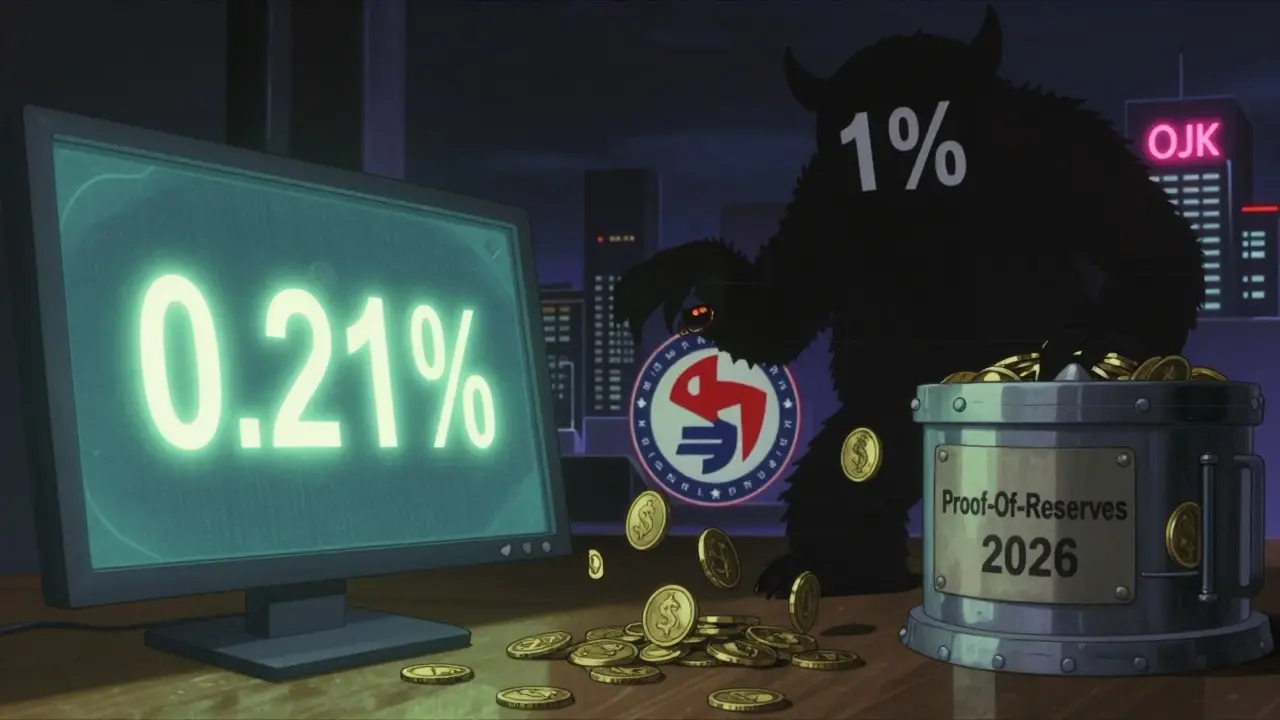
What’s Coming Next
The government isn’t done. Two major changes are coming:- Proof-of-reserves audits - Starting January 1, 2026, every licensed exchange must prove they hold enough crypto to cover all user balances. This is to prevent another FTX-style collapse.
- Possible stablecoin payments - The OJK and Bank Indonesia are talking about allowing stablecoins like USDT or USDC for cross-border remittances. This could be a game-changer for workers sending money home.
Common Mistakes and How to Avoid Them
Most legal traders make these errors:- Using Binance or KuCoin thinking it’s fine - It’s not. You’ll owe 1% tax, and if caught, you may be flagged for tax evasion.
- Forgetting to link your NPWP - Without it, your account won’t be approved. Get your tax ID before you start.
- Not saving transaction records - Even if the exchange reports taxes, keep your own logs. You’ll need them if OJK asks.
- Trying to cash out large amounts quickly - Withdrawals over IDR 500 million trigger extra scrutiny. Spread them out.
Is It Worth It?
Yes - if you’re serious about trading. Indonesia’s crypto market is one of the largest in Southeast Asia. The rules are strict, but they’re clear. You know exactly what you can and can’t do. You know your tax rate. You know which platforms are safe. The system isn’t perfect. The tax gap between local and foreign exchanges is unfair. Customer service is slower. Onboarding takes longer. But for now, this is the only legal path. And it’s working - for those who follow it. If you want to trade crypto in Indonesia, don’t look for loopholes. Don’t try to hide on offshore platforms. Play by the rules. Use a licensed exchange. Pay the 0.21%. Keep your records. And stay updated. The rules might change again - but as long as you’re compliant, you’ll be fine.Can I use Binance to trade crypto legally in Indonesia?
No. Binance and other foreign exchanges are not licensed by Indonesia’s OJK. Trading on them is not illegal per se, but you must pay a 1% final income tax on all transactions and report them yourself. You also lose legal protections, such as dispute resolution and insurance coverage. For full compliance, use only OJK-licensed exchanges like Indodax or Tokocrypto.
Do I need a tax ID (NPWP) to trade crypto in Indonesia?
Yes. You must have a valid NPWP (Tax Identification Number) to register with any OJK-licensed exchange. Without it, your application will be rejected. The NPWP is tied to your identity and ensures the government can track your crypto income and tax payments. You can apply for one at your local tax office or online through the Directorate General of Taxes portal.
What happens if I don’t pay crypto taxes in Indonesia?
If you trade on a foreign exchange and don’t pay the 1% tax, you risk being flagged by the Directorate General of Taxes. The OJK and tax authorities share data through the National Single Window system. Penalties include fines, interest on unpaid taxes, and potential criminal charges for tax evasion. Even if you’re not caught immediately, future financial applications - like loans or property purchases - may be denied if your tax history is flagged.
Can I use crypto to pay for goods or services in Indonesia?
No. Under Bank Indonesia’s Regulation No. 20/6/PBI/2018 and the 2023 Payment Systems Law, the Indonesian Rupiah is the only legal tender. Using cryptocurrency to pay for goods, services, rent, or bills is illegal. Even if a business accepts crypto, the transaction violates national law and could lead to regulatory action against both parties.
Are staking or DeFi rewards taxable in Indonesia?
As of 2025, staking rewards and DeFi income are not officially taxed - but they’re also not officially recognized. The government has not issued clear guidance. Most tax experts advise reporting these as income to avoid future penalties. The Directorate General of Taxes has signaled that staking rewards will likely be taxed in 2026, so keeping records now is strongly recommended.
How do I know if an exchange is OJK-licensed?
Go to the official OJK website and check the list of licensed crypto asset trading platforms at ojk.go.id. Only platforms listed there are legally permitted to operate. Never trust a platform that claims to be “approved” unless it appears on that list. Indodax, Tokocrypto, and Pintu are the largest and most trusted.
What’s the difference between BAPPEBTI and OJK regulation?
BAPPEBTI was the commodity futures regulator that oversaw crypto as a commodity until January 2025. OJK, the Financial Services Authority, now regulates crypto as a financial asset - similar to stocks or bonds. This shift means stricter rules on investor protection, licensing, taxation, and market transparency. OJK’s oversight includes real-time monitoring, mandatory audits, and direct tax reporting - making the system more secure but also more complex.
Will Indonesia ban crypto in the future?
No. Indonesia has made it clear that crypto is legal as an investment. The government wants to regulate, not ban. The goal is to protect users, prevent fraud, and collect tax revenue. With 14.3 million active users and $1.13 trillion in trading volume in 2025, banning crypto would be economically disruptive. Instead, expect tighter rules - like proof-of-reserves audits and possible staking taxes - not a ban.


