Not all crypto tokens are created equal. Some rise and fall with market hype. Others? They climb steadily because they’re built to capture real value - not just speculation. Exchange tokens, like Binance’s BNB, Gate’s GT, or SushiSwap’s SUSHI, aren’t just trading badges. They’re economic engines tied directly to the platforms that issue them. And if you understand how they gain value, you’ll see why some hold up through bear markets while others vanish.
They Save You Money - Right Now
The simplest way exchange tokens gain value? They cut your costs. If you trade on Binance, holding BNB gives you up to a 25% discount on trading fees. On Gate.io, GT token holders get similar discounts on both spot and futures trading. That’s not a perk - it’s cash in your pocket.Let’s say you trade $10,000 a month. At 0.1% fees, that’s $10 in fees. With a 25% discount from GT or BNB, you save $2.50 per month. Sounds small? Do that for a year? You save $30. Do it for five years? $150. Multiply that across millions of users, and you’ve got billions in savings flowing back into token demand. People don’t buy tokens just to hold them - they buy them because they need them to trade cheaper.
They Pay You to Hold Them
Some tokens don’t just save you money - they pay you to keep them. This is where staking and fee distribution come in. Platforms like SushiSwap and Gate.io take a slice of trading fees and redistribute them to token holders who stake their tokens. Staking means locking up your tokens for a while. In return, you earn more tokens as rewards.Why does this work? Because staking reduces the number of tokens floating around. Fewer tokens in circulation means each one becomes scarcer. And scarcity drives price. When 60% of all GT tokens are staked, only 40% are available to buy or sell. Demand stays steady? Price goes up. This isn’t magic - it’s basic supply and demand, engineered into the token itself.
They Get Smaller Over Time
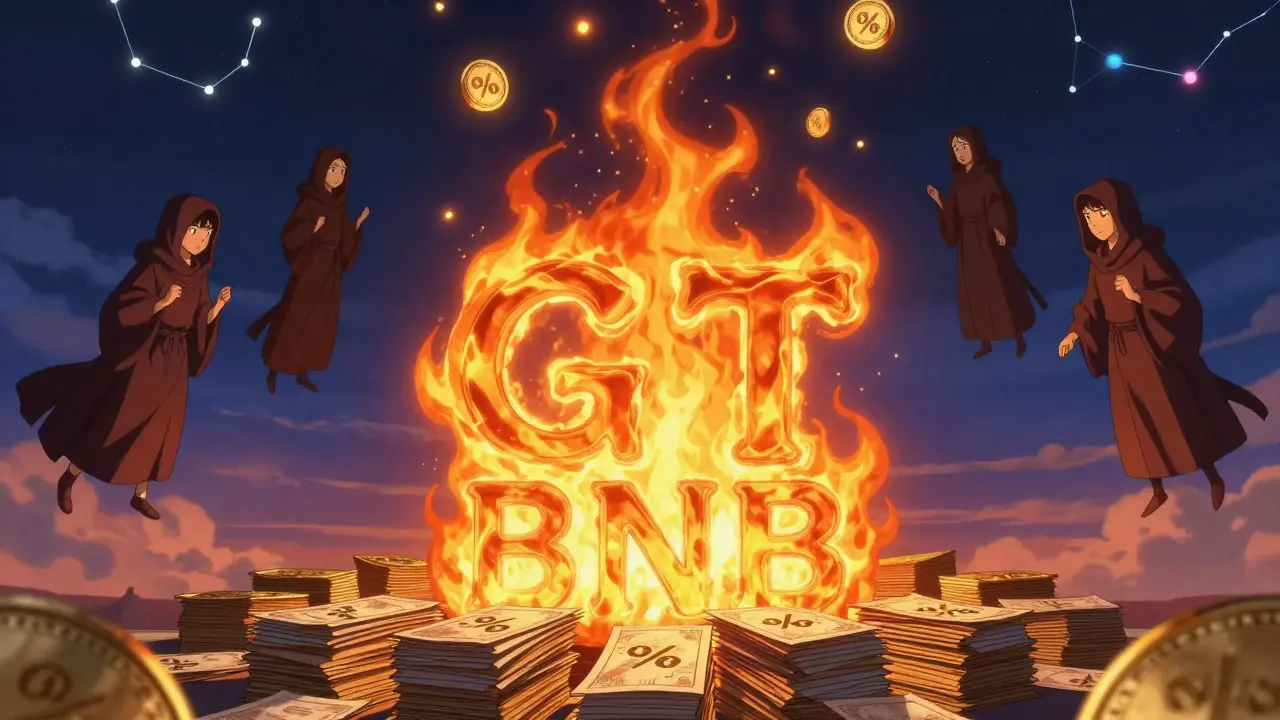
Burns are one of the most powerful tools in the exchange token playbook. Every time a platform burns tokens - permanently destroying them - the total supply drops. Gate.io uses part of its profits to buy back GT tokens and burn them. Binance has burned BNB quarterly since 2017, removing over 40% of its original supply. That’s not a marketing stunt. It’s a deliberate deflationary mechanism.Think of it like a limited-edition collectible. If you start with 1 million coins and destroy 200,000 of them, the remaining 800,000 become more valuable - assuming demand doesn’t fall. Exchange tokens work the same way. No new supply. Constant burns. Rising demand. That’s a recipe for long-term appreciation.
They Give You a Voice - And Early Access
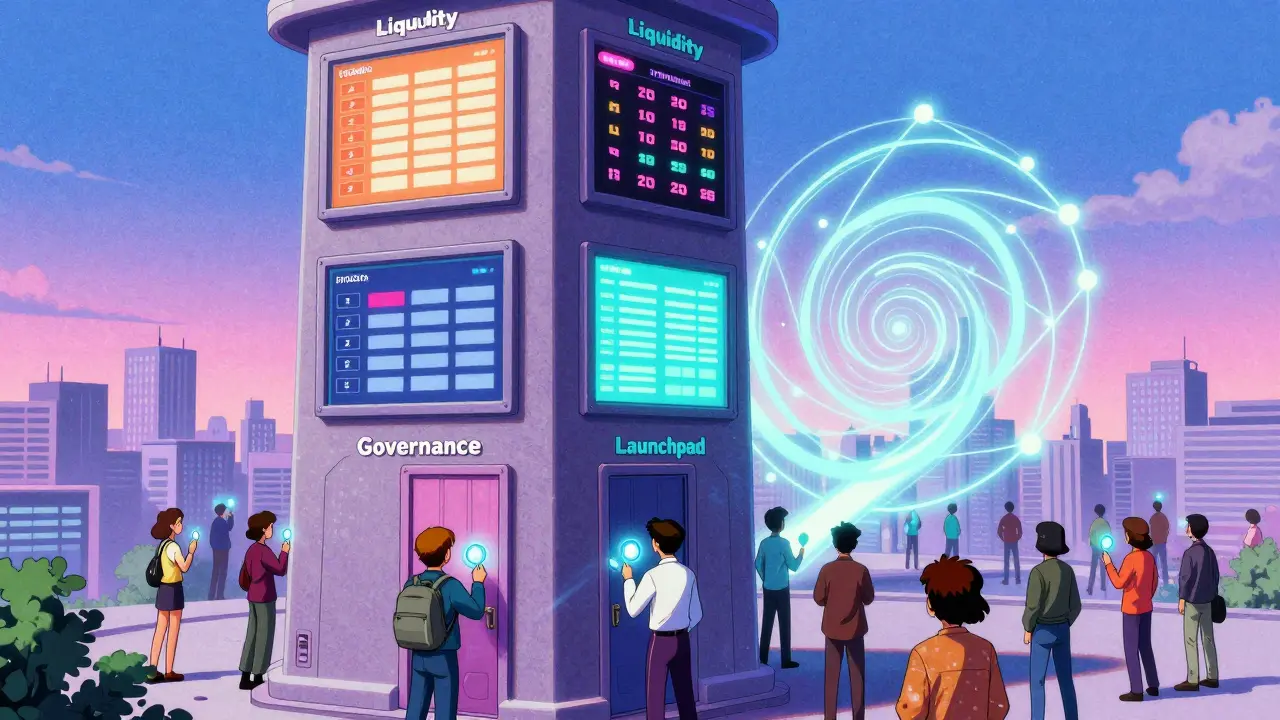
Holding an exchange token isn’t just about money. It’s about power. On many platforms, token holders vote on key decisions: which new coins get listed, how fees are structured, or even how platform funds are used. Gate.io lets GT holders vote on Launchpad project approvals. Binance lets BNB holders influence future product development.There’s also early access. If you hold GT or BNB, you get priority to join new token sales - often before the public. These sales can offer tokens at a fraction of their eventual market price. One early investor in a Launchpad project might turn a $500 investment into $5,000 in weeks. That kind of opportunity doesn’t exist for non-token holders. So people buy tokens not just to trade, but to get in on the next big thing.
They Grow With the Platform
A token’s value is tied to how good the exchange is. If the platform adds new trading pairs, lowers slippage, improves security, or launches a popular new product like a decentralized wallet or derivatives market, more people use it. More users mean more trading. More trading means more fees. More fees mean more rewards for token holders.This creates a loop: better platform → more users → more trading → higher token value → more users. It’s a self-reinforcing cycle. When Binance added futures trading, its user base exploded. BNB’s price followed. When Gate.io improved its order matching engine, trading volume jumped 300% in six months. GT’s price surged. The token didn’t rise because people thought it was “undervalued.” It rose because the platform got better - and people knew it would keep getting better.
They Ride the Network Effect
Network effects are invisible but massive. The more people use an exchange, the more useful it becomes. More liquidity. Tighter spreads. Faster trades. Better price discovery. That makes the platform more attractive to traders, developers, and institutions.Exchange tokens sit right in the middle of this. As more traders join, they need tokens to get discounts, staking rewards, and early access. So they buy. As more people buy, the price rises. That attracts even more attention. New users see the token’s rising value and assume the platform must be strong. They join. The cycle accelerates.
This is why BNB and GT have outlasted hundreds of other tokens. They’re not just assets - they’re gateways to a growing ecosystem. The token isn’t the product. The platform is. And the token is the key that unlocks it.
They’re Not Just for Traders
Many assume exchange tokens only matter to active traders. That’s wrong. They matter to investors, developers, and even people who just want to hold crypto.Investors buy them because they’re tied to real business metrics: revenue, user growth, fee volume. Developers build on platforms that use these tokens because they get better access to liquidity and user bases. Even casual holders benefit - because if the platform thrives, the token thrives. You don’t need to trade daily to benefit. You just need to believe the platform will keep improving.
What Makes a Token Fail?
Not every exchange token succeeds. Many fail because they lack one or more of these mechanisms. If a token offers no discounts, no staking rewards, no burns, and no governance power - it’s just another coin. It has no intrinsic reason to hold value.Look at tokens that died after their exchange shut down. They had no utility beyond speculation. When the platform vanished, so did the token. But tokens with strong utility - like BNB and GT - survive even when markets crash. Why? Because they’re still useful. You still save money. You still earn rewards. You still get access. The value doesn’t disappear - it just gets quieter.
Bottom Line: Value Comes From Use
Exchange tokens don’t gain value because they’re “the next Bitcoin.” They gain value because they solve real problems: lower fees, higher rewards, better access, and stronger platform growth. The most successful ones combine multiple mechanisms - discounts, staking, burns, governance - into a single asset that gets more valuable as the platform grows.If you’re holding an exchange token, ask yourself: Does it save me money? Does it pay me to hold it? Is supply being reduced? Do I get exclusive access? If the answer is yes to most of these, you’re not just holding crypto. You’re holding a stake in a growing business.
Do exchange tokens always go up in value?
No. Their value depends on platform performance. If trading volume drops, fees shrink, or the platform loses users, the token can fall. But tokens with strong utility - like BNB and GT - tend to recover faster because they’re still useful even in downturns.
Can I earn passive income from exchange tokens?
Yes. Many platforms offer staking rewards where you lock up your tokens and earn more tokens as interest. Some also distribute a portion of trading fees directly to stakers. This can generate consistent returns, especially on high-volume exchanges.
Are exchange tokens safer than other cryptos?
Not inherently. But tokens tied to profitable, well-run exchanges have more real-world backing than speculative tokens. BNB and GT are supported by millions of users and billions in trading volume. That gives them more stability than tokens with no utility or revenue.
What’s the difference between BNB and GT?
BNB is from Binance, the largest centralized exchange. GT is from Gate.io, a top-tier platform with strong DeFi integration. Both offer fee discounts, staking, and burns. BNB has more global recognition. GT offers more direct DeFi access and lower fees for some users. The core mechanics are nearly identical - it’s about which platform you trust and use.
Do I need to trade often to benefit from exchange tokens?
No. Even if you trade once a month, you still get discounts and staking rewards. If you hold the token long-term, you benefit from price appreciation driven by platform growth, burns, and network effects. You don’t need to be active - just a holder.


