
Crypto Phishing Risk Calculator
Calculate Your Phishing Risk
Based on 2025 industry data: Email phishing has 28.7% click-through rate, SMS has 17.3%. Multi-sig wallets reduce conversion rates to 4.2%.
Results will appear here after calculation
Crypto phishing is a type of social‑engineering attack that tricks people into handing over cryptocurrency private keys, seed phrases, or wallet credentials. Attackers disguise their messages as legitimate alerts from exchanges, wallet apps, or blockchain services, then use the information to move funds that can never be reversed.
Why crypto phishing is a fast‑growing threat in 2025
In the last two years, Email phishing has become the most common delivery channel for crypto‑focused scams, leveraging AI‑generated content that mirrors real transaction details. The FBI’s IC3 Q3 2025 report shows the average loss per incident now sits at $42,850, and Chainalysis says crypto phishing accounts for 38.7% of all cryptocurrency thefts. That’s a huge jump from the early days of generic “you’ve won Bitcoin” emails.
At the same time, SMS phishing (also called smishing) targets mobile users with fake security alerts that appear to come from services like Coinbase or Binance. A 2025 Blockchain Association survey found 63% of crypto traders received at least one suspicious SMS in the first half of the year. Even though SMS click‑through rates are lower than email (17.3% vs 28.7%), the immediacy of a text message often convinces victims to act within minutes.
How AI has supercharged email scams
Since 2023, attackers have been feeding large language models with public social‑media data. In under a minute, an AI engine can pull a victim’s recent Twitter posts, recent wallet addresses, and transaction hashes, then craft a message that says, “We noticed a withdrawal from 0xABC… on March 12. If you didn’t authorize it, click here to secure your account.” The grammar is flawless - 99.2% error‑free - so the usual spelling‑mistake red flags disappear.
The real power lies in real‑time blockchain monitoring. When a user makes a transaction, an automated script detects it, triggers an AI‑generated email within 8.3 seconds, and delivers a link that mimics the exchange’s login page. According to StrongestLayer’s October 2025 penetration test, this timing boosts conversion rates by more than three times compared with static phishing templates.
Smishing tricks that bypass carrier filters
SMS attacks have gotten clever, too. Around 68% of smishing attempts now use Unicode character substitution - swapping Latin ‘a’ with Cyrillic ‘а’ - to sneak past carrier spam detectors. The message often reads, “MetaMask security alert: suspicious login detected. Verify now → bit.ly/secure‑meta.” Because the URL shortener hides the final destination, many users click without a second thought.
Phishers also embed deepfake audio clips that sound like a support agent reading out a “verification code.” Kaspersky’s 2025 Threat Intelligence Report noted a 210% jump in success when voice phishing is combined with text messages.
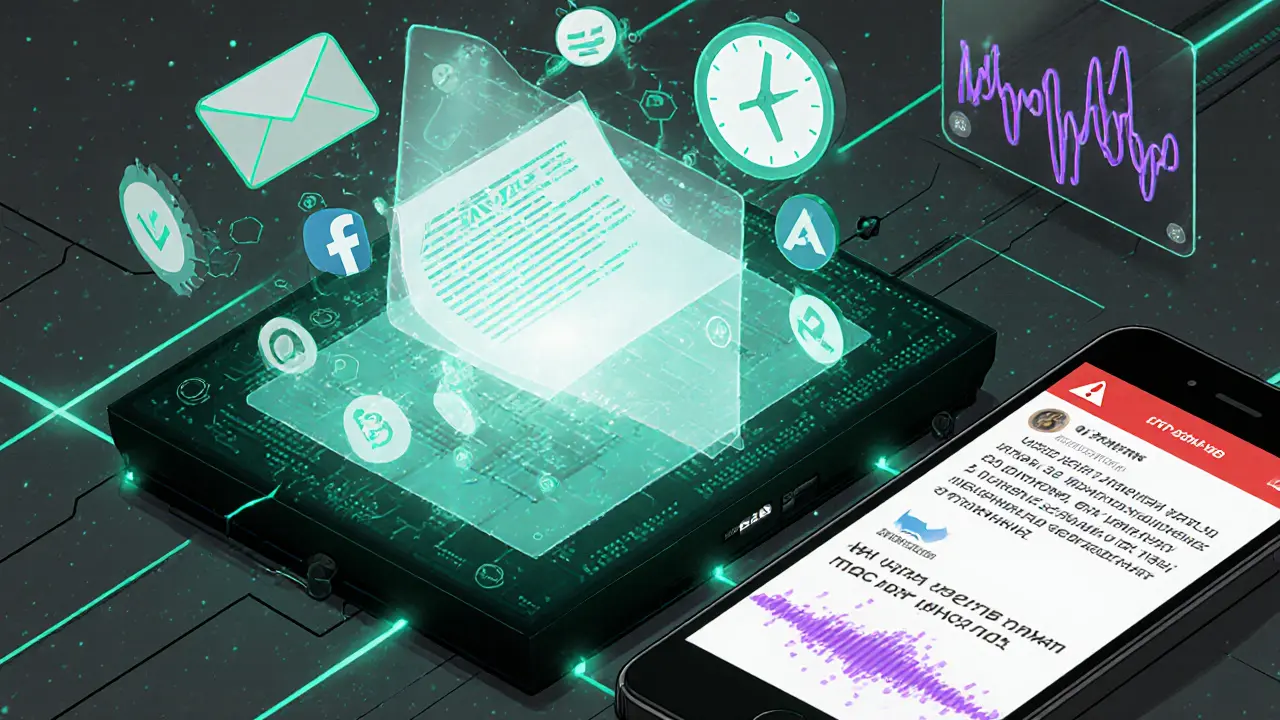
Tools that make attacks cheap and easy
Attack kits are now sold as a service on dark‑web marketplaces. Phishing‑as‑a‑Service platforms like PhishChain Pro provide ready‑made email and SMS templates, AI prompt libraries, and one‑click deployment for as little as $150 a month. A recent post on Dread showed a user turning a $500 investment into a 3,400% ROI by simply tweaking the template’s brand name.
Other popular kits include “MetaPhish” (38% market share) and “BinanceBait” (29%). They often bundle Blob URI techniques that bypass Google’s Advanced Protection Program, which otherwise blocks 98.7% of phishing attempts.
Defensive measures that actually work
Because blockchain transactions are irreversible, the best defense is preventing the credential leak in the first place. Here are the most effective steps:
- Enable multi‑signature (multi‑sig) wallets for any balance over $5,000. Attack conversion drops to 4.2% for multi‑sig users.
- Use hardware wallets that never expose seed phrases to the internet.
- Activate AI‑powered phishing detectors like Coinbase’s upcoming PhishShield (beta Q1 2026). Early testers report a 75% reduction in successful scams.
- Educate staff - 68% of exchanges now run mandatory phishing simulations for employees.
- Verify URLs by hovering, checking SSL certificates, and never trusting shortened links.
Regulators are also stepping up. The SEC’s October 2025 enforcement action against three phishing‑kit developers signals that the legal landscape will soon penalize the supply side heavily.

Email vs SMS: A quick side‑by‑side look
| Feature | Email Phishing | SMS Phishing |
|---|---|---|
| Delivery Speed | Seconds to minutes (depends on email provider) | Instant - arrives the moment it’s sent |
| Typical Success Rate | 28.7% click‑through | 17.3% click‑through |
| Common Red Flags | Misspelled domains, generic greetings | Unicode substitution, shortened URLs |
| Automation Tools | AI content generators, blockchain monitors | SMS‑gateway APIs, deepfake audio |
| Defensive Controls | Spam filters, DMARC, AI detectors | Carrier‑level filtering, phone‑based anti‑phish apps |
Key Takeaways
- Crypto phishing now claims roughly 39% of all crypto thefts, with AI making attacks more personal than ever.
- Email scams are more common and have higher click‑through rates, but SMS attacks are faster and harder to filter.
- Turnkey Phishing‑as‑a‑Service kits let low‑skill criminals launch sophisticated campaigns for under $200 a month.
- Multi‑sig wallets, hardware devices, and upcoming AI detectors are the most reliable defenses.
- Regulators are cracking down on the supply side, so the ecosystem may shift toward more subtle, deep‑fake‑driven lures.
Frequently Asked Questions
How can I tell if an email is a crypto phishing attempt?
Look for mismatched URLs, urgency language (“Your wallet is at risk!”), and any request to enter seed phrases. Even if the email looks perfect, never click the link - go directly to the official site.
Are shortened links always dangerous in SMS scams?
They’re a red flag because they hide the final destination. Use a URL expander service or type the address manually into a browser.
What is the best wallet setup to avoid phishing?
Combine a hardware wallet (e.g., Ledger, Trezor) with a multi‑signature smart contract for large balances. Keep the seed phrase offline and never share it.
Can AI detectors really stop phishing?
Early pilots of AI tools like PhishShield catch up to 92% of AI‑generated phishing emails before they land in inboxes. They’re not perfect, but they add a strong layer of protection.
Is there any way to recover stolen crypto?
Because blockchain transactions are immutable, recovery is rare. However, if the address is linked to an exchange that follows KYC, firms like Chainalysis can sometimes trace and freeze the funds, achieving a 74% recovery rate for compliant platforms.


