
On July 24, 2025, Algeria didn’t just tighten rules-it erased an entire industry overnight. With the passage of Law No. 25-10, the country made it illegal to own, trade, mine, or even talk about cryptocurrency. Not just use it. Not just exchange it. Simply holding Bitcoin or Ethereum in a digital wallet became a criminal act. This wasn’t a warning. It wasn’t a gray area. It was a full blackout.
What Exactly Is Banned?
Algeria’s law doesn’t just target exchanges or traders. It targets the whole chain. Article 6 bis lists every possible activity involving digital assets as illegal:- Possessing any cryptocurrency, even if you never sold it
- Buying or selling Bitcoin, Ethereum, or any altcoin
- Mining crypto using your computer or farm
- Running or operating a crypto exchange or wallet service
- Promoting crypto on social media, blogs, or YouTube
- Advertising crypto-related services
- Teaching others how crypto works
This means if you posted a TikTok explaining how to set up a MetaMask wallet, you could be fined or jailed. If you bought Litecoin in 2024 and still have it, you’re breaking the law. Even if you didn’t touch it.
The law doesn’t care if you’re an investor, a student, or a developer. It doesn’t care if you’re using crypto to send money to family abroad. It doesn’t care if you’re mining with solar power. If it’s digital, decentralized, and not issued by the Bank of Algeria-it’s banned.
How Are They Enforcing It?
This isn’t a paper law. Algeria built a real enforcement machine.The Bank of Algeria monitors banks to make sure no one deposits crypto proceeds or uses fintech apps that might link to digital assets. The Banking Commission checks financial institutions daily to ensure no crypto-related transactions slip through. If a bank customer tries to send money to a foreign exchange, it gets flagged.
Then there’s the security forces. They’re scanning online forums, social media, and messaging apps for crypto-related keywords. They’re tracking IP addresses linked to mining pools. They’re working with telecom providers to identify users accessing crypto websites or apps like Binance or Kraken.
And the courts? They’re ready. Since July 2025, dozens of cases have been filed. One man in Oran got a six-month sentence for holding $2,000 worth of Bitcoin. A content creator in Algiers was fined 500,000 DZD (about $3,850) for posting a video titled “Why I Invest in Crypto.”
Even foreign crypto platforms aren’t safe. If you’re a developer in Canada or India building a wallet app, and someone in Algeria uses it, you could be targeted under international cooperation agreements Algeria has signed with the Financial Action Task Force (FATF).
Why Did Algeria Do This?
The government says it’s about protecting the Algerian Dinar. They claim crypto is a threat to national security, a tool for terrorists, and a trap for ordinary people who lose money to scams.It’s true that in 2024, Algeria was one of the fastest-growing crypto markets in North Africa. Peer-to-peer trading volumes jumped 300% in just 12 months. Young people were using crypto to send remittances, invest in DeFi, and escape inflation that hit 12% in 2024. But instead of regulating it, the government chose to crush it.
They pointed to FATF guidelines-international standards to fight money laundering. But while the EU passed MiCA to bring crypto into the light, and the U.S. created clear licensing rules, Algeria went full lockdown. It’s not about compliance. It’s about control.
The Dinar isn’t backed by gold or oil-it’s backed by state power. Crypto threatens that. If people can move money outside the system, if they can store value without the central bank’s permission, then the government loses grip. And in Algeria, that’s unacceptable.
What Happened to the Crypto Community?
Before the ban, Algeria had a thriving blockchain scene. Developers were building local NFT platforms. Students were taking online courses in Solidity. Startups were raising funds through token sales. Crypto headhunters were recruiting talent from Algiers to Constantine.Now? The exodus has begun.
Blockchain engineers are leaving. Some fly to Dubai, where crypto is legal and taxed at 0%. Others move to Tunisia or Egypt, where regulators are still figuring things out. A few even went to Serbia or Portugal-places with low taxes and clear crypto rules.
Those who stayed? They go underground. Some use VPNs to access wallets. Others trade over Telegram in encrypted groups. But every time they open an app, they risk arrest. One developer in Constantine told a reporter: “I used to teach coding. Now I teach how to hide.”
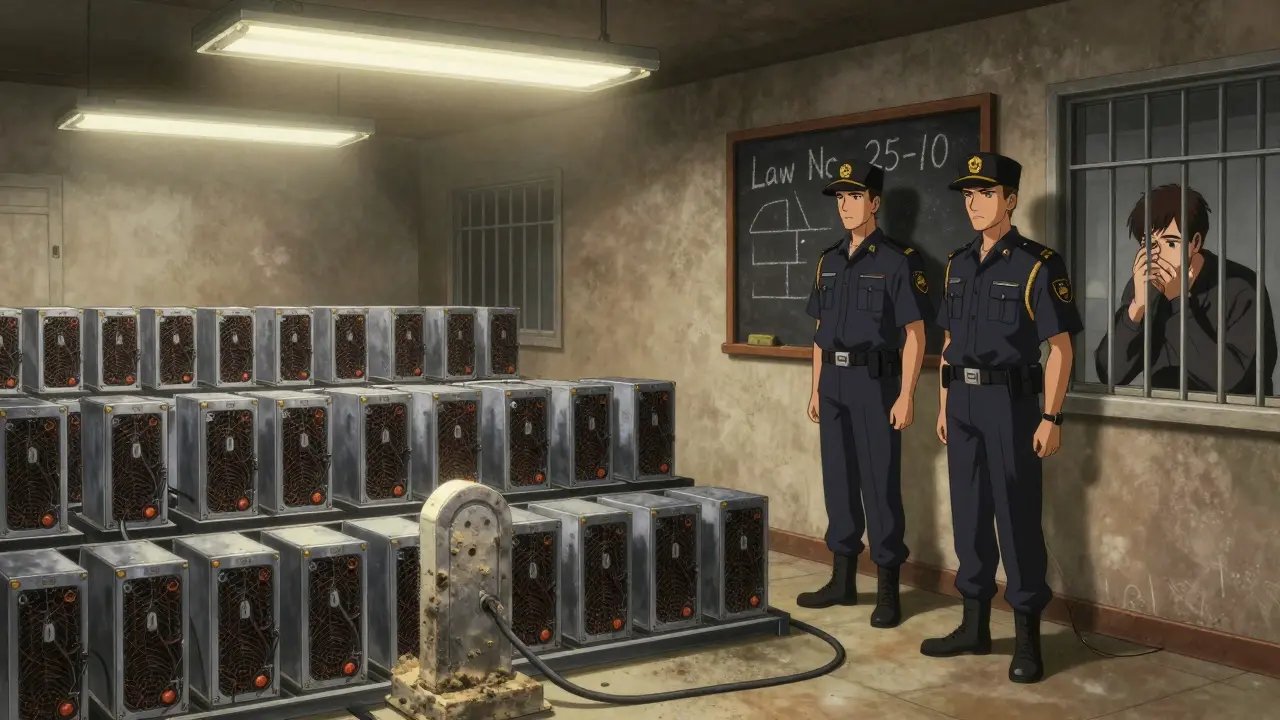
Miners? Their rigs are gathering dust. Algeria had cheap electricity thanks to state subsidies, making it ideal for mining. Now, those machines are either seized or sold for scrap. One mining farm in Annaba was raided in October 2025. Police confiscated 140 ASIC miners. The owner got a year in prison.
How Does This Compare to the Rest of the World?
Algeria is one of the few countries with a total ban. China banned crypto in 2021, but enforcement there is patchy. Nigeria cracked down hard in 2021, but lifted some restrictions in 2023. Algeria’s law is broader and more aggressive.Compare it to the UAE. They have a full licensing system. Companies can get permits to operate exchanges. Banks can hold crypto assets. Investors are protected by law.
Or Bahrain. They created a sandbox for crypto startups. They offer visas to blockchain developers. They’re building a fintech hub.
Algeria? They’re building prisons for developers.
This isn’t just about money. It’s about the future. If you ban the tools of innovation, you ban the people who use them. And when a country pushes out its tech talent, it doesn’t just lose jobs-it loses relevance.
What’s the Real Cost?
The government says the ban protects citizens. But who’s really protected?People who want to send money to relatives overseas? They can’t use crypto anymore. They pay 15% fees through Western Union. They wait days for transfers.
Small businesses trying to sell digital services? They can’t accept crypto payments. They lose customers to competitors in Morocco or Tunisia.
Students studying computer science? They can’t learn blockchain. No internships. No projects. No future in a global tech economy.
The ban didn’t stop crypto. It just made it riskier. And it turned Algeria from a rising market into a cautionary tale.
Five years from now, when the world is using digital currencies for everything-from paying rent to buying groceries-Algeria will still be stuck with paper money, slow banks, and a generation of talent that had to leave to survive.
There’s no evidence crypto caused the financial chaos the government fears. But there’s plenty of evidence that the ban caused real harm: brain drain, lost innovation, and a quiet collapse of digital freedom.
Can Anything Change?
Right now? Unlikely. The government shows no sign of backing down. Law No. 25-10 is written to last. Penalties are high. Enforcement is active. International pressure hasn’t moved them.But history shows that bans like this rarely work forever. People find ways. Bitcoin survived China’s crackdown. Crypto grew in Nigeria despite bans. The internet always finds a path.
For now, Algeria stands alone-not as a leader in financial security, but as the country that chose control over progress.
If you’re in Algeria and you hold crypto? You’re breaking the law. If you’re outside Algeria and you know someone who does? They’re taking a risk most people don’t understand.
The ban didn’t end crypto. It just made it invisible.
Is it illegal to own Bitcoin in Algeria?
Yes. Under Law No. 25-10, passed on July 24, 2025, simply possessing any cryptocurrency-including Bitcoin, Ethereum, or stablecoins-is a criminal offense. You don’t have to trade it. You don’t have to sell it. Just holding it in a digital wallet is enough to face prosecution.
What are the penalties for violating Algeria’s crypto ban?
Violators can face prison sentences of two months to one year and fines between 200,000 and 1,000,000 Algerian dinars (roughly $1,540 to $7,700 USD). The penalty depends on the nature of the violation-possession carries lighter sentences, while running an exchange or promoting crypto can trigger the maximum penalty.
Can you still mine cryptocurrency in Algeria?
No. Mining is explicitly banned under Article 6 bis of Law No. 25-10. This includes using personal computers, home rigs, or industrial-scale mining farms. Authorities have raided multiple mining operations since the law took effect, seizing equipment and arresting operators.
Are crypto influencers being prosecuted in Algeria?
Yes. Promoting, advertising, or educating others about cryptocurrency-including YouTube videos, TikTok posts, blog articles, or social media content-is considered a criminal act under the law. At least five influencers have been fined or charged since July 2025 for discussing crypto online.
Is Algeria the only country with a crypto ban?
No, but it’s one of the strictest. China banned crypto transactions and mining in 2021, and a few other countries like Egypt and Morocco have restricted usage. But Algeria’s law is unique in criminalizing possession, promotion, and even passive holding-making it one of the most comprehensive bans in the world.
What happens if you send crypto to someone in Algeria?
Sending crypto to someone in Algeria puts both parties at risk. The recipient can be prosecuted for possession. The sender could be investigated under international anti-money laundering agreements Algeria has with FATF. Even if you’re outside the country, your transaction could be flagged and traced.
Can Algerians use crypto for remittances?
No. Using cryptocurrency to send money to family or pay for goods abroad is illegal. Algerians must now rely on traditional remittance services like Western Union or MoneyGram, which charge higher fees and take longer to process. This has made cross-border payments more expensive and less accessible for ordinary citizens.
Is there any legal way to invest in crypto in Algeria?
No. There are no legal exchanges, no licensed wallets, no regulated platforms. All forms of crypto investment, trading, staking, or DeFi participation are banned. Any service offering crypto access in Algeria is operating illegally and can be shut down by authorities at any time.


