On May 6, 2014, Bolivia made a move no other country had dared to: it became the first nation in the world to officially ban Bitcoin and all other cryptocurrencies. Not just restrict them. Not just warn against them. Ban them - completely, permanently, and without exception. The Central Bank of Bolivia, known as BCB, issued Resolution No. 24-14-001, declaring that any currency not issued or controlled by the government was illegal. Bitcoin, Namecoin, Peercoin, Quark - all of them were outlawed overnight.
Why Bolivia Went All-In on the Ban
At the time, Bitcoin was still a fringe idea. Few people outside tech circles understood it. But Bolivia’s central bank saw it as a direct threat. Their official reasoning was simple: protect the boliviano. The country’s national currency had already struggled with inflation and instability. Officials feared that if people started using Bitcoin to store value or make payments, it could drain demand away from the boliviano, weaken monetary control, and trigger capital flight. The resolution didn’t just say "don’t use Bitcoin." It went further. It banned businesses from pricing goods in crypto. It forbade banks from processing any transactions linked to digital currencies. It even made it illegal for citizens to hold or trade Bitcoin as a form of savings. The goal wasn’t to regulate - it was to erase. What made Bolivia’s ban unique was how absolute it was. While other countries like China and Russia were still debating restrictions, Bolivia didn’t wait. It acted. By 2014, China hadn’t yet shut down crypto exchanges. Thailand had only issued warnings. The U.S. was still figuring out how to classify Bitcoin. Bolivia didn’t care about nuance. It drew a line in the sand: only the boliviano is legal money here.How the Ban Was Enforced - And Why It Failed
Enforcement was strict on paper. Commercial banks had to install monitoring systems to detect any crypto-related activity. Any transaction flagged as possibly involving Bitcoin had to be reported. The Financial System Supervisory Authority (ASFI) slapped fines on institutions that slipped up. The message was clear: break this rule, and you lose your license. But enforcement on the ground? That’s where things fell apart. People didn’t stop using Bitcoin. They just went underground. LocalBitcoins and Paxful became lifelines. In La Paz, Santa Cruz, and Cochabamba, users traded Bitcoin for cash in parking lots, cafes, and even behind gas stations. Fees soared - 8% to 12% just to convert bolivianos to Bitcoin. But for many, it was worth it. One user on Reddit, u/CryptoLaPaz, said it best: "I’ve been using USDT to protect my savings from boliviano depreciation since 2019. The ban doesn’t stop us, it just makes everything more expensive and risky." A 2021 survey by the Bolivian Digital Rights Observatory found that 68% of crypto users operated entirely outside the system. Over 40% made at least one crypto transaction every month. Remittances - money sent home from workers abroad - became the biggest driver. Traditional services like Western Union charged 15-20% in fees. Bitcoin cut that to under 5%. Fraud followed. The Financial Intelligence Unit recorded 147 crypto-related fraud cases between 2018 and 2023, totaling $2.3 million. But experts believe that was only a fraction. Many victims never reported losses because they were breaking the law themselves.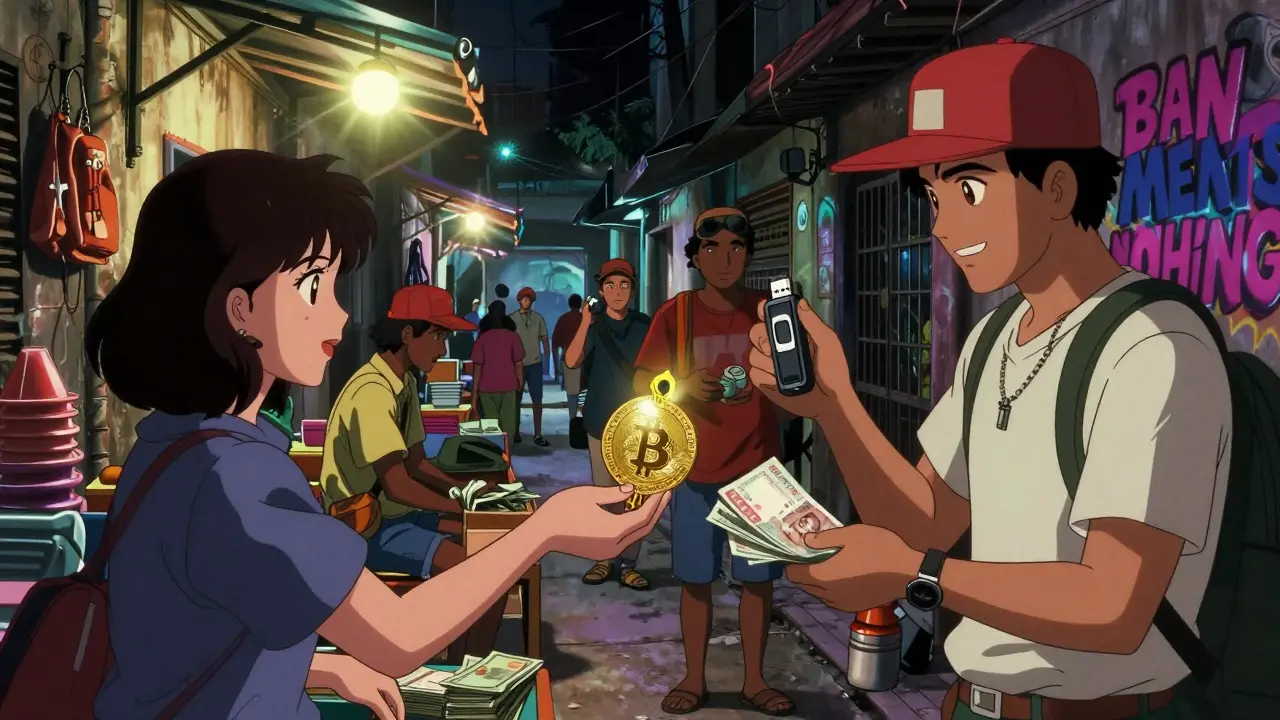
How Bolivia Compared to the Rest of the World
Bolivia wasn’t alone in trying to ban crypto - but it was the only one that did it so early and so completely. - China didn’t ban Bitcoin until 2017 - and even then, only exchanges and mining. People could still hold it. Bolivia banned holding. - Russia proposed a ban in 2014 but never passed it. Their lawmakers kept debating. - Thailand warned citizens about crypto risk in 2013 - but never outlawed it. - Japan and the U.S. took the opposite path: they licensed exchanges and created rules. Japan even recognized Bitcoin as legal money in 2017. Bolivia stood alone. It was the strictest, the earliest, and the most uncompromising. By 2022, the Blockchain Association of Latin America ranked Bolivia as the most restrictive crypto jurisdiction in the entire region - tied only with Algeria and Egypt.The Human Cost of the Ban
The ban didn’t just affect tech users. It hit ordinary people trying to survive. Inflation in Bolivia climbed from 3.5% in 2018 to over 5% by 2023. The boliviano lost value. People’s savings shrank. Meanwhile, neighbors like Peru and Chile let citizens use crypto as a hedge. Bolivians couldn’t. They had no access to stablecoins like USDT or USDC - tools that could’ve protected their money from inflation. Border towns suffered most. In cities like Trinidad and Rurrenabaque, near Brazil and Peru, people used crypto daily to buy goods, pay for services, and send money home. The ban forced them into risky, expensive workarounds. Businesses that wanted to accept crypto payments were forced to close shop or operate illegally. Experts were split. Dr. Carlos Newland, a former BCB advisor, argued the ban preserved monetary sovereignty. "Emerging economies can’t risk alternative currencies," he wrote in 2015. But Dr. Rebecca Liao from Stanford called it "a protectionist measure that failed to fix the real problem - weak economic policy." The IMF changed its stance too. In 2020, Alejandro Werner, head of the IMF’s Western Hemisphere Department, said: "Blanket bans on digital assets often prove ineffective and may drive activity underground, reducing regulatory oversight rather than enhancing it."
The Ban Ends - And What Happened Next
On June 26, 2024, Bolivia reversed its decade-long ban. The Central Bank lifted the prohibition on cryptocurrency transactions. Not because it changed its mind about Bitcoin - but because the ban had become impossible to enforce. The new rules? Trading is now legal. Exchanges can register with ASFI. But you still can’t use Bitcoin to pay for coffee, rent, or a bus ticket. The boliviano remains the only legal tender for payments. The result? Explosive growth. In the first half of 2025, crypto transactions jumped from $46.5 million to $294 million. By May 2025, total volume hit $430 million. Binance saw a 6,600% surge in Bolivian users. Meru, a local wallet app, became the fastest-growing fintech platform in the country. Today, 75% of crypto users in Bolivia are male. 86% of transactions are personal - not business. Most people use USDT to protect their savings. The government still fears inflation. But now, it’s trying to control the flow instead of stopping it.What Bolivia’s Story Teaches Us
Bolivia’s ban wasn’t just a policy mistake. It was a lesson in how governments misunderstand technology. You can’t ban something people need. When inflation eats away at your savings, and banks won’t help, people find a way. Crypto wasn’t the problem - it was the solution. And banning it didn’t stop the solution. It just made it more expensive, more dangerous, and less transparent. Other countries watched. Some copied Bolivia. Most didn’t. Today, El Salvador uses Bitcoin as legal tender. Argentina lets people use crypto to escape currency controls. Bolivia? It’s caught in the middle - allowing trade but blocking payments. A half-measure. A compromise. But one thing is clear: the first country to ban Bitcoin didn’t win. It just delayed the inevitable.Was Bolivia the first country to ban Bitcoin?
Yes. Bolivia’s Central Bank issued Resolution No. 24-14-001 on May 6, 2014, making it the first national government to formally ban Bitcoin and all other cryptocurrencies. No other country had taken such a complete and enforceable stance before. While China, Thailand, and Russia had considered restrictions, none enacted a full ban until years later - and even then, not as broadly as Bolivia did.
What exactly did Bolivia’s ban prohibit?
The ban made it illegal to use, trade, or hold any currency not issued by the Bolivian government. This included Bitcoin, Ethereum, and over a dozen other cryptocurrencies. Businesses couldn’t list prices in crypto. Banks couldn’t process crypto-related transactions. Even holding crypto as a savings tool was technically against the law. Only the boliviano (BOB) was recognized as legal tender.
Did the ban stop people from using Bitcoin in Bolivia?
No. Despite the ban, Bitcoin usage grew underground. People used peer-to-peer platforms like LocalBitcoins and Paxful to buy and sell crypto. A 2021 survey found 68% of crypto users operated outside the system. Remittance flows and inflation protection drove adoption. By 2023, an estimated 1.2 million Bolivians - over 10% of the population - were using crypto informally.
Why did Bolivia lift the ban in 2024?
The ban became unenforceable. As inflation rose and neighboring countries adopted crypto-friendly policies, Bolivians increasingly turned to digital assets to protect their savings. The government realized that outlawing crypto wasn’t stopping usage - it was just making it riskier and harder to regulate. In June 2024, it reversed course, allowing trading while keeping the ban on using crypto for payments.
Can you use Bitcoin to pay for things in Bolivia today?
No. Even after the ban was lifted, the government still prohibits using Bitcoin or any cryptocurrency to pay for goods or services. Only the boliviano is legal tender for transactions. People can trade crypto on registered exchanges, but they can’t use it at stores, restaurants, or for bills. The goal is to allow investment and trading while protecting the national currency from direct competition.


