
Ever bought a bag of coffee beans and wondered if the "fair trade" label on the packet was actually true? Or maybe you grabbed a luxury handbag online, only to spend the next week worrying it might be a knock-off. We’ve all been there. The problem isn’t just about trust; it’s about visibility. Traditional supply chains are like black boxes. You see the start (the factory) and the end (your doorstep), but everything in between is a blur of paperwork, disconnected databases, and potential points of failure.
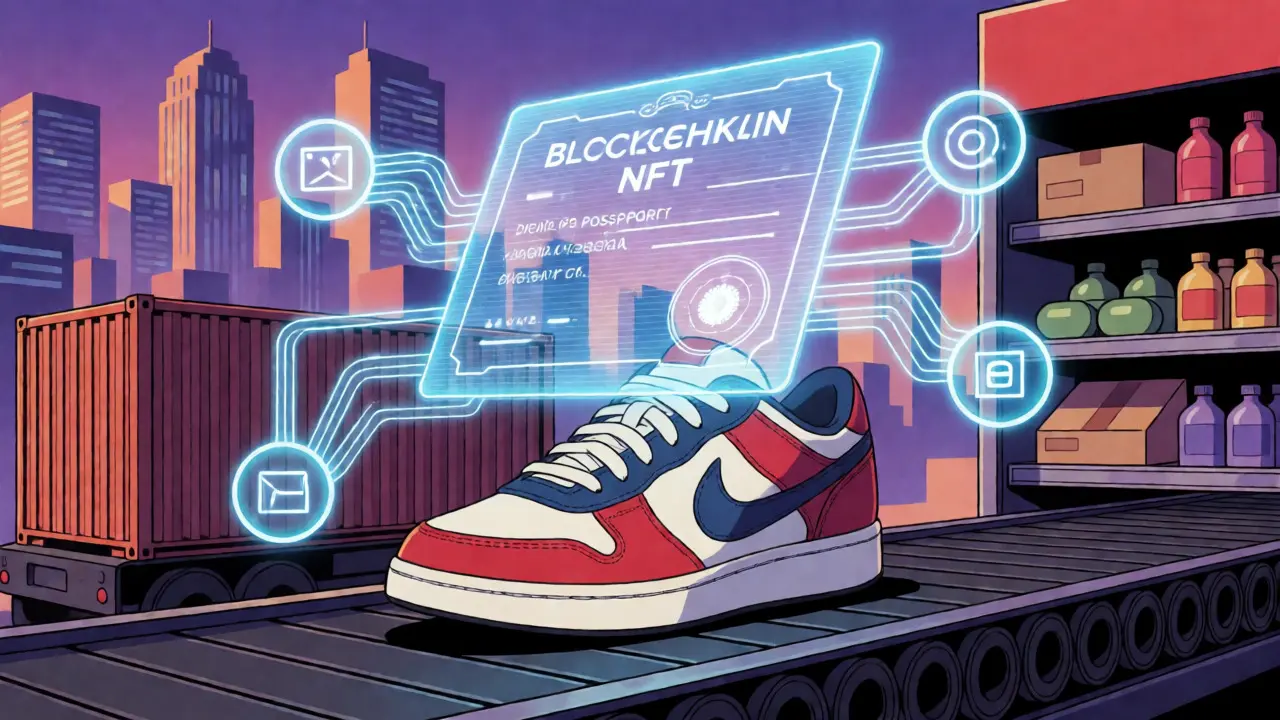
This is where Blockchain NFTs come into play. No, we aren’t talking about those expensive JPEGs of cartoon apes. In this context, an NFT is a unique digital certificate that represents a physical product on a blockchain. It acts as a tamper-proof passport for your goods, recording every step from origin to consumer. If you’re a business owner, a logistics manager, or just a curious tech enthusiast, understanding how this technology works can change how you view product authenticity forever.
The Core Problem: Why Old Tracking Methods Fail
Before we jump into the solution, let’s look at why the current system is broken. Most supply chains rely on centralized databases. Company A sends data to Company B, who enters it into their own spreadsheet. If Company B makes a mistake-or worse, alters the data to hide a delay-Company C has no way of knowing unless they audit the raw logs. And audits are slow, expensive, and rare.
Consider the pharmaceutical industry. Counterfeit drugs are a massive issue globally. In traditional systems, verifying a drug’s journey involves checking multiple certificates from different countries. These documents can be forged. With distributed ledger technology, every participant in the network holds a copy of the truth. If someone tries to change a record, the other copies reject it. This creates a single source of truth that is incredibly hard to manipulate.
How Blockchain NFTs Actually Work in Logistics
So, how do you turn a physical pair of sneakers into a digital token? It starts with the concept of tokenization. At the point of origin, a manufacturer assigns a unique identifier to a batch of products. This identifier is minted as an NFT on a blockchain. This isn’t just a random number; it’s a container for metadata.
Think of the NFT as a digital twin of the physical item. When the product moves from the factory to the shipping container, the smart contract associated with the NFT updates its status. Smart contracts are self-executing codes stored on the blockchain. They don’t need a human middleman to verify that the shipment left port. The code checks the conditions: Was the temperature within range? Did the GPS coordinates match the expected route? If yes, the NFT state changes automatically.
This process continues through every handoff. The importer scans the QR code linked to the NFT. The retailer receives the goods. Each scan adds a new block to the chain. Because blockchains use cryptographic hashing, each new entry is mathematically linked to the previous one. You can’t insert a fake transaction in the middle without breaking the entire chain’s integrity.
Key Technologies Powering Transparent Supply Chains
You don’t always need Ethereum for this. While public blockchains offer maximum transparency, businesses often prefer private or consortium blockchains for speed and privacy. Here is a breakdown of the main players:
| Platform | Type | Best For | Privacy Level |
|---|---|---|---|
| Hyperledger Fabric | Private/Consortium | Enterprise partners needing controlled access | High (Channel-based) |
| Ethereum | Public | Consumer-facing verification and open markets | Low (Transparent) |
| Polygon | Layer 2 Scaling | High-volume tracking with lower fees | Medium |
| R3 Corda | Distributed Ledger | Financial and legal document exchange | High |
Most large-scale implementations lean towards Hyperledger Fabric. It allows companies to define exactly who sees what. For example, a retailer might see the price history, but not the supplier’s cost margins. This flexibility is crucial because businesses hate leaking proprietary data to competitors.
Real-World Applications: Beyond the Hype
Let’s get concrete. Who is actually using this?
- Luxury Goods: Brands like LVMH and Richemont have launched platforms like Aura to track high-end watches and bags. You can scan a chip in the item and see its entire service history, proving it’s genuine and detailing repairs.
- Food Safety: Walmart uses blockchain to trace leafy greens. During an E. coli outbreak, tracing contaminated lettuce used to take days. With blockchain, they can pinpoint the exact farm and harvest date in seconds, allowing them to pull only affected batches rather than clearing shelves nationwide.
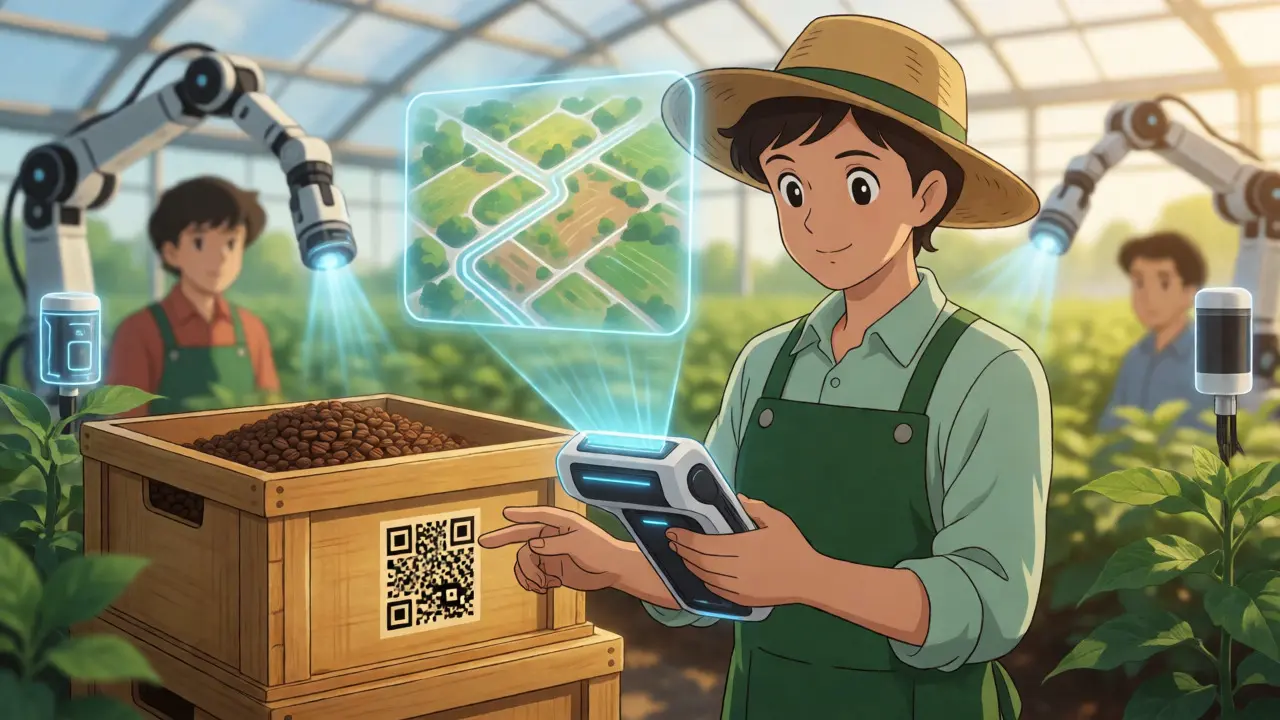
- Coffee and Cocoa: Farmers in remote regions often struggle to prove their ethical sourcing claims. By logging harvest data directly onto an NFT, they can show consumers exactly which cooperative picked the beans, ensuring fair wages were paid.
In New Zealand, where we pride ourselves on clean green agriculture, this tech is gaining traction for dairy exports. Verifying that milk powder came from grass-fed cows in Taranaki becomes a verifiable fact, not just a marketing slogan.
Implementation Challenges: It’s Not All Smooth Sailing
If this technology is so great, why isn’t every small business using it yet? Three words: Integration, Cost, and Data Entry.
First, integration. Most companies run legacy ERP systems like SAP or Oracle. Connecting these old giants to a modern blockchain requires custom middleware. It’s not plug-and-play. You need developers who understand both SQL databases and Solidity (for Ethereum) or Go (for Hyperledger).
Second, the "Garbage In, Garbage Out" problem. Blockchain guarantees that once data is on the chain, it hasn’t been changed. But it doesn’t guarantee the data was correct when it went in. If a warehouse worker accidentally scans the wrong box, the blockchain records a lie perfectly. To combat this, companies are integrating IoT sensors. These devices automatically log temperature, humidity, and location, reducing human error.
Third, energy consumption. While proof-of-work blockchains like Bitcoin are energy-intensive, most supply chains use proof-of-stake or permissioned networks that are far more efficient. Still, sustainability-minded brands must choose their platform carefully to avoid contradicting their green messaging.
The Future: AI and Zero-Knowledge Proofs
We are just scratching the surface. The next big leap involves combining blockchain with Artificial Intelligence. Imagine an AI analyzing millions of NFT transaction records to predict supply chain disruptions before they happen. It could spot patterns indicating a port strike or a weather event delaying shipments, triggering automatic re-routing via smart contracts.
Another emerging tech is Zero-Knowledge Proofs (ZKPs). ZKPs allow one party to prove to another that a statement is true without revealing any information beyond the validity of the statement itself. For example, a supplier can prove their goods meet EU safety standards without revealing their specific manufacturing recipes or supplier lists. This solves the privacy vs. transparency dilemma elegantly.
Getting Started: A Checklist for Businesses
If you’re considering adding blockchain tracking to your operations, here’s a quick roadmap:
- Audit Your Current Process: Identify the biggest pain points. Is it counterfeiting? Delay detection? Compliance reporting?
- Choose the Right Platform: Do you need public visibility (Ethereum/Polygon) or private control (Hyperledger)?
- Standardize Data Inputs: Ensure all partners agree on what data gets recorded and in what format.
- Pilot Small: Don’t try to track your whole inventory at once. Start with one high-value product line.
- Educate Your Staff: Your warehouse team needs to know how to interact with the new digital tokens.
Supply chain transparency isn’t just a buzzword anymore; it’s becoming a regulatory requirement. With laws like the EU’s Digital Product Passport coming into effect, having a blockchain-backed trail will soon be mandatory for many industries. Getting ahead of the curve now saves you from scrambling later.
Are NFTs only for digital art?
No. While famous for digital collectibles, NFTs are increasingly used as digital certificates for physical assets. In supply chains, they represent unique identifiers for physical goods, storing metadata about their origin, journey, and condition.
Which blockchain is best for supply chain tracking?
It depends on your needs. Hyperledger Fabric is popular for enterprise solutions due to its privacy and speed. Ethereum and Polygon are better for consumer-facing applications where public verification is key. R3 Corda is often used in finance-heavy sectors.
Can blockchain prevent all fraud?
It prevents data tampering after the fact, but it cannot prevent bad data entry. If a fraudulent actor inputs false information at the source, the blockchain will faithfully record that falsehood. IoT integration helps mitigate this by automating data capture.
Is implementing blockchain expensive?
Initial setup costs can be high due to development and integration needs. However, long-term savings from reduced disputes, faster audits, and improved brand trust often justify the investment. Cloud-based blockchain services are lowering barriers for smaller firms.
Do customers need to understand crypto to use this?
Not at all. Most user interfaces abstract away the complexity. Customers simply scan a QR code with their smartphone camera, and they see a simple webpage showing the product’s history. The blockchain interaction happens in the background.