
Is Bitso the right place to store and trade your digital assets in 2026? If you live in Mexico or other parts of Latin America, the answer is likely yes. But if you are looking for a global powerhouse with futures trading and zero-fee spot markets, you might want to look elsewhere. This review cuts through the marketing hype to show you exactly what Bitso offers, where it falls short, and who should actually use it.
Quick Summary / Key Takeaways
- Best For: Users in Mexico, Argentina, Brazil, and Colombia seeking easy fiat on-ramps (MXN, ARS, BRL, COP).
- Fees: Competitive tiered structure starting at 0.04% for makers; higher for takers and lower volumes.
- Security: Strong track record since 2014; uses Proof of Reserves and Coincover insurance.
- Limitations: No futures trading, no demo accounts, and limited advanced features compared to global giants like Binance.
- Verdict: A top-tier choice for regional users prioritizing local compliance and ease of use over advanced derivatives.
What Is Bitso? The Regional Leader in Latin America
Bitso is a cryptocurrency exchange founded in 2014 that specializes in serving the Latin American market. Unlike global platforms that treat LatAm as an afterthought, Bitso built its infrastructure specifically for the economic realities of the region. With over 7 million users across 33 jurisdictions, including the United States, it has become the go-to platform for millions of people looking to hedge against inflation or simply enter the crypto space.
The platform supports more than 50 cryptocurrencies, including major players like Bitcoin (BTC) and Ethereum (ETH), alongside stablecoins like USDC. What sets Bitso apart is its deep integration with local fiat currencies. You can deposit Mexican Pesos (MXN), Argentinian Pesos (ARS), Brazilian Reais (BRL), and Colombian Pesos (COP) directly. This solves one of the biggest pain points for traders in these regions: getting money from their bank account into a crypto wallet without paying exorbitant international transfer fees.
Regulatory compliance is another cornerstone of Bitso’s identity. The exchange operates under the supervision of the Gibraltar Financial Services Commission and adheres to local regulations in each country it serves. For users worried about the "wild west" nature of crypto, this regulatory backing provides a layer of trust that many offshore exchanges lack.
Bitso Fees: How Much Will You Pay?
Let’s talk money. Trading fees can eat into your profits faster than you think. Bitso uses a maker-taker fee model, which means you pay less if you add liquidity to the order book (maker) and more if you take it away (taker).
| Role | Standard Fee Range | Note |
|---|---|---|
| Maker | 0.04% - 0.25% | Lower fees for limit orders that don't execute immediately |
| Taker | 0.05% - 0.30% | Higher fees for market orders or immediate execution |
| Withdrawal | Variable | Depends on the blockchain network congestion |
These rates are competitive within the industry. While they aren’t the absolute cheapest on the market (some exchanges offer 0% spot trading promotions), they are transparent and predictable. The fees vary based on your base currency and trading volume. If you are a high-volume trader, you will see significant reductions in these percentages. However, be aware of the minimum deposit requirements. Reports vary, with some sources citing $10 and others noting up to $100 depending on the payment method and jurisdiction. Always check the current requirement before funding your account.
Security and Trust: Is Your Money Safe?
In crypto, security isn’t a feature; it’s a necessity. Bitso has maintained a strong reputation since its launch in 2014. Here is how they protect your assets:
- Proof of Reserves: Bitso regularly publishes Proof of Reserves reports. This cryptographic proof shows that the exchange holds enough assets to cover all user balances. It’s a critical transparency measure following several high-profile exchange collapses in recent years.
- Coincover Insurance: User funds are backed by insurance guarantees provided by Coincover. While not a replacement for self-custody, this adds a financial safety net in case of operational failures.
- Two-Factor Authentication (2FA): Mandatory 2FA protects your account from unauthorized access. Bitso supports standard authenticator apps, ensuring your login credentials remain secure even if your password is compromised.
- Cold Storage: Like most reputable exchanges, Bitso keeps the majority of user funds in cold storage (offline wallets), making them inaccessible to online hackers.
User feedback on platforms like G2.com highlights this security focus. Many Mexican users specifically mention feeling safer using a locally regulated entity compared to anonymous offshore platforms. The peace of mind knowing that Bitso complies with local laws is a significant factor for mainstream adoption.
Trading Experience: Apps and Tools
Bitso understands that different users have different needs. That’s why they offer two distinct mobile applications:
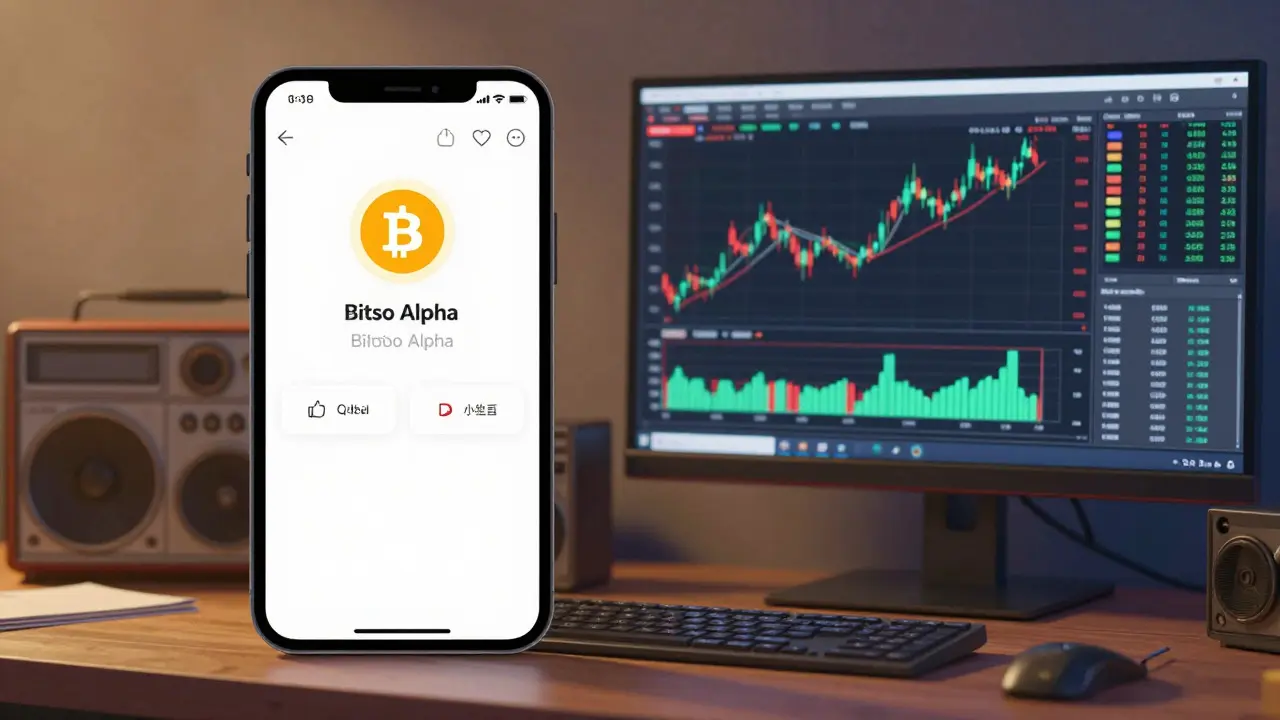
- Bitso App: Designed for beginners. It’s clean, simple, and focused on buying and selling crypto quickly. If you just want to buy $50 worth of Bitcoin to hold long-term, this is the app for you. It allows real-time price monitoring and easy portfolio tracking.
- Bitso Alpha: Built for serious traders. This app integrates TradingView charts, offering professional-grade technical analysis tools. You can use advanced order types like Limit, Stop-Loss, and Stop-Limit orders. If you need leverage (up to 1:1) or want to analyze candlestick patterns, Bitso Alpha is your tool.
The desktop interface mirrors these capabilities, providing a seamless experience whether you are trading on your phone during your commute or analyzing charts on your laptop at home. Live chat support is available 24/7, though some users note that response times can vary during peak hours.
Bitso vs. Competitors: Where Does It Stand?
To give you a realistic perspective, let’s compare Bitso with two major competitors: Binance and Coinbase.
| Feature | Bitso | Binance | Coinbase |
|---|---|---|---|
| Primary Market | Latin America | Global | USA/Europe |
| Fiat On-Ramp | MXN, ARS, BRL, COP | Limited in LatAm | USD, EUR, GBP |
| Futures Trading | No | Yes (Extensive) | Limited |
| Regulatory Status | Highly Compliant (Local) | Complex/Varying | Publicly Traded |
| Educational Resources | Minimal | Moderate | High (Learn & Earn) |
Binance offers more coins and lower fees for global users, but its fiat on-ramps in Latin America can be clunky and subject to sudden regulatory changes. Coinbase is incredibly user-friendly and safe for US residents, but its fees are notoriously high, and it lacks the local fiat integrations that make Bitso so convenient for LatAm users. Bitso strikes a balance: it’s not the cheapest globally, but it’s often the most practical for regional traders.
Who Should Use Bitso? (And Who Should Avoid It)
Bitso isn’t for everyone. Here is a quick breakdown to help you decide:
Use Bitso if:
- You live in Mexico, Argentina, Brazil, or Colombia and want to easily convert local currency to crypto.
- You prioritize regulatory compliance and local customer support.
- You want a simple, secure way to buy and hold major cryptocurrencies.
- You need the Bitso Card (debit card) to spend your crypto in daily life (available exclusively to Mexican residents).
Avoid Bitso if:
- You are an advanced trader looking for futures, options, or high-leverage trading (Bitso only offers 1:1 leverage).
- You want to trade obscure altcoins; Bitso lists 50+ assets, whereas Binance lists hundreds.
- You are a complete beginner who needs extensive tutorials and demo accounts (Bitso lacks these educational resources).
Final Thoughts on Bitso in 2026
Bitso has carved out a unique niche in the cryptocurrency world. By focusing relentlessly on the Latin American market, it has solved problems that global exchanges often ignore. The combination of local fiat support, robust security measures, and a user-friendly interface makes it a compelling choice for millions of users. While it may lack the flashy features of some competitors, its reliability and regional expertise are hard to beat. If you are in LatAm and want a trustworthy, compliant way to enter the crypto economy, Bitso deserves a spot on your shortlist.
Is Bitso safe for beginners?
Yes, Bitso is considered safe due to its regulatory compliance, Proof of Reserves, and insurance partnerships. However, it lacks educational resources like demo accounts, so beginners should start with small amounts to learn the interface.
Can I use Bitso in the United States?
Yes, Bitso operates in the United States and other jurisdictions. However, its primary strength lies in Latin America. US users may find better fiat on-ramp options with domestic exchanges like Coinbase or Kraken.
Does Bitso offer a debit card?
Yes, the Bitso Card is available, but currently, it is exclusively restricted to residents of Mexico. It allows users to spend their crypto holdings at any merchant that accepts Visa/Mastercard.
What is the minimum deposit on Bitso?
The minimum deposit varies by payment method and region. Some sources cite $10, while others report $100. It is best to check the specific requirements for your country and chosen payment method when creating your account.
Does Bitso have futures trading?
No, Bitso does not currently offer futures or derivatives trading. It focuses on spot trading with up to 1:1 leverage, making it less suitable for traders seeking high-risk derivative products.