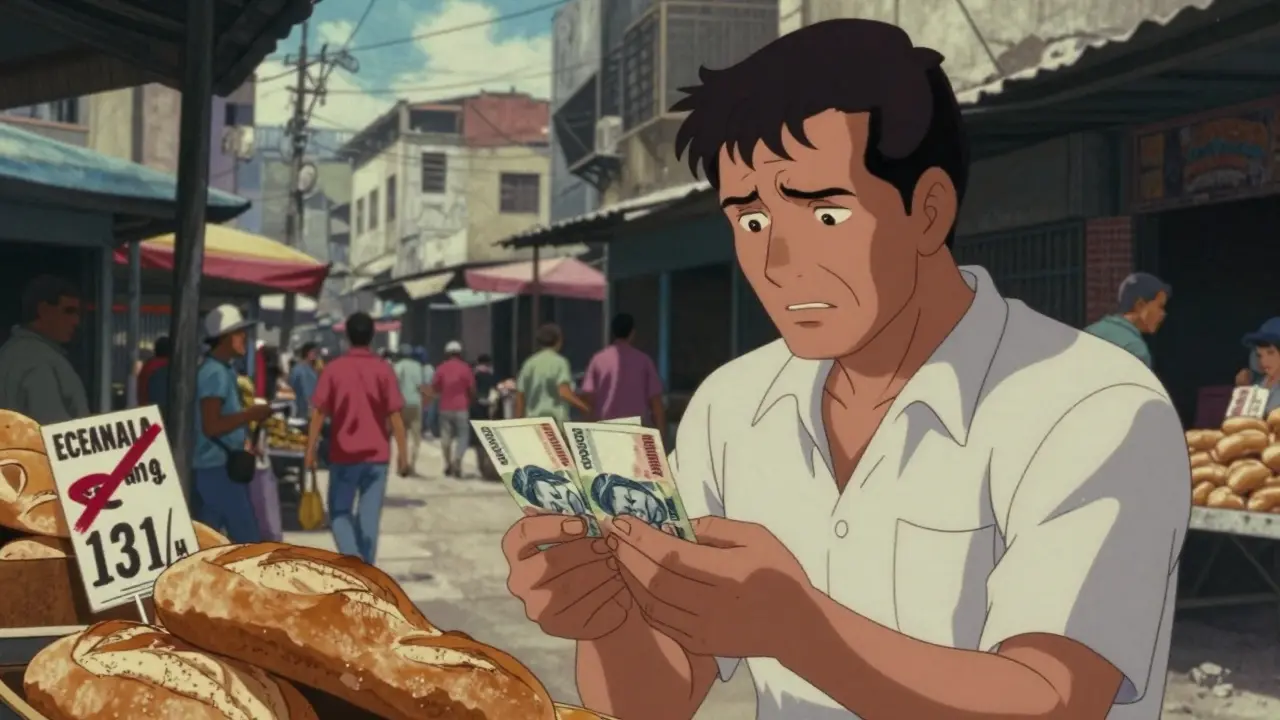
Imagine waking up to find that your monthly salary can't even buy a loaf of bread by the time you reach the store. For millions in Venezuela, this isn't a nightmare-it's daily life. When a national currency like the bolívar loses over 70% of its value in just a few months, people don't look for investment opportunities; they look for a way to survive. This is where Bitcoin adoption is the transition from traditional national currency to decentralized digital assets to preserve purchasing power during economic collapse. It has shifted from a tech-hobbyist niche to a fundamental economic lifeline.
Why Venezuelans Turned to Crypto Out of Necessity
Most people in stable economies see crypto as a gamble. In Venezuela, it's the opposite. The driver here is brutal hyperinflation. By May 2024, the Venezuelan Finance Observatory (OVF) recorded annual inflation at a staggering 229%. When the government stopped defending the bolívar in late 2023, the currency plummeted, leaving citizens with no choice but to find an alternative store of value.
It isn't about ideology or "banking the unbanked" in a theoretical sense. It's about the fact that opening a traditional bank account is nearly impossible for many, and wages simply cannot keep up with price hikes. This environment created a perfect storm for the rise of digital assets. According to the 2024 Crypto Adoption Index by Chainalysis, Venezuela ranked 13th globally, showing a 110% year-over-year growth in usage. People aren't trading to get rich; they are trading to keep what they already have.
The Rise of "Binance Dollars" and Stablecoins
While Bitcoin started the trend, the volatility of BTC is often too high for someone trying to buy groceries. Enter Tether (USDT), a stablecoin pegged 1:1 to the U.S. Dollar. In the streets of Caracas, you'll often hear people refer to these as "Binance dollars." Because USDT maintains a steady value, it has become the preferred medium for daily commerce.
The technical preference for stablecoins is clear. Bitcoin transactions can take anywhere from 10 to 60 minutes to confirm during peak times. In contrast, USDT transactions on the Tron network usually clear in under two minutes. This speed makes it possible to pay for a coffee or a taxi without waiting around for a blockchain confirmation.
| Feature | Bitcoin (BTC) | Tether (USDT) |
|---|---|---|
| Primary Use Case | Long-term savings / Hedge | Daily payments / Stability |
| Price Stability | High Volatility | Pegged to USD |
| Avg. Confirmation | 10-60 Minutes | < 2 Minutes (Tron) |
| Market Role | Digital Gold | De facto Currency |
The Infrastructure of Survival: P2P and Wallets
How does a population with failing banks and slow internet actually move money? They bypass the banks entirely. Peer-to-Peer (P2P) Trading is the backbone of this system. Platforms like Binance P2P allow users to trade bolívars directly with other individuals for crypto, removing the need for a centralized exchange that might be targeted by government restrictions.
Digital wallets have essentially replaced savings accounts. Around 4.3 million Venezuelans-roughly 13% of the population-now rely on tools like the Binance Wallet or Airtm. These platforms provide a way to receive money from family abroad without losing a massive chunk to predatory exchange rates or middlemen. In 2023, crypto remittances accounted for about $461 million, or 9% of the total remittance flow into the country.

Overcoming the Digital Divide and Sanctions
It hasn't been a smooth ride. Venezuela's internet infrastructure is a major bottleneck. Ranking 153rd globally for speed, many users struggle with connectivity. In a survey of 1,200 businesses, about 37% of respondents reported that internet outages directly hindered their ability to process crypto payments. If the power goes out or the network crashes, your "money" is effectively locked away.
Then there are the U.S. Sanctions. Since 2017, sanctions have tightened the noose on Venezuelan financial institutions. While crypto is designed to be permissionless, centralized platforms still have to comply with regulations. This means that accounts linked to sanctioned individuals or banks can be frozen. Internal data suggests that these restrictions block roughly 18% of attempted transactions on major platforms.
A Parallel Economy in the Making
We are seeing the emergence of a shadow financial system. In Caracas, over 65% of surveyed merchants now accept some form of cryptocurrency for routine transactions. This isn't just a few tech cafes; it's grocery stores, pharmacies, and clothing shops. By July 2025, private sector crypto transactions reached $119 million in a single month, with 91% of that volume being stablecoins.
The government's response has been chaotic. They tried to launch the Petro (a state-backed cryptocurrency) in 2018, but it collapsed by 2024 amid corruption allegations. While the state once tried to regulate the space through SUNACRIP, the regulator was shut down in 2023. This has left a regulatory vacuum where crypto is neither fully legal nor illegal-it's simply tolerated because the state can't stop it and the people need it.

The Risks of a Crypto-Dependent Economy
Is this a sustainable solution? Not necessarily. Relying on stablecoins means trusting the issuer. For example, Tether Limited controls 76% of the stablecoin market in Venezuela. If that entity were to fail or freeze assets, a huge portion of the population would lose their life savings instantly.
Furthermore, as economist María Fernández has pointed out, crypto solves the money problem, but it doesn't solve the supply problem. You can have a million USDT in your wallet, but if the factories aren't producing food and the ports are blocked, there is nothing to buy. Crypto is a tactical shield against inflation, not a cure for systemic economic failure.
Why is USDT more popular than Bitcoin in Venezuela?
USDT is preferred for daily use because it is a stablecoin pegged to the US Dollar. Bitcoin's price fluctuates too much for basic needs like buying food or paying rent, whereas USDT provides the stability of the dollar without needing a physical US bank account.
How do Venezuelans buy crypto if they don't have dollars?
Most users use P2P (Peer-to-Peer) platforms. They find a seller on a platform like Binance, send the seller bolívars via a local bank transfer, and in return, the seller releases the cryptocurrency to their digital wallet.
Do U.S. sanctions stop people from using Bitcoin?
Not entirely, but they make it harder. While Bitcoin itself is decentralized, the "on-ramps" and "off-ramps" (exchanges) often comply with U.S. laws. This can lead to accounts being frozen if they are linked to sanctioned Venezuelan entities.
What is the "Petro" and did it work?
The Petro was a state-issued cryptocurrency launched by the Venezuelan government in 2018. It failed significantly and collapsed by 2024 due to a lack of real value and widespread allegations of corruption.
Can anyone in Venezuela use crypto, or just people in cities?
Adoption is much higher in urban centers like Caracas where internet access and smartphone penetration are better. In rural areas, poor connectivity remains a massive barrier, making crypto less practical for daily use.
What to do if you're navigating this system
If you are assisting someone in Venezuela or operating there, remember that connectivity is the biggest risk. Always encourage the use of light-weight wallets and suggest that users keep a small amount of funds in multiple different platforms to avoid total loss during a lockout or outage. For those looking to learn, community-led resources like YouTube channels and even university courses at the Universidad Central de Venezuela are now the primary ways people are bridging the knowledge gap.


