BEPSwap was the first decentralized exchange built on Binance Smart Chain. Launched in July 2019, it promised low fees, fast trades, and seamless access to BEP2 tokens-all without handing over your keys. For a brief moment, it looked like the future of DeFi on BSC. But by November 2021, it was gone. No warning. No announcement. Just silence. Today, if you try to visit BEPSwap’s website, you’ll get a dead end. No redirect. No explanation. Just a blank page and a warning from crypto watchdogs: “Dead.”
What Was BEPSwap Really Like?
BEPSwap wasn’t a centralized exchange like Binance or Coinbase. You didn’t deposit funds into their system. Instead, you connected your wallet-Ledger, Trust Wallet, or a Keystore file-and swapped tokens directly on-chain. It used an automated market maker (AMM) model, meaning trades happened against liquidity pools, not order books. That meant no middleman, no account freezes, and no KYC. But it also meant you were fully responsible for everything: gas fees, slippage, wrong addresses, and even the platform’s own failures. At its peak, BEPSwap supported around 20-30 BEP2 tokens. That’s not much compared to PancakeSwap, which by 2021 had over 150 tokens. BEPSwap’s focus was narrow: just Binance Chain assets. If you wanted to trade something outside that ecosystem, you couldn’t. No ETH. No SOL. No AVAX. Just BEP2. That limited its appeal as DeFi exploded with cross-chain bridges and multi-chain tokens.Why Did People Use It?
The main reason was cost. While Ethereum DEXs like Uniswap charged 0.3% in protocol fees on top of gas, BEPSwap charged zero platform fees. You only paid the BSC network gas-usually between $0.10 and $0.50 per trade. That was a huge deal in 2019-2020, when Ethereum gas was hitting $50+ per transaction. For users tired of paying $10 to swap a few dollars worth of crypto, BEPSwap was a breath of fresh air. It was also fast. BSC processed blocks every 3 seconds. That meant swaps settled in under 10 seconds, compared to 1-3 minutes on Ethereum. For active traders, that speed mattered. And since it was the first DEX on BSC, early adopters got a sense of being pioneers. Reddit threads from 2020 are full of users bragging about their $0.15 trades and smooth wallet integrations.What Went Wrong?
Speed and low fees weren’t enough. BEPSwap had three fatal flaws. First, it had no governance. Unlike Uniswap or PancakeSwap, which later issued tokens that gave users voting power, BEPSwap was entirely controlled by its creators-THORChain and BitMax.io. There was no community treasury. No roadmap votes. No way for users to influence its future. When things broke, there was no one to ask. Second, it was built on infrastructure that wasn’t its own. BEPSwap ran on Binance Smart Chain, which was owned and operated by Binance. That meant Binance could change rules, upgrade the chain, or even pull support without warning. And in late 2020, Binance launched its own DEX aggregator. Suddenly, BEPSwap wasn’t just competing with PancakeSwap-it was competing with its own parent company. Third, it had no security safeguards. There were no timelocks on contract changes. No multi-sig upgrades. No audits published. One engineer from CryptoSlate called it “a house of cards built on trust, not code.” If the devs decided to change the smart contract, they could. And they did-quietly. No public notice. No user alert. Then, in November 2021, the site vanished.
What Happened to Users’ Money?
Thousands of users lost access to their funds. Not because they lost their private keys. Not because they sent crypto to the wrong address. But because BEPSwap’s liquidity pools froze. The smart contracts still existed on-chain, but the front-end interface disappeared. Without it, you couldn’t interact with your liquidity. You couldn’t withdraw. You couldn’t swap. You were locked out. One Reddit user, u/LostMyTokens, reported $3,200 worth of BEP20 tokens trapped in the pool. Others reported similar losses. There was no customer support. No email response. No Twitter reply. The @BEPSwap_io account went silent on October 26, 2021. The Telegram group, once home to 4,200 active users, turned into a graveyard of desperate questions. There’s no official recovery process. No refund. No legal recourse. The blockchain doesn’t forget. But the platform that let you use it? It’s gone.How Did It Compare to PancakeSwap?
PancakeSwap launched in September 2020-just over a year after BEPSwap. But it learned from BEPSwap’s mistakes. PancakeSwap had a governance token (CAKE). Users could vote on upgrades, earn rewards, and even suggest new features. It had a treasury funded by protocol fees. It had a team that communicated openly. And it had a much wider token list-over 150 by early 2021. By Q4 2020, PancakeSwap had captured 92% of the BSC DEX market. BEPSwap dropped to under 0.5%. It didn’t just lose users-it lost relevance. Its interface looked outdated. No limit orders. No staking dashboard. No mobile app. No tutorials. Users had to figure everything out themselves. A 2020 CryptoJourney survey found 68% of BEPSwap users struggled with basic wallet setup. PancakeSwap? It had one-click connect, video guides, and a clean UI. The difference wasn’t just technical-it was cultural. PancakeSwap treated users like partners. BEPSwap treated them like test subjects.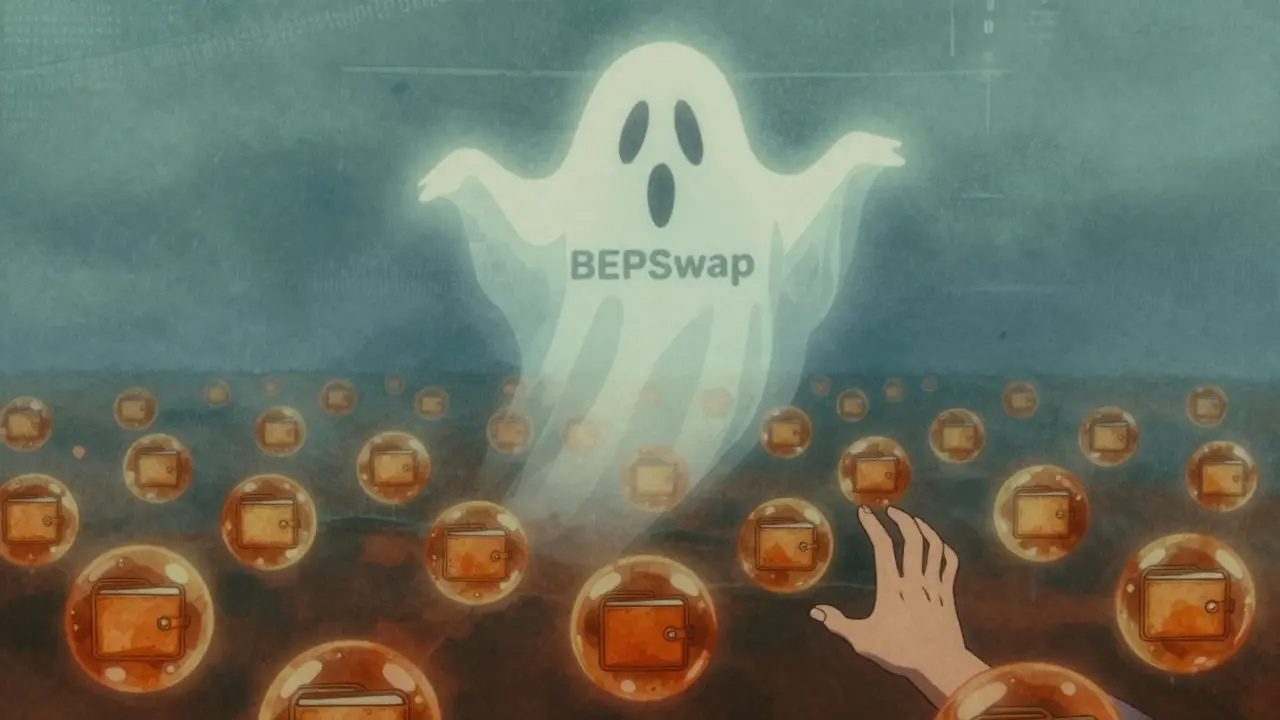
Was BEPSwap a Scam?
No. It wasn’t a rug pull. No one withdrew funds and vanished. The smart contracts still exist. The liquidity is still there. But the team stopped maintaining it. They didn’t communicate. They didn’t respond. They just walked away. That’s not fraud. It’s abandonment. And in DeFi, abandonment is just as deadly. Many early DeFi projects followed this pattern: launch fast, attract users with low fees, then disappear when the hype faded. Of the 12 earliest DEXs on BSC, nine are now dead. BEPSwap was just the first.What Can You Learn From BEPSwap?
If you’re considering using any decentralized exchange today, ask yourself three questions:- Does this platform have a governance token? Can users vote on changes?
- Has it been audited by a reputable firm? Are the reports public?
- Is the team active? Do they respond to issues? Do they have a roadmap?
Final Verdict
BEPSwap was a bold experiment. It proved BSC could support DeFi. It showed users they could trade with near-zero fees. But it failed because it treated users as a means to an end-not as stakeholders. Today, BEPSwap is a cautionary tale. A ghost in the blockchain. A reminder that in DeFi, if you don’t build for the long term, you won’t have a long term. Don’t chase the first mover. Chase the one still here.Is BEPSwap still operational?
No. BEPSwap became inaccessible on November 1, 2021, with no official announcement or migration notice. Cryptowisser and other crypto watchdogs classify it as "dead." The website no longer loads, and its social media accounts have been silent since late 2021. There is no way to access the platform or recover funds.
Can I recover my funds from BEPSwap?
Unfortunately, no. While your tokens may still exist in the smart contract’s liquidity pools, the front-end interface needed to interact with them has been shut down. Without access to the platform’s web interface or official tools, there is no known method to withdraw or swap your assets. The lack of governance or community control means no one has the authority to restore access.
Why did BEPSwap fail when PancakeSwap succeeded?
BEPSwap failed because it lacked community ownership, governance, and long-term planning. PancakeSwap introduced a governance token (CAKE), allowing users to vote on changes, earn rewards, and influence development. BEPSwap had no token, no treasury, and no roadmap. Its team was tied to BitMax.io and THORChain, and when priorities shifted, they walked away. PancakeSwap built a community. BEPSwap built a tool-and then left it behind.
Did BEPSwap have any security audits?
No public security audits were ever released for BEPSwap’s smart contracts. Independent reviews from blockchain engineers at the time noted the absence of standard DeFi safeguards like timelocks for contract upgrades or multi-signature controls. This meant the team could change the code at any time without user consent, creating a significant centralization risk.
Was BEPSwap only available on Binance Smart Chain?
Yes. BEPSwap was designed exclusively for the Binance Smart Chain (BSC) and only supported BEP2 and later BEP20 tokens. It had no cross-chain capabilities and could not interact with Ethereum, Solana, or any other blockchain. This limited its appeal as the DeFi ecosystem expanded beyond BSC in 2021.
What was BEPSwap’s fee structure?
BEPSwap charged 0% platform fees. Users only paid the Binance Smart Chain network gas fees, which averaged $0.10-$0.50 per transaction during its active period. This made it significantly cheaper than Ethereum-based DEXs like Uniswap, which charged 0.3% protocol fees on top of much higher gas costs.
How many tokens did BEPSwap support?
At its peak, BEPSwap supported approximately 20-30 BEP2 and BEP20 tokens. This was far fewer than competitors like PancakeSwap, which listed over 150 tokens by early 2021. BEPSwap’s narrow focus limited its utility and contributed to its decline as users sought more diverse trading options.
Did BEPSwap have a mobile app?
No. BEPSwap was a web-based platform only. Users accessed it through desktop browsers or mobile browsers connected to compatible wallets like Trust Wallet or Ledger. There was no dedicated mobile app, and many users reported poor mobile experience due to interface compatibility issues.
What wallet did BEPSwap require?
BEPSwap required wallets compatible with Binance Smart Chain, including Ledger hardware wallets via Binance Chain integration, Trust Wallet, MetaMask (with BSC network added), or Keystore files. Users had to manually configure BSC network settings, which was a barrier for beginners. No wallet integration was provided by BEPSwap itself.
Is BEPSwap the same as PancakeSwap?
No. BEPSwap and PancakeSwap are completely different platforms. BEPSwap was the first DEX on BSC, launched in 2019, and is now defunct. PancakeSwap launched in September 2020 and is still active today. PancakeSwap introduced a governance token (CAKE), better UI, more tokens, and community-driven development-features BEPSwap never had.


