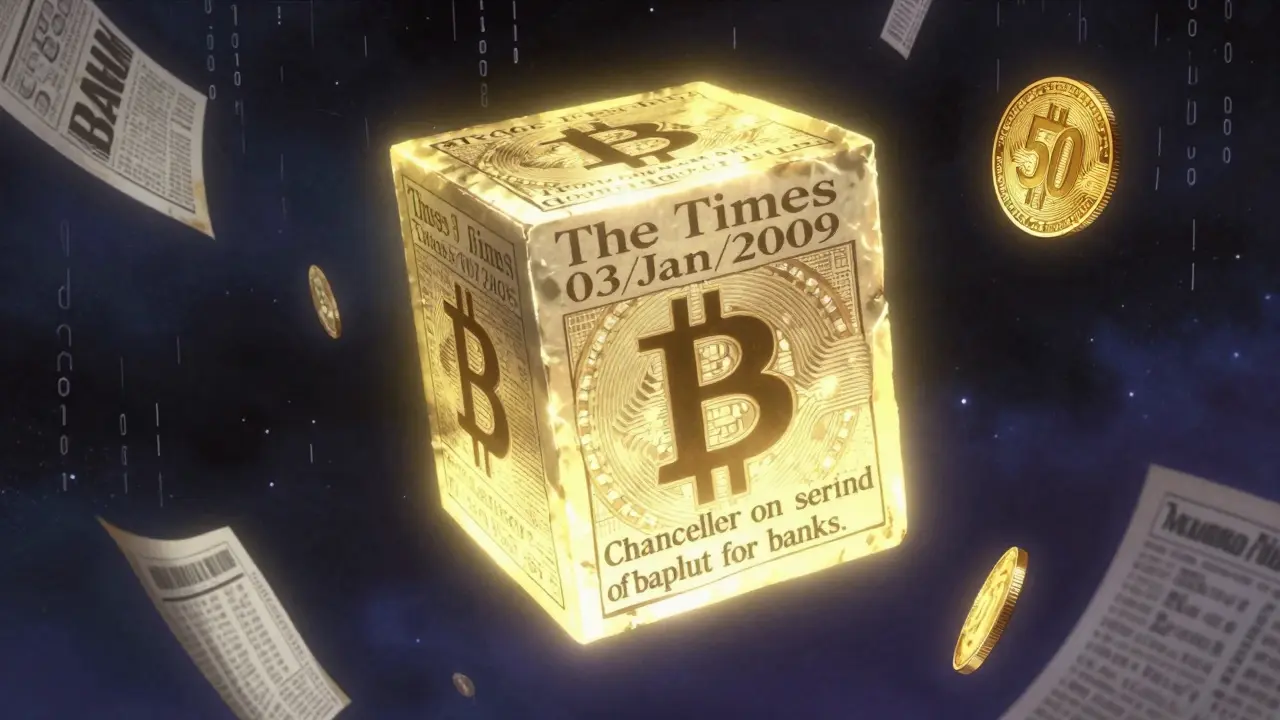
The first block in any blockchain isn't just another block. It's the genesis block - the starting point, the foundation, the cryptographic seed that everything else grows from. For Bitcoin, that’s Block 0, created on January 3, 2009. If you’ve ever wondered why this single block matters so much, or how to actually look at its data, you’re not alone. Millions of people have clicked into block explorers just to see it. And once you do, you’ll understand why it’s still talked about 15 years later.
What Makes the Genesis Block Different?
Every block after the genesis block links to the one before it. That’s how the chain stays unbroken. But the genesis block? It has no predecessor. Its "previous block hash" is filled with 32 zeros. That’s not a mistake - it’s by design. This is the only block in Bitcoin’s history that doesn’t point backward. Everything else points to it. That’s why it’s called the root of trust.
Then there’s the reward. The genesis block mined 50 BTC. But here’s the twist: that money has never been spent. Not once. The transaction output uses a special script that makes it impossible to unlock. Why? No one knows for sure, but the most likely reason is that Satoshi Nakamoto wanted to make a statement - not a transaction. It’s a monument. A digital artifact. And every block explorer that shows Bitcoin’s genesis block clearly labels it as "unspendable."
But the real headline isn’t the coins. It’s the text hidden inside. If you look at the coinbase parameter in hexadecimal, you’ll see this:
46 69 72 73 74 20 54 69 6d 65 73 20 30 33 2f 4a 61 6e 2f 32 30 30 39 20 43 68 61 6e 63 65 6c 6c 6f 72 20 6f 6e 20 62 72 69 6e 6b 20 6f 66 20 73 65 63 6f 6e 64 20 62 61 69 6c 6f 75 74 20 66 6f 72 20 62 61 6e 6b 73
Decode that, and you get: "The Times 03/Jan/2009 Chancellor on brink of second bailout for banks."
That’s not random. That’s a timestamp. A protest. A declaration that Bitcoin was built as an alternative to a failing system. And it’s permanently locked into the blockchain. No one can change it. Not now. Not ever.
How Block Explorers Show the Genesis Block
Not all block explorers treat the genesis block the same way. Some just show the raw data. Others go further.
Blockchain.com is one of the oldest and most popular. Their genesis block page is clean and simple. It shows the block height (0), timestamp (January 3, 2009, 18:15:05 UTC), and confirms the 50 BTC reward is unredeemable. It even highlights the embedded newspaper headline. But it doesn’t explain why the reward can’t be spent. For newcomers, that’s confusing.
Blockstream Explorer does better. It labels the block as "Block 0," not "Block 1." It clearly explains that the coinbase output is intentionally unspendable. It even links to Bitcoin Core’s documentation so you can read the technical reasoning. If you want to understand the "why," this is the place to go.
Blockchair takes a different approach. It lets you compare genesis blocks across 17 different blockchains - Ethereum, Litecoin, Dogecoin, and more. You can see how Bitcoin’s is unique, and how others copy or tweak it. But it skimps on context. You’ll get the data, but not the story.
Here’s what most block explorers have in common:
- The block hash:
000000000019d6689c085ae165831e934ff763ae46a2a6c172b3f1b60a8ce26f - Version: 1
- Merkle root:
4a5e1e4baab89f3a32518a88c31bc87f618f76673e2cc77ab2127b7afdeda33b - Timestamp: 1231006505 (Unix time for Jan 3, 2009, 18:15:05 UTC)
- Difficulty target (bits): 486604799
- Nonce: 2083236893
These numbers aren’t random. They’re the first proof that the blockchain works. If any of them changed, the whole chain would break. That’s why every Bitcoin node has this block hard-coded into its software. It’s the anchor.
Why This Matters Beyond Bitcoin
Bitcoin’s genesis block isn’t just history - it’s a blueprint. Over 98% of the top 100 cryptocurrencies have their own genesis block. And most follow Bitcoin’s pattern: unspendable initial reward, embedded message, zero previous block hash.
Researchers at Cornell’s IC3 studied 100 blockchains. They found that 78% embedded a text message - often a political statement, a quote, or a date. 63% made the initial coin reward unspendable. That’s not coincidence. It’s tradition. The genesis block is where a blockchain declares its values.
That’s why financial institutions are starting to pay attention. Banks and regulators don’t care about trading Bitcoin. But they do care about verifying that a blockchain is real. If you’re building a private blockchain for a bank, you need to prove it’s not a fork or a fake. The genesis block is your proof. Check the hash. Confirm the timestamp. See if the reward is unspendable. That’s how you know it’s the real thing.
How to Find and Verify the Genesis Block Yourself
You don’t need to be a developer to do this. Here’s how:
- Go to any major block explorer: Blockchain.com, Blockstream, or Blockchair.
- Type
0into the search bar. Or paste the full hash:000000000019d6689c085ae165831e934ff763ae46a2a6c172b3f1b60a8ce26f. - Check the block height. It should say "0" or "Genesis Block." If it says "1," you’re on a testnet or a different chain.
- Look for the embedded text. Most explorers decode it for you. If not, copy the coinbase hex and paste it into a hex-to-text converter.
- Verify the reward. It should be 50 BTC and marked as "unspendable." If it’s spendable, you’re not on the real Bitcoin blockchain.
Pro tip: Always double-check the hash. There are dozens of fake block explorers out there. If the hash doesn’t match 000000000019d6689c085ae165831e934ff763ae46a2a6c172b3f1b60a8ce26f, you’re looking at a scam.

Common Confusions and How to Fix Them
Even after you find the genesis block, questions come up.
Why can’t the 50 BTC be spent? The script used in the coinbase output has no public key or signature requirement. It’s literally unspendable. No private key exists for it. Even Satoshi couldn’t spend it - and he didn’t try. It was meant to be symbolic.
Is this block really from 2009? Yes. The timestamp is embedded in the block header. It matches The Times newspaper’s online archive. And because the blockchain is immutable, you can’t fake it. The timestamp is part of the hash. Change it, and the whole chain breaks.
What about testnet or altcoin genesis blocks? Each blockchain has its own. Ethereum’s genesis block is different. Litecoin’s is similar to Bitcoin’s. Blockchair lets you compare them. But if you’re looking for Bitcoin’s, make sure you’re on the mainnet. Testnet blocks look almost identical - but they’re not real.
Why do some explorers call it Block 1? Early Bitcoin software counted it as Block 1. Bitcoin Core later changed it to Block 0 to reflect the technical reality. Blockstream and Bitcoin.org now use Block 0. Older explorers still say Block 1. It doesn’t change anything - just a naming quirk.
What You’ll Learn by Looking at It
Most people think blockchain is about transactions, wallets, or mining. But the genesis block teaches you something deeper: trust doesn’t come from institutions - it comes from code.
When you see that embedded headline, you’re not just reading news. You’re seeing a moment in history frozen in math. When you see the unspendable reward, you’re seeing a promise: this system doesn’t need a central authority. It works because it’s open, transparent, and unchangeable.
That’s why every blockchain security expert agrees: the genesis block isn’t just data. It’s the first line of defense. If you can’t verify it, you can’t trust the chain.
And that’s why, over 12,500 times a day, people still search for it. Not to invest. Not to trade. Just to see. To remember. To confirm.
Can the Bitcoin genesis block be changed?
No. The genesis block is hardcoded into every Bitcoin node’s software. Its hash - 000000000019d6689c085ae165831e934ff763ae46a2a6c172b3f1b60a8ce26f - is the first block all nodes validate. If someone tried to change it, every node would reject the chain. It’s immutable by design.
Why is the genesis block’s reward unspendable?
The coinbase transaction uses a script that requires no signature to spend. Since no private key exists for it, the 50 BTC cannot be moved. This was likely intentional - either as a symbolic gesture, a technical test, or to prevent accidental spending. All major block explorers confirm this is permanent.
How do I know I’m looking at the real Bitcoin genesis block?
Check the block hash. It must be 000000000019d6689c085ae165831e934ff763ae46a2a6c172b3f1b60a8ce26f. Also confirm the timestamp is January 3, 2009, and the embedded text matches "The Times 03/Jan/2009 Chancellor on brink of second bailout for banks." If any of these don’t match, you’re not on the real Bitcoin blockchain.
Do all blockchains have a genesis block?
Yes. Every blockchain, whether Bitcoin, Ethereum, or a private chain, starts with a genesis block. It’s the first block in the chain and serves as the anchor point for validation. Most copy Bitcoin’s structure - unspendable reward, zero previous hash, embedded message - but some modify it based on their goals.
Can block explorers lie about the genesis block data?
Block explorers are just interfaces - they don’t store the blockchain themselves. They pull data from nodes. If a block explorer shows different data than Bitcoin Core nodes, it’s either broken or malicious. Always cross-check with multiple trusted explorers like Blockchain.com or Blockstream. The real data is consistent across all honest nodes.


