
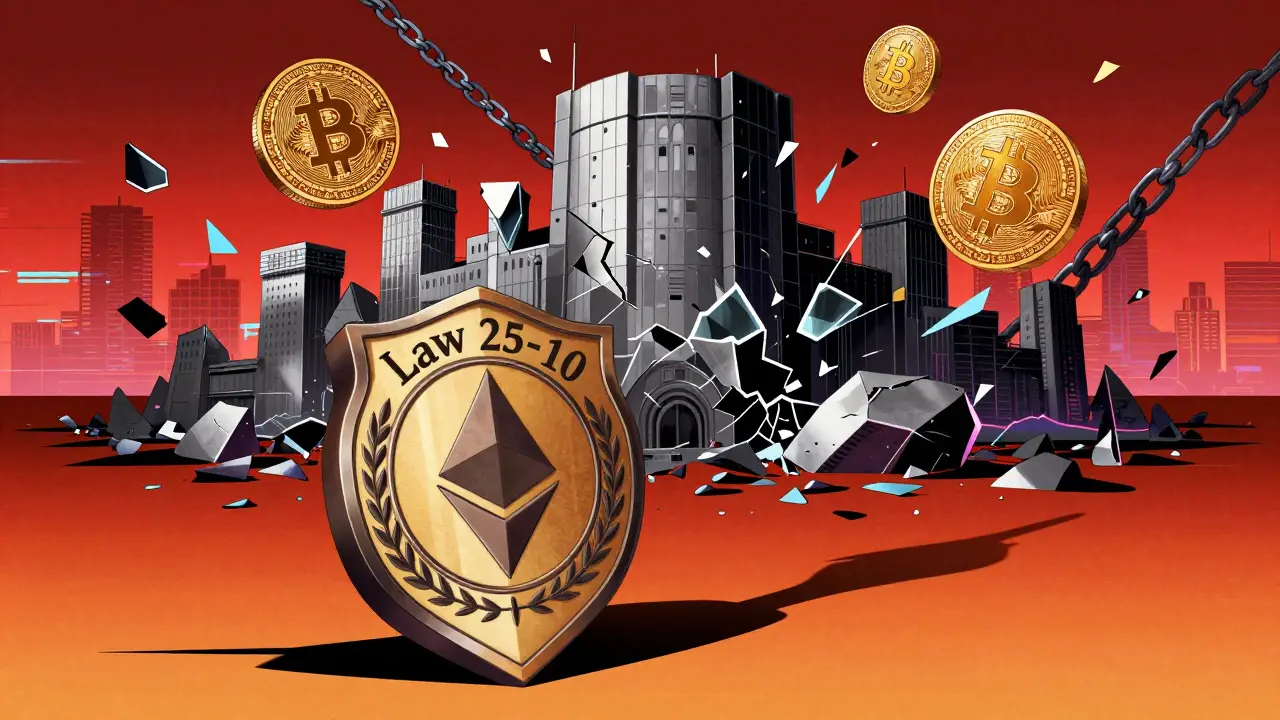
You can't buy Bitcoin legally in Algeria anymore. Not since July 24, 2025, when Law No. 25-10 was enacted, criminalizing every aspect of cryptocurrency activity. The law didn't just restrict trading; it banned holding, mining, promoting, and even discussing digital assets. Yet, despite prison sentences of up to one year and fines reaching $14,700, the demand for decentralized finance hasn't vanished. It has simply gone dark. What was once one of the largest crypto markets in the Middle East and North Africa (MENA) region is now a shadow economy operating through encrypted channels and peer-to-peer networks.
If you are in Algeria and still interested in crypto, you aren't doing it on Binance or Coinbase. You are navigating a high-risk environment where every transaction carries legal weight. This article breaks down how this underground ecosystem works, the severe risks involved, and why the government’s total ban may be harder to enforce than it looks.
The Legal Wall: Understanding Law No. 25-10
To understand the underground market, you first need to understand what it is hiding from. Before 2025, Algeria had restrictions under Article 117 of the 2018 Financial Law, but enforcement was vague. The new law changes everything. It explicitly defines crypto assets as "virtual instruments used as means of exchange via a computer system, without support from a central bank" and declares them strictly prohibited.
The scope of the ban is comprehensive. It targets eight specific categories of activity:
- Issuing new tokens
- Purchasing or selling digital assets
- Using crypto as a payment method
- Holding virtual currencies (yes, just owning them is illegal)
- Trading for speculation
- Promoting crypto through advertising or content creation
- Operating exchange platforms
- Mining operations
The penalties are designed to be deterrents. First-time offenders face imprisonment ranging from two months to one year, plus fines between 200,000 and 1 million Algerian dinars ($1,540 to $7,700). Some reports indicate higher ceilings for certain violations, reaching up to 2 million dinars. Repeat offenses double these penalties. This creates a legal environment where passive ownership is a crime, forcing any remaining users into secrecy.
How the Underground Market Operates
Prohibition rarely eliminates demand; it distorts it. In Algeria, the crypto market has shifted from open exchanges to clandestine networks. Based on patterns seen in other restrictive regimes like China post-2021, three primary mechanisms sustain this underground activity.
Peer-to-Peer (P2P) Networks
Without centralized exchanges, users rely on direct person-to-person trades. These transactions often happen through encrypted messaging apps like Telegram or Signal. A buyer and seller agree on a price, transfer fiat currency via local banking apps or cash, and release crypto from a personal wallet. This method avoids institutional tracking but introduces massive counterparty risk. If the seller disappears after receiving the dinar, there is no customer support to call.
International Exchange Access via VPN
Many Algerians still access global platforms like Binance or Kraken using Virtual Private Networks (VPNs) to mask their IP addresses. While technically accessing these sites is part of the ban, enforcement focuses more on large-scale operators than individual users browsing from home. However, linking a local bank account to an international exchange leaves a digital trail that authorities can trace.
Stablecoins for Value Preservation
With the Algerian dinar facing volatility, many citizens previously turned to crypto as a hedge. Now, they use stablecoins like USDT (Tether) or USDC. These assets pegged to the US dollar offer stability without the price swings of Bitcoin. They are easier to trade discreetly because their value doesn't fluctuate wildly during the negotiation process, making them ideal for quick, small-scale underground swaps.
| Feature | Pre-2025 (Restricted) | Post-2025 (Underground) |
|---|---|---|
| Legality | Banned but loosely enforced | Criminalized with strict penalties |
| Primary Channels | International Exchanges | P2P Networks, Encrypted Apps |
| Risk Level | Moderate (Financial loss) | High (Prison, Fines, Seizure) |
| User Base | General Public, Traders | Sophisticated Users, Speculators |
| Cost | Standard Fees | Premium Pricing due to Risk |

The Risks: More Than Just Losing Money
Entering the underground market requires accepting risks that go far beyond market volatility. In a regulated environment, if an exchange hacks your account, you might file a claim. In Algeria's shadow economy, you have no recourse.
Legal Consequences: The threat of prosecution is real. Authorities have the power to seize digital assets and freeze bank accounts linked to suspicious transactions. A criminal record for financial crimes can impact future employment, travel visas, and business opportunities. The doubling of penalties for repeat offenses means one mistake can have lifelong consequences.
Financial Vulnerability: Scammers thrive in unregulated spaces. Without legal protection, users are prime targets for fraud. Common scams include fake P2P sellers who take the money and run, or phishing links disguised as legitimate trading groups. Additionally, liquidity is lower in the underground market, meaning you might struggle to sell large amounts of crypto quickly without accepting a steep discount.
Operational Security Burden: Staying safe requires technical skill. Users must manage their own wallets, secure private keys, use VPNs effectively, and maintain operational security (OPSEC) to avoid leaving digital footprints. This high barrier to entry limits participation to those who are technically proficient, potentially reducing the overall market size but increasing the sophistication of remaining players.
Why the Ban Exists: Government Motivations
Algeria’s decision to implement such a harsh ban wasn't arbitrary. It stems from a desire to protect monetary sovereignty and comply with international standards. The government cites several key reasons:
- Capital Flight Prevention: By banning crypto, authorities aim to stop citizens from moving money out of the country, which helps stabilize the national currency.
- Anti-Money Laundering (AML): Aligning with Financial Action Task Force (FATF) guidelines, the government wants to curb illicit financial flows. Crypto’s pseudonymous nature makes it attractive for laundering, so the ban removes the tool entirely.
- Fraud Protection: Officials argue that unregulated markets expose ordinary citizens to scams and "uncontrolled speculation."
Amir Haddadi, a North Africa-based fintech analyst, noted that this move sends a clear message: Algeria does not intend to participate in the global experiment of decentralized finance. Critics, however, warn that this approach stifles innovation. Blockchain technology drives tech development in supportive regions, and by banning it, Algeria may deter foreign investment and talent in the digital economy sector.
Market Dynamics: Supply, Demand, and Premiums
Economic theory suggests that when supply is restricted, prices rise. In Algeria’s underground market, we see evidence of "risk premiums." Because buying crypto involves legal danger and limited sellers, buyers often pay more than the global market rate. This arbitrage opportunity attracts some traders willing to take the risk, but it also pushes casual users away.
The market has likely consolidated. Casual investors who bought Bitcoin for long-term savings may have sold off before the ban or abandoned crypto altogether. Those remaining are likely speculators or individuals who need crypto for specific cross-border transactions. This shift reduces overall volume but increases the intensity of activity among core users.
Enforcement remains a challenge. While the law is strict, tracking millions of individual P2P transactions across encrypted apps is resource-intensive. International precedents show that complete prohibition often drives activity deeper underground rather than eliminating it. This creates a paradox: the government achieves compliance on paper, but actual usage persists in the shadows, outside regulatory oversight.
Future Outlook: Will the Underground Market Survive?
The sustainability of Algeria’s underground crypto market depends on three factors: enforcement intensity, technological evolution, and economic pressure.
If enforcement remains focused on large entities rather than individuals, the underground market will likely stabilize at a reduced level. Technological advancements in privacy coins and decentralized exchanges (DEXs) could make it easier for users to transact without intermediaries, further complicating government efforts to track activity. DEXs allow users to swap tokens directly from their wallets, removing the need for centralized platforms that can be blocked or monitored.
However, increased international cooperation on crypto tracking could tighten the net. If Algerian banks begin flagging transactions associated with known crypto-related IPs or patterns, the cost of participation will rise further. Conversely, if the digital economy continues to grow globally, Algeria may face pressure to reconsider its stance to remain competitive. Countries that embrace regulation often attract fintech investment, while those that ban it risk isolation.
For now, the underground market exists as a testament to persistent demand. It is smaller, riskier, and more expensive than before, but it is not dead. As long as citizens seek alternatives to traditional finance, the shadow economy will adapt, finding new ways to operate beneath the radar of Law No. 25-10.
Is it legal to hold Bitcoin in Algeria in 2026?
No. Under Law No. 25-10, enacted in July 2025, holding virtual currencies is strictly prohibited. Even passive ownership constitutes a criminal offense punishable by fines and imprisonment.
What are the penalties for crypto trading in Algeria?
First-time offenders face up to one year in prison and fines ranging from 200,000 to 1 million Algerian dinars ($1,540-$7,700). Repeat offenses result in doubled penalties. Asset seizure is also common.
How do people buy crypto in Algeria if it's banned?
Users rely on underground methods such as peer-to-peer (P2P) trades via encrypted messaging apps, using VPNs to access international exchanges, and trading stablecoins like USDT for value preservation.
Why did Algeria ban cryptocurrency completely?
The government aims to protect monetary sovereignty, prevent capital flight, comply with FATF anti-money laundering guidelines, and shield citizens from fraud and speculative risks.
Is the underground crypto market in Algeria growing or shrinking?
While exact numbers are unknown, the market has likely shrunk in terms of general public participation due to fear of penalties. However, it persists among sophisticated users, with higher transaction costs and increased reliance on privacy tools.
Can I use Binance in Algeria?
Technically, accessing international exchanges is part of the banned activities. While some users bypass blocks using VPNs, doing so violates Law No. 25-10 and carries significant legal and financial risks.