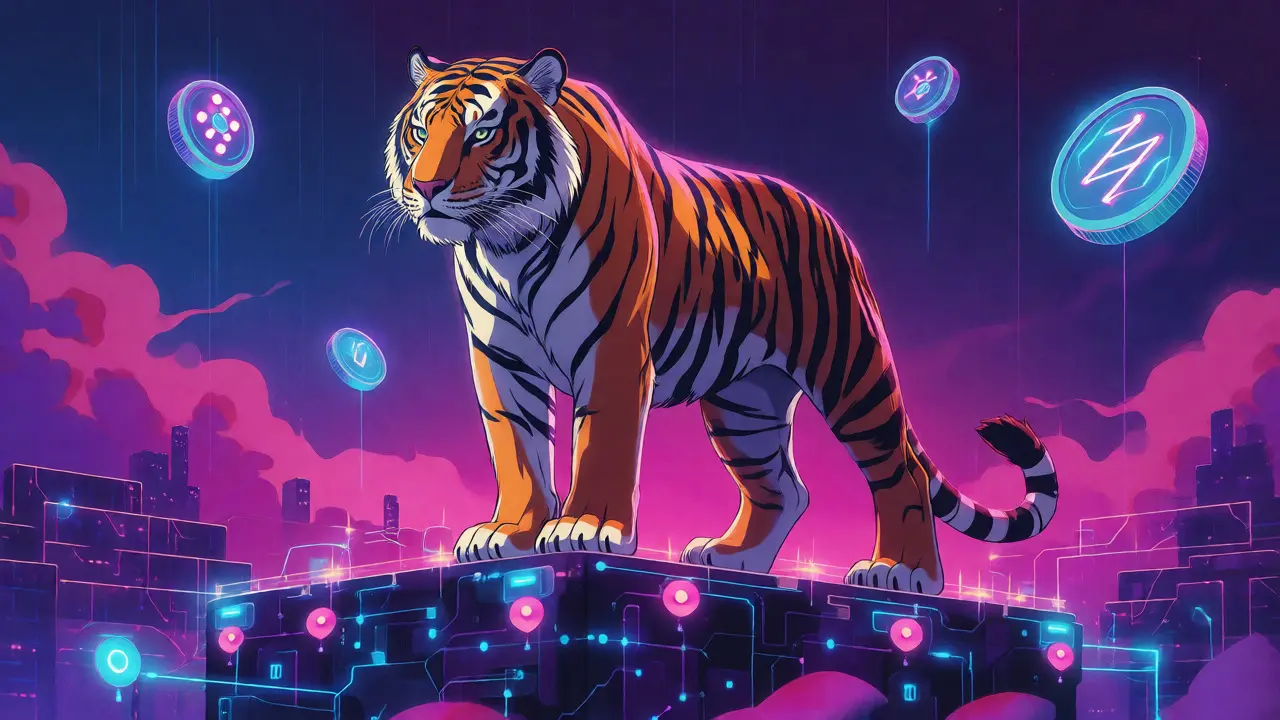
You’ve probably seen the hype. A new Defi Tiger (DTG) token pops up, promising to save big cats while making you rich. It sounds like a win-win: you get exposure to the volatile world of cryptocurrency, and you feel good about helping endangered felines. But here’s the cold, hard truth most influencers won’t tell you upfront. As of late 2026, this token has lost over 91% of its value from its all-time high. So, what exactly is Defi Tiger, and does it have any legs left to stand on?
The Core Concept: Meme Culture Meets Conservation
Defi Tiger is a decentralized, deflationary meme cryptocurrency designed to bridge decentralized finance with animal welfare initiatives. Unlike standard meme coins that rely solely on community hype and speculation, DTG integrates a charitable mission into its core structure. The project targets the preservation of endangered big cats, aiming to channel a portion of every transaction toward conservation efforts.
This isn’t just a marketing gimmick; it’s baked into the code. The project operates on the BNB Smart Chain (BEP20) after migrating from Ethereum. This move was strategic, aiming to lower transaction fees for users who want to participate in small-scale donations or trades without burning a hole in their wallets through gas fees. The team behind it claims to be building towards their own blockchain, aptly named Tiger Chain, intended to drive mass adoption beyond the current niche community.
How the Tokenomics Work (And Why They Matter)
If you’re thinking about buying DTG, you need to understand where your money goes. The token employs a 9% tax on transactions, but it’s not all going into someone’s pocket. Here is the breakdown:
- 3% Burned: These tokens are sent to a dead address, permanently removing them from circulation. This deflationary pressure is supposed to increase scarcity over time.
- 3% Charity & Development: This slice funds the conservation projects and pays for the technical development of the ecosystem.
- 3% Holder Rewards: Existing holders receive passive rewards simply for holding the token, incentivizing long-term retention rather than quick flips.
The total supply sits at approximately 761 trillion tokens, with a maximum cap of 1 quadrillion. While the numbers look astronomical, the circulating supply matches the total supply currently. This means there’s no massive unlock event looming that could crash the price further, which is a rare positive in the meme coin world.
| Metric | Value | Context |
|---|---|---|
| Current Price | ~$0.0000000012 | Highly volatile; varies by exchange |
| All-Time High | $0.000000001694 | Achieved August 2025 |
| Decline from ATH | -91.16% | Significant capital loss for early buyers |
| Market Cap | ~$1.14 Million | Micro-cap asset; high risk |
| Holders | ~33,000 | Niche community size |
| Daily Volume | $870 - $15,800 | Extremely low liquidity |
The 'Claw Trail' Initiative: More Than Just Words?
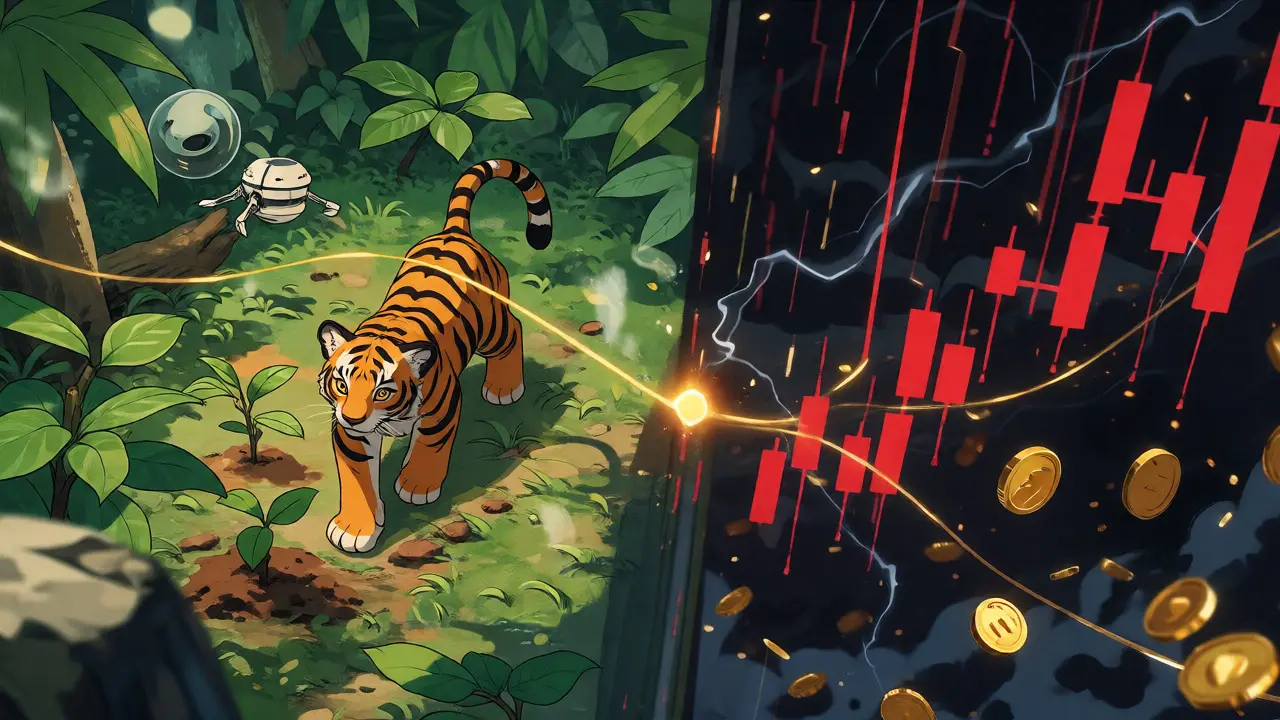
The project distinguishes itself with a roadmap called the Claw Trail. This isn't just a vague promise to "donate later." The initiative includes specific pledges, such as planting 50-100 trees for every 5 trillion DTG tokens burned. This creates a direct, measurable link between token deflation and environmental impact.
Why does this matter to an investor? In the crowded meme coin market, utility is scarce. Most coins offer nothing but vibes. By tying token burns to tree planting and shelter donations, Defi Tiger attempts to create a narrative that resonates with socially conscious investors. However, verify these claims independently. Blockchain transparency allows you to track the burn addresses, but verifying that the charity funds actually reached the shelters requires trust in the project's reporting mechanisms.
Risks You Cannot Ignore
Let’s cut through the noise. Investing in Defi Tiger is akin to buying a lottery ticket that costs money to play. The primary risk is liquidity. With daily trading volumes often dipping below $1,000 on some aggregators, selling a large position could crash the price instantly. You might buy easily, but getting out without taking a haircut is another story.
Furthermore, the project ranks around #5194 in market capitalization. This places it deep in the "micro-cap" territory, where assets are prone to manipulation and sudden delistings. The migration from Ethereum to BNB Smart Chain shows adaptability, but the planned launch of Tiger Chain remains in the announcement phase. Until that chain is live and functional, the utility argument holds little weight against established Layer 1 blockchains.
Also, consider the competition. There are hundreds of "animal-themed" meme coins. If the community sentiment shifts away from tigers to dogs, cats, or frogs, DTG could lose relevance overnight. Community engagement is currently limited to roughly 33,000 holders, which is a small base compared to major memes like Shiba Inu or Dogecoin.

Where Can You Trade DTG?
You won’t find Defi Tiger listed on major centralized exchanges like Coinbase or Kraken. Its presence is limited to smaller platforms and decentralized exchanges (DEXs). Key venues include:
- KuCoin: One of the few mid-tier CEXs listing the token.
- MEXC: Known for listing micro-cap gems early.
- PancakeSwap: The primary DEX on BNB Smart Chain for direct swaps.
- Binance Web3 Wallet: Useful for managing BEP20 tokens directly from the Binance ecosystem.
Always double-check the contract address before swapping. Scam tokens with similar names pop up frequently, especially when a project gains minor traction.
Final Verdict: Who Should Buy?
Is Defi Tiger a good investment? For the average investor seeking stable growth, absolutely not. The volatility, low liquidity, and lack of proven institutional adoption make it unsuitable for serious portfolio allocation. However, if you are a speculator who enjoys the thrill of the hunt and wants to support a specific cause, it offers a unique entry point.
Think of DTG as a high-risk venture capital bet in a micro-cap environment. Only invest what you can afford to lose completely. The potential upside exists if Tiger Chain launches successfully and the community expands, but the downside is a slow bleed to zero as interest fades. Keep your expectations grounded in data, not tweets.
Is Defi Tiger (DTG) a scam?
Not necessarily a scam, but highly risky. The project has active smart contracts, a verifiable burn mechanism, and a stated charitable mission. However, the low trading volume and significant price decline from its all-time high indicate weak market confidence. Always perform due diligence on the contract address to ensure you aren't buying a copycat token.
Which blockchain does Defi Tiger use?
Currently, Defi Tiger operates on the BNB Smart Chain as a BEP20 token. It originally launched on Ethereum but migrated to reduce transaction costs. The team has announced plans to develop its own proprietary blockchain called Tiger Chain, but this is still in the future roadmap stage.
How does the Defi Tiger burn mechanism work?
A 9% tax is applied to each transaction. Of this, 3% is automatically sent to a dead wallet, effectively removing those tokens from circulation forever. This reduces the total supply over time, theoretically increasing scarcity. Another 3% goes to charity/dev, and 3% is redistributed to existing holders.
Can I buy Defi Tiger on Coinbase?
No, Defi Tiger is not listed on major tier-1 exchanges like Coinbase or Kraken. You can typically find it on smaller centralized exchanges like KuCoin and MEXC, or via decentralized exchanges like PancakeSwap on the BNB Smart Chain network.
What is the 'Claw Trail' initiative?
The Claw Trail is Defi Tiger’s environmental and social responsibility roadmap. It includes commitments to donate funds to feline shelters and plant trees (50-100 per 5 trillion tokens burned) to support ecological restoration alongside big cat conservation.